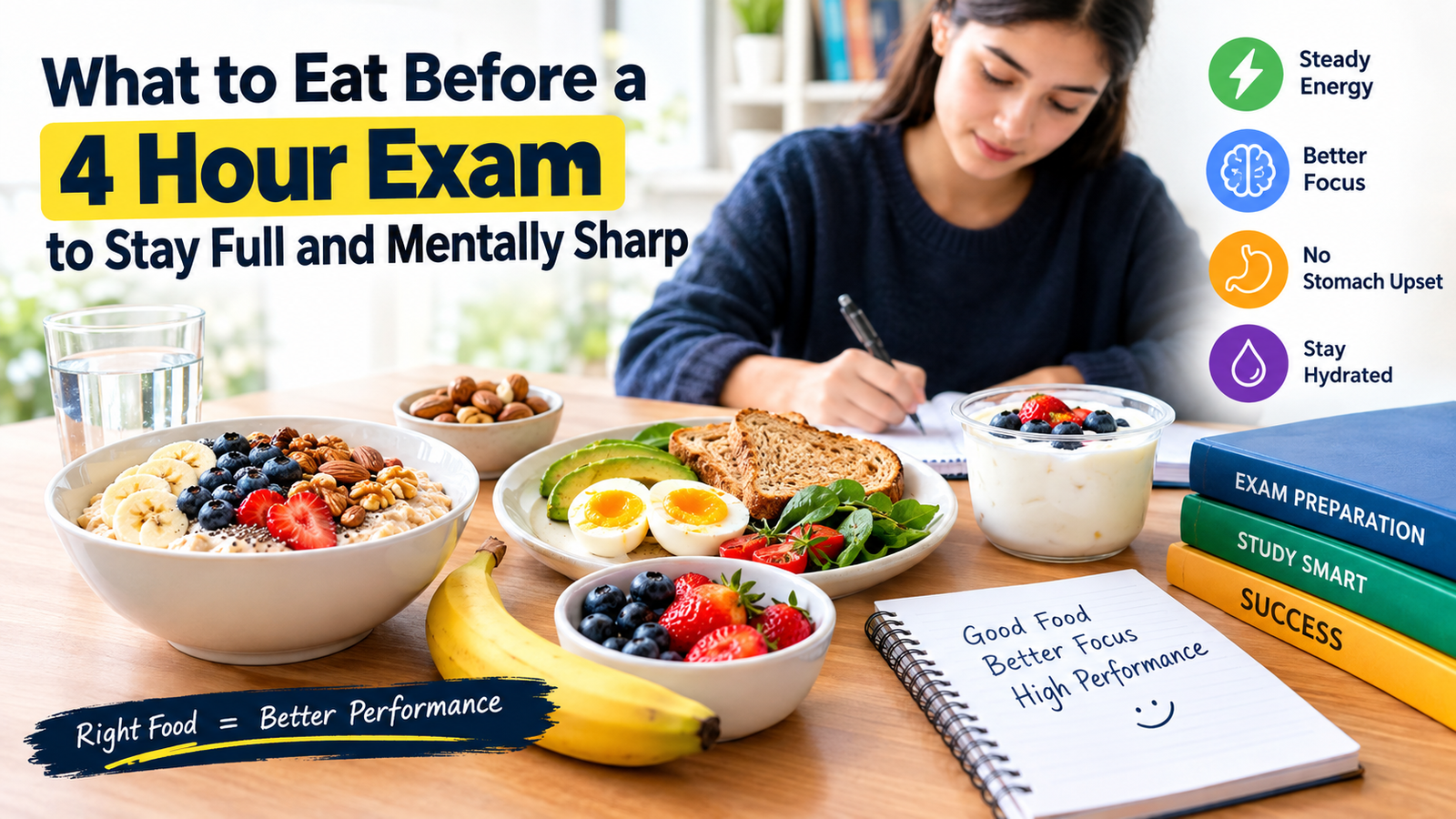

A four-hour exam can test more than memory. It can test patience, concentration, and energy control.
The wrong meal may leave you sleepy. A sugary breakfast may leave you hungry again. Too much caffeine can make some people restless.
So, what should you eat?
The best approach is simple. Build a meal around slow-digesting carbohydrates, protein, healthy fats, and fluids.
You do not need a special “brain food.” You need a meal your body handles well.
Research on breakfast and cognition suggests that eating breakfast can benefit some areas of attention, memory, and executive function. However, studies do not establish one perfect breakfast for everyone. [Insert PubMed Breakfast Research Reference Here]
For a four-hour exam, your goal is steady energy rather than a sudden boost.
The Ideal Exam-Day Meal Formula
Think of your pre-exam meal as a four-part combination.
| Food Group | Good Choices | Why It Helps |
|---|---|---|
| Complex carbohydrates | Oats, whole-grain toast, brown rice, potatoes | Provides longer-lasting energy |
| Protein | Eggs, Greek yogurt, chicken, beans | Helps increase fullness |
| Healthy fats | Nuts, seeds, avocado, peanut butter | Adds staying power |
| Fluids | Water, milk, unsweetened drinks | Supports normal hydration |
You do not need every food listed.
Choose one or two options from each group.
For example, oatmeal with Greek yogurt, berries, and nuts creates a balanced meal.
Eggs with whole-grain toast and fruit can work too.
The key is balance.
Why Protein Matters Before a Long Exam
Protein can make a meal more satisfying.
Eggs are an easy option. Greek yogurt works well. Cottage cheese, beans, chicken, and tofu can also fit.
You do not need an enormous serving.
A moderate portion is usually enough.
Adding protein can also make a carbohydrate-heavy meal feel more substantial.
For example, fruit alone may not keep you satisfied for four hours.
Fruit with yogurt or nuts is more filling.
That difference matters during a long exam.
[Insert Harvard Nutrition Reference Link Here]
Best Foods to Eat Before a 4 Hour Exam
1. Oatmeal With Fruit and Nuts
Oatmeal is a practical exam-day choice.
It provides carbohydrates and can be paired with protein and fat.
Add berries or a banana for fruit.
Then add walnuts, almonds, chia seeds, or peanut butter.
This creates a more complete breakfast.
Avoid turning it into a dessert.
Large amounts of sugar may make the meal unnecessarily heavy.
2. Eggs With Whole-Grain Toast
Eggs are one of the easiest protein options.
Pair two eggs with whole-grain toast.
Add fruit if you want more carbohydrates.
You can also add avocado for extra richness.
This meal works especially well for people who prefer savory breakfasts.
3. Greek Yogurt, Fruit, and Nuts
Greek yogurt provides protein.
Fruit provides carbohydrates.
Nuts add fat and texture.
Together, they make a quick meal.
Choose plain or lightly sweetened yogurt if possible.
A huge bowl may feel uncomfortable during the exam.
Keep the portion familiar.
4. Peanut Butter Toast With a Banana
This option is fast.
Whole-grain toast provides carbohydrates.
Peanut butter adds protein and fat.
A banana adds carbohydrates and potassium.
It can work well when you cannot tolerate a large breakfast.
Choose a portion you already know feels comfortable.
5. Rice, Eggs, and Vegetables
Not everyone wants breakfast food.
That is completely fine.
Rice with eggs and vegetables can make a solid pre-exam meal.
It provides carbohydrates and protein.
Keep the meal moderate.
Very oily or spicy preparations may cause discomfort for some people.
When Should You Eat Before a 4 Hour Exam?
Timing matters almost as much as food choice.
A practical starting point is to eat your main meal around 2 to 3 hours before the exam.
That gives your body time to begin digestion.
It also reduces the chance of feeling overly full when the exam starts.
If you normally need a snack closer to the exam, keep it small.
A banana, yogurt, or small handful of nuts may work.
Do not experiment on exam morning.
Your usual routine is safer than a completely new meal.
If your exam begins at 9:00 a.m., for example, you might eat breakfast around 6:30–7:00 a.m.
Then, if needed, have a small snack before leaving.
Your exact timing depends on your digestion, schedule, and normal eating habits.
What About Coffee Before a Long Exam?
Caffeine can increase alertness.
However, more caffeine does not automatically mean better concentration.
If you regularly drink coffee, your normal amount may be reasonable.
Avoid suddenly doubling your intake because it is exam day.
Too much caffeine can cause jitters, anxiety, stomach discomfort, or frequent bathroom trips in sensitive people.
Energy drinks can be especially unpredictable if you are not used to them.
The safest exam-day rule is simple:
Use familiar caffeine habits.
Do not test a new energy drink five minutes before a major exam.
[Insert FDA Caffeine Reference Link Here]
Foods to Avoid Before a Four-Hour Exam
Some foods can make a long exam harder.
That does not mean these foods are universally “bad.”
The issue is timing.
Huge Meals
A very large meal can leave you uncomfortable.
You may feel sluggish before the exam even begins.
Keep the portion satisfying rather than enormous.
Excessively Sugary Foods
Pastries, candy, and sugary drinks can provide plenty of calories.
But they may not keep you full for several hours.
Pair carbohydrates with protein and fat instead.
Very Greasy Foods
Fried foods can feel heavy.
That feeling becomes especially distracting during a four-hour sitting.
If greasy meals normally upset your stomach, avoid them before exams.
Foods That Cause You Gas
Beans, large amounts of cruciferous vegetables, or other foods can bother some people.
That does not make them unhealthy.
It simply means exam day may not be the right time to test your tolerance.
Too Much Water at Once
Hydration matters.
But drinking a huge amount immediately before the exam can create unnecessary bathroom problems.
Drink normally throughout the morning.
Follow your usual hydration routine.
[Insert NHS Hydration Reference Link Here]
A Simple Four-Hour Exam Meal Plan
Here is a practical example.
3 hours before:
Oatmeal + Greek yogurt + berries + walnuts.
1 hour before:
Water and, if needed, a small banana.
During the exam:
Follow the exam center’s rules for water and food.
If snacks are allowed, choose something familiar and easy to digest.
For example, a small portion of nuts or fruit may be easier than a heavy snack.
The exact plan should match your normal eating pattern.
There is no magic menu that guarantees perfect concentration.
Research on breakfast composition and cognitive performance remains mixed. Some studies suggest benefits from breakfast, while others find that the exact composition does not produce consistent cognitive advantages. [Insert Systematic Review Reference Here]
The Night Before Matters Too
Your exam breakfast cannot compensate for everything.
The night before also matters.
Eat a normal dinner.
Do not attempt an extreme “brain food” diet.
Avoid overeating late at night.
Prepare your breakfast before sleeping if your morning will be rushed.
Most importantly, protect your sleep schedule.
A good meal cannot fully replace adequate rest.
Your exam preparation should therefore include food, hydration, sleep, and time management.
Think of them as one system.
Final Takeaways for Exam Day
- Choose balanced meals: Combine carbohydrates, protein, and healthy fats.
- Eat familiar foods: Avoid experimental meals before important exams.
- Time your meal: Aim for roughly 2–3 hours beforehand.
- Control caffeine: Stick close to your normal intake.
- Stay hydrated: Drink normally rather than excessively.
- Keep portions sensible: Full is useful; uncomfortably stuffed is not.
- Protect your sleep: Nutrition works better alongside adequate rest.
The best pre-exam meal is not complicated.
Choose familiar foods that keep you satisfied.
Build the meal around balanced nutrition.
Then focus on the exam itself.
Disclaimer: This article is compiled from publicly available nutrition research, systematic reviews, and health guidance. It is intended for general educational and informational purposes only and does not replace individualized advice from a qualified healthcare or nutrition professional.
Read more:Healthy Non Perishable Desk Snacks for Busy Students During Exam Week