
Exam week changes everything. Sleep gets shorter. Study sessions get longer. Meals can become an afterthought.
That is why healthy non perishable desk snacks for busy students during exam week can make a practical difference. The right snacks can stay in a backpack, dorm room, or desk drawer without refrigeration.
They also need to be easy to eat between study sessions.
A good exam-week snack does not need to be complicated. Nuts, seeds, whole-grain crackers, popcorn, dried fruit, and nut butter can all work well. Harvard nutrition guidance recommends nutrient-dense snack choices such as nuts, seeds, whole grains, and fruit.
The goal is simple: keep useful food nearby when hunger appears.
Quick Snack Profile
| Snack | Storage | Main Benefit | Best Study Time |
|---|---|---|---|
| Unsalted almonds | Pantry | Protein and healthy fats | Morning |
| Pumpkin seeds | Pantry | Protein and minerals | Afternoon |
| Plain popcorn | Pantry | Whole-grain crunch | Long study sessions |
| Dried fruit | Pantry | Convenient carbohydrate | Quick breaks |
| Whole-grain crackers | Pantry | Carbohydrates and fiber | Between meals |
| Peanut butter packets | Pantry | Protein and healthy fats | Anytime |
| Roasted chickpeas | Pantry | Crunch and plant protein | Afternoon |
| Oatmeal packets | Pantry | Convenient whole grains | Early morning |
| Trail mix | Pantry | Mixed nutrients | Long sessions |
| Dark chocolate | Pantry | Small sweet option | Evening break |
Why Desk Snacks Matter During Exam Week
Students often spend several hours sitting at a desk.
Hunger can become distracting during that time. A planned snack provides an easy option between meals.
Harvard’s Nutrition Source explains that snacks can help provide energy between meals. It also recommends paying attention to portion sizes because packaged foods can contain multiple servings.
That makes planning especially useful during exams.
Instead of opening a large bag of chips while studying, portion snacks into small containers or bags. USDA MyPlate also recommends preparing snack portions ahead of time.
A desk snack should serve one purpose.
It should satisfy hunger without turning into an accidental full meal.
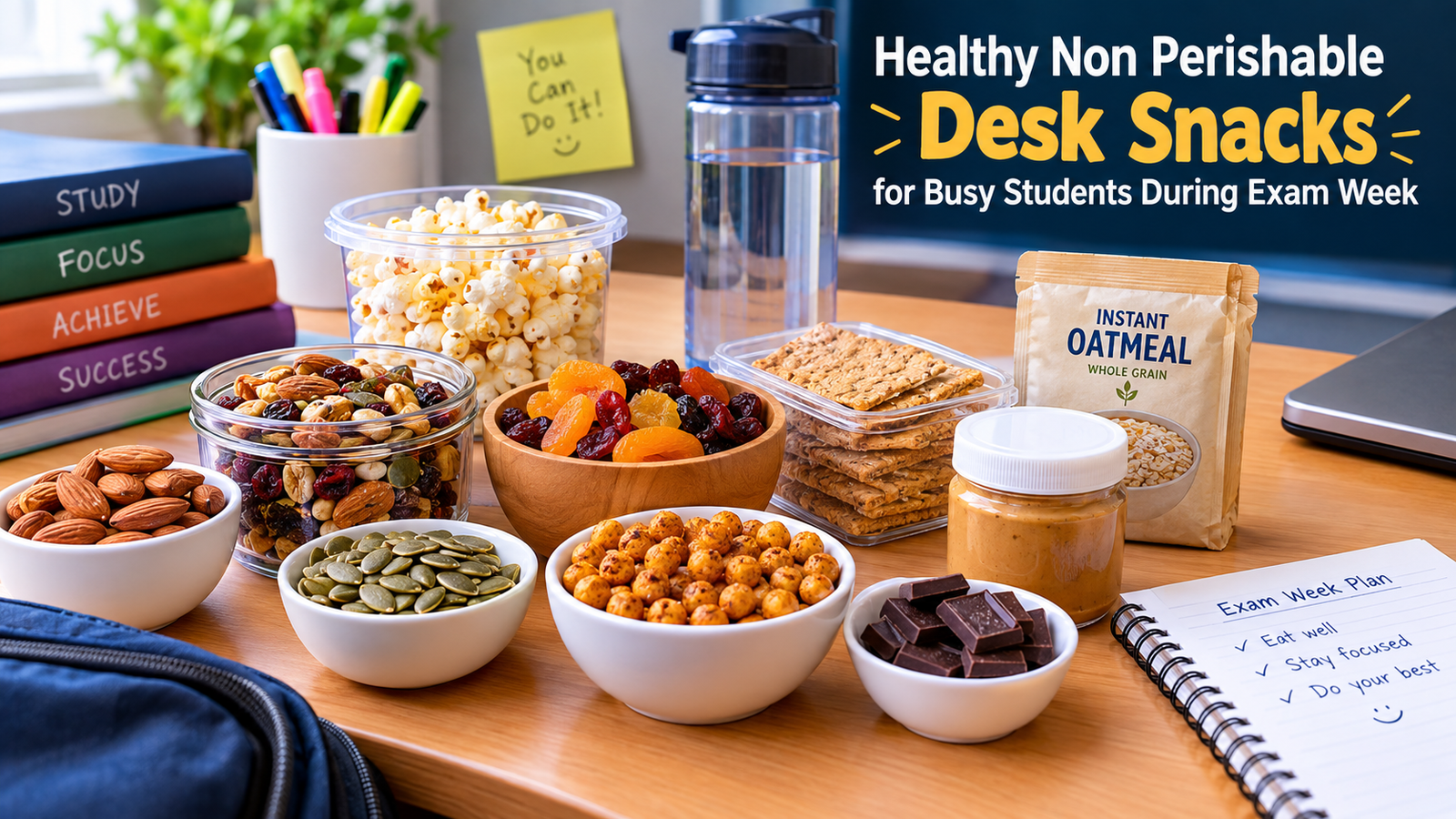
10 Healthy Non Perishable Desk Snacks for Students
1. Unsalted Nuts
Almonds, walnuts, peanuts, and pistachios are easy choices.
They require no refrigeration. They also provide protein, fats, and other nutrients.
Choose unsalted varieties when possible. Harvard specifically lists raw or unsalted nuts among useful snack choices.
A small handful can fit easily beside study materials.
2. Homemade Trail Mix
Trail mix offers more variety than plain nuts.
Combine unsalted nuts with seeds and a small amount of dried fruit. You can add a few dark-chocolate pieces for sweetness.
USDA MyPlate recommends making your own trail mix using nuts, seeds, dried fruit, popcorn, and small amounts of chocolate chips.
Prepare several small portions before exam week begins.
That removes one decision from a stressful day.
3. Plain Popcorn
Popcorn can be an inexpensive whole-grain snack.
Choose plain or lightly seasoned versions. Avoid turning it into a heavily salted snack.
It works especially well during long reading sessions because it provides plenty of crunch without requiring refrigeration.
Keep individual portions in resealable bags.
4. Dried Fruit
Raisins, dried apricots, dates, and dried berries are convenient.
They take almost no space. They also avoid the storage problems associated with fresh fruit.
However, check the ingredient label. Some dried fruits contain substantial added sugar.
Harvard recommends dried fruit as part of snack combinations while emphasizing nutrient-dense choices.
Pairing dried fruit with nuts creates a more substantial snack.
5. Whole-Grain Crackers
Whole-grain crackers are useful when students want something savory.
Look for options with whole grains listed prominently on the ingredient list. Check sodium levels too.
You can eat them alone or pair them with shelf-stable nut butter.
Whole grains are among the food choices recommended in healthy snack guidance from Harvard and MyPlate.
6. Peanut Butter Packets
Individual peanut butter packets are excellent for desks.
They require little preparation. They can also pair with crackers, whole-grain toast, or an apple when refrigeration is available elsewhere.
Choose varieties with simple ingredients and limited added sugar when possible.
Students with peanut allergies should choose an appropriate alternative, such as sunflower-seed butter.
7. Roasted Chickpeas
Roasted chickpeas bring a different texture to the snack drawer.
They provide plant-based protein and carbohydrates. They also have the satisfying crunch many students expect from chips.
Harvard includes roasted chickpeas among nutritious snack possibilities.
Buy a packaged version or prepare them ahead of time.
8. Oatmeal Packets
Plain instant oatmeal can work well for early study sessions.
Keep several packets in the dorm or office. Add hot water when needed.
Choose lower-sugar versions. Add nuts, seeds, or dried fruit if available.
This option is particularly useful when breakfast has been rushed.
9. Seed Mixes
Pumpkin seeds and sunflower seeds make convenient desk snacks.
They store easily and can be added to homemade trail mix.
Seeds also provide variety when students become tired of eating nuts every day.
Portion them before studying to avoid mindless eating.
10. Dark Chocolate
A small amount of dark chocolate can satisfy a sweet craving.
Harvard’s Nutrition Source recommends dark chocolate with a high cocoa percentage and notes that properly stored dark chocolate can last for a long time.
Think of it as an occasional addition.
It should complement nutritious snacks rather than replace them.
How to Build a Better Exam-Week Snack Box
The easiest strategy is combining different food groups.
A snack containing a carbohydrate and protein can feel more satisfying than a highly sugary option. Harvard’s healthy-snacking guidance also suggests pairing protein-rich foods with carbohydrate-rich foods.
Try these combinations:
- Nuts + dried fruit — simple and portable.
- Crackers + peanut butter — savory and filling.
- Popcorn + pumpkin seeds — crunchy and varied.
- Oatmeal + nuts — useful for mornings.
- Roasted chickpeas + dried fruit — sweet and savory.
- Whole-grain crackers + seed butter — easy desk combination.
Portion everything before the serious studying begins.
Small containers work better than eating directly from large packages.
Smart Storage for a Student Desk
Not every food belongs in a desk drawer.
Choose foods that remain stable under normal storage conditions. Keep packages sealed and away from moisture, excessive heat, and direct sunlight.
Harder, lower-moisture foods generally travel better. Harvard notes that some nonperishable staples can be purchased in bulk, including whole grains and dried foods.
Read the package storage instructions.
Do not assume that every product is shelf-stable simply because it looks dry.
Also check expiration dates before exam week.
A five-minute pantry check can prevent unpleasant surprises.
The Best Exam-Week Snack Strategy
Do not wait until extreme hunger appears.
Pack two or three small snacks each morning. Keep water nearby as well. Harvard youth nutrition guidance recommends water as the default beverage during snacks and meals.
Use snacks to bridge meals.
Do not rely on them as replacements for every meal.
A practical exam-week routine might look like this:
- Morning: oatmeal with nuts.
- Mid-morning: small trail mix.
- Afternoon: roasted chickpeas or popcorn.
- Evening: whole-grain crackers with nut butter.
- Sweet craving: small dark-chocolate portion.
Individual nutrition needs vary. Students with allergies, diabetes, eating disorders, or other dietary concerns should follow advice from their healthcare professional.
Final Takeaways
- Plan ahead: Portion snacks before studying.
- Mix foods: Combine protein with carbohydrates.
- Read labels: Check added sugar, sodium, and serving sizes.
- Store safely: Follow package storage instructions.
Good exam-week snacks do not need to be expensive or complicated. A small collection of shelf-stable foods can keep useful options within reach throughout demanding study days.
The best setup is the one students will actually use. Keep it simple, portable, portioned, and varied.
Disclaimer: This article is compiled from publicly available nutrition guidance and authoritative health resources. It is intended solely for educational and informational purposes and should not replace individualized medical or dietary advice.
Read more:Is Systolic or Diastolic More Dangerous for Stroke Risk?