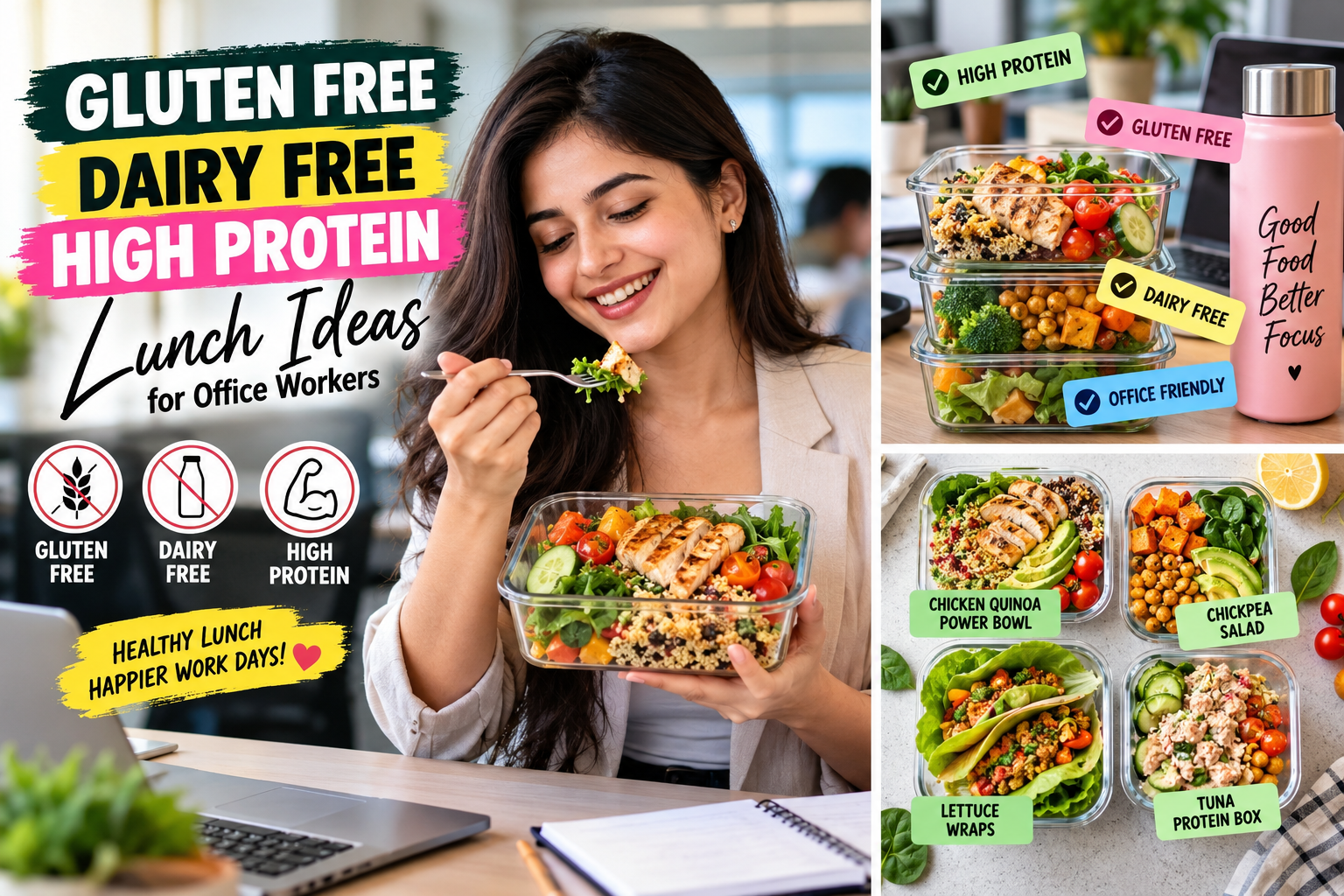

The good news? Gluten free dairy free high protein lunch ideas can be simple, affordable, and genuinely delicious. You don’t need expensive ingredients or complicated recipes.
Think colorful chicken bowls, satisfying chickpea salads, tender salmon, and protein-packed rice dishes. Most take less than 30 minutes to prepare.
Better still, these meals travel well. They help you plan ahead and avoid relying on limited cafeteria choices.
Whether you work at a desk or move between meetings, these ten lunches offer practical ways to eat well.
Why Protein-Rich Office Lunches Make a Difference
Protein helps maintain muscles and supports normal tissue repair. It also contributes to fullness, especially when paired with fiber-rich vegetables and whole grains.
For office workers, a balanced lunch can make the afternoon more comfortable. However, protein alone doesn’t guarantee steady energy. Sleep, total calorie intake, hydration, and overall diet matter too.
A practical lunch often provides around 20–40 grams of protein, depending on individual needs. You can reach that range using chicken, fish, eggs, tofu, beans, or lentils.
Gluten-free eating is essential for people with celiac disease. Others may avoid gluten for different medical or personal reasons. Dairy-free meals can help those managing milk allergies or avoiding dairy products.
The key is building meals that meet your actual nutritional needs.
10 Easy Gluten Free Dairy Free High Protein Lunch Ideas
Protein figures are approximate per serving. Portions and ingredient brands can change the totals.
1. Grilled Chicken and Quinoa Power Bowl

This colorful bowl combines lean protein with satisfying carbohydrates.
Use 100 grams of cooked chicken breast, one cup of cooked quinoa, spinach, tomatoes, and cucumber. Add lemon juice and olive oil for a fresh dressing.
Prepare the chicken and quinoa the night before. Keep the dressing separate until lunchtime.
Estimated protein: 40–43 grams.
2. Tuna and White Bean Salad
Mix canned tuna with rinsed white beans, chopped celery, parsley, and red onion. Finish with lemon juice and black pepper.
The beans add fiber, while tuna supplies concentrated protein. Choose canned light tuna more often than high-mercury varieties.
Pack this salad in a sealed container and refrigerate promptly.
Estimated protein: 32–38 grams.
3. Turkey and Avocado Lettuce Wraps
Replace ordinary sandwich bread with large, crisp lettuce leaves.
Fill them with roasted turkey breast, avocado, grated carrots, and sliced cucumber. Add mustard labeled gluten-free.
Choose unprocessed cooked turkey when possible. Packaged deli meats may contain unexpected ingredients or excessive sodium.
Estimated protein: 28–35 grams.
4. Salmon and Brown Rice Lunch Box

Cook a salmon fillet and serve it with brown rice and roasted broccoli.
Salmon supplies protein and omega-3 fatty acids. Brown rice adds carbohydrates that help fuel your working day.
Season with garlic, lemon, and herbs. Avoid ordinary soy sauce unless the label confirms it’s gluten-free.
Estimated protein: 32–38 grams.
5. Chickpea and Tofu Mediterranean Bowl
For a plant-based option, combine firm tofu, chickpeas, cucumber, tomatoes, and fresh parsley.
Add olive oil, lemon juice, and oregano. Roast the tofu first for better texture.
Choose certified gluten-free tofu when necessary and check flavored varieties for wheat-containing sauces.
Estimated protein: 25–30 grams.
6. Egg and Sweet Potato Protein Box
Boil three eggs and pair them with roasted sweet potato, edamame, and crunchy vegetables.
The eggs provide complete protein. Edamame adds extra protein and fiber.
This meal works especially well when you don’t have access to an office microwave.
Estimated protein: 28–32 grams.
7. Chicken and Black Bean Burrito Bowl

Build a burrito bowl using grilled chicken, black beans, rice, corn, and fresh salsa.
Add avocado and lime juice just before eating. Use homemade seasoning or check packaged spice mixes for gluten-containing additives.
This meal is easy to prepare in batches.
Estimated protein: 38–45 grams.
8. Shrimp and Rice Noodle Salad
Cook shrimp and rice noodles separately. Toss them with shredded cabbage, carrots, mint, and lime dressing.
Add gluten-free tamari for extra flavor.
This chilled lunch feels light but still provides substantial protein. Check rice noodle packaging because some products contain wheat.
Estimated protein: 30–35 grams.
9. Lentil and Chicken Vegetable Soup
Combine cooked lentils, shredded chicken, carrots, celery, tomatoes, and gluten-free broth.
Simmer until the vegetables become tender. Portion into microwave-safe containers.
This warming meal is useful during colder office days. Serve with fruit or a side salad for variety.
Estimated protein: 35–40 grams.
10. Tempeh and Roasted Vegetable Bowl
Roast plain tempeh with zucchini, peppers, and sweet potatoes.
Serve over quinoa and finish with tahini-lemon dressing.
Tempeh offers plant protein and a pleasantly firm texture. Some flavored tempeh products contain gluten, so check the label.
Estimated protein: 28–35 grams.
Five-Day Office Lunch Meal Prep Plan
A weekly plan reduces morning decisions and helps limit food waste.
| Day | Lunch | Approx. protein |
|---|---|---|
| Monday | Chicken quinoa power bowl | 42 g |
| Tuesday | Tuna and white bean salad | 35 g |
| Wednesday | Salmon and brown rice box | 35 g |
| Thursday | Chickpea and tofu bowl | 28 g |
| Friday | Chicken burrito bowl | 42 g |
Cook grains and prepare vegetables in advance. Store individual components separately where practical.
For food safety, refrigerate cooked meals promptly at 40°F (4°C) or below. Use most cooked leftovers within three to four days. Freeze later-week portions rather than leaving them refrigerated all week.
How to Build a Balanced Lunch Without Gluten or Dairy
A satisfying lunch needs more than a large serving of protein.
Start with a protein source. Add vegetables, a suitable carbohydrate, and a little healthy fat.
Quinoa, rice, potatoes, and certified gluten-free oats provide flexible carbohydrate options. Beans and lentils contribute both protein and fiber.
For healthy fats, try avocado, olive oil, seeds, or nuts.
Also consider calcium. Removing dairy may reduce calcium intake unless you replace it with suitable foods. Fortified dairy-free milk, calcium-set tofu, and certain leafy greens can help.
If you have celiac disease, prevent cross-contact during preparation. Separate utensils, clean surfaces, and verified ingredients matter.
Common Mistakes That Make Office Lunches Less Healthy
One common mistake involves trusting every product labeled healthy. Some dressings, marinades, sauces, and processed meats contain gluten or milk ingredients.
Another mistake is eating protein without enough vegetables or carbohydrates. A balanced meal generally offers better nutritional variety.
Portion sizes also matter. Adding excessive oils, dressings, and calorie-dense toppings can change a meal significantly.
Finally, don’t overlook food safety. Cooked meat, seafood, eggs, and prepared rice require proper refrigeration.
Smart Storage, Shopping, and Time-Saving Tips
Office meal preparation becomes easier with a repeatable routine.
- Batch-cook proteins: Prepare chicken, tofu, or lentils ahead.
- Choose simple ingredients: Use rice, beans, vegetables, and fresh herbs.
- Pack sauces separately: Keep salads fresh and crisp.
- Use insulated containers: Carry chilled meals with ice packs.
- Freeze extra portions: Save meals for busy days.
Keep a few pantry essentials available. Canned beans, tuna, quinoa, and gluten-free seasonings can turn leftovers into lunch.
Frequently Asked Questions
What are the easiest gluten free dairy free high protein lunches?
Chicken rice bowls, tuna bean salads, tofu quinoa bowls, and egg protein boxes are convenient options. Most require basic ingredients and minimal preparation.
Can I get enough protein without dairy?
Yes. Chicken, fish, eggs, tofu, tempeh, beans, lentils, and edamame provide protein without dairy. Combining different foods helps create a varied diet.
Is quinoa gluten-free and high in protein?
Quinoa is naturally gluten-free and provides around eight grams of protein per cooked cup. It also contains fiber and minerals. Choose appropriately labeled products when cross-contact is a concern.
How do I keep office lunches fresh?
Refrigerate perishable foods promptly. Use an insulated lunch bag with cold packs during transport. Avoid leaving prepared meals at room temperature for more than two hours, or one hour in very hot conditions.
Are these meals suitable for weight loss?
They can fit into a weight-management plan. However, results depend on overall calorie intake, portion sizes, activity, and personal needs. High protein alone does not guarantee weight loss.
Final Thoughts
Healthy office lunches don’t need complicated recipes or expensive specialty foods.
These gluten free dairy free high protein lunch ideas combine familiar ingredients with practical preparation methods. They offer flexibility for different tastes and working schedules.
Start with two favorite recipes. Prepare the ingredients in advance, adjust portions to your needs, and build a routine you can maintain.
Disclaimer: This article provides general educational nutrition information. Protein estimates vary by serving size and product. People with celiac disease, food allergies, kidney disease, or specific dietary needs should seek individualized guidance from a qualified healthcare professional.
Read more:How to Meal Prep for Weight Loss When You Are Allergic to Nuts and Eggs