
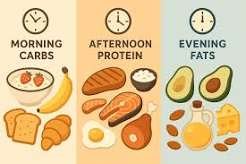
Eating 3,500 calories can feel impossible with a small appetite.
The solution is not huge meals, but smarter calorie choices.
What Makes 3,500 Calories Difficult With a Small Appetite?
A 3,500-calorie diet requires substantial food intake. That can become uncomfortable when your appetite is naturally low. Large portions may cause fullness before you reach your target.
The better strategy is to increase calorie density. Calorie-dense foods provide more energy in smaller portions. Fats are especially energy-dense compared with water-rich foods.
Instead of forcing three massive meals, spread food across the day. Cleveland Clinic recommends smaller meals and snacks for people struggling with large portions.
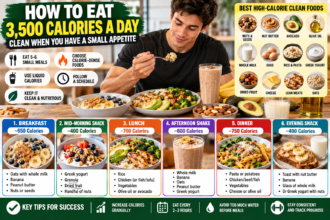
A Better Daily Structure
| Eating time | Approximate calories |
|---|---|
| Breakfast | 650 |
| Morning snack | 400 |
| Lunch | 800 |
| Afternoon snack | 400 |
| Dinner | 850 |
| Evening snack | 300 |
| Total | 3,400 |
Add a small extra ingredient to reach roughly 3,500 calories.
Focus on Calorie-Dense Whole Foods
“Clean eating” does not mean eating only salads and lean vegetables. Those foods can be nutritious but often provide little energy per bite.
Mayo Clinic explains that foods containing more fat generally have higher energy density. This makes healthy fats useful when increasing calories without dramatically increasing food volume.
Good options include:
- Peanut or almond butter
- Nuts and seeds
- Avocado
- Olive oil
- Full-fat yogurt
- Whole milk
- Eggs
- Oats
- Rice
- Whole-grain bread
- Dried fruit
- Salmon
Cleveland Clinic also recommends nutrient-rich foods such as nuts, avocado, olive oil, hummus, seeds, cheese, and dried fruit for adding calories.
The “Add-On” Method
You do not always need another meal.
Instead, increase the calories already present.
For example:
- Add peanut butter to oatmeal.
- Add olive oil to rice or vegetables.
- Add nuts to yogurt.
- Add avocado to sandwiches.
- Add cheese to eggs.
- Add dried fruit to oatmeal.
- Add seeds to smoothies.
These small additions can raise calories without creating a much larger meal.
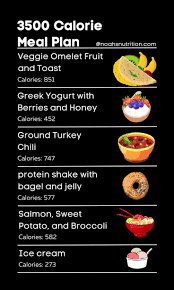
Eat More Often Instead of Eating Huge Meals
A small appetite makes meal timing especially important.
Cleveland Clinic recommends eating smaller meals and snacks throughout the day. Some people may find eating every two to three hours easier than relying on three large meals.
A practical schedule could look like this:
7:30 a.m. — Breakfast
Oatmeal, whole milk, banana, peanut butter, and eggs.
10:30 a.m. — Snack
Greek yogurt, granola, nuts, and dried fruit.
1:30 p.m. — Lunch
Rice, chicken, vegetables, avocado, and olive oil.
4:30 p.m. — Snack
A homemade smoothie with milk, oats, banana, and nut butter.
7:30 p.m. — Dinner
Pasta, salmon or chicken, vegetables, cheese, and olive oil.
10:00 p.m. — Evening snack
Whole-grain toast with peanut butter and yogurt.
This approach makes 3,500 calories less intimidating.
Use Liquid Calories Strategically
Drinking calories can be easier than chewing another large meal.
Cleveland Clinic specifically notes that smoothies and protein shakes can help people with smaller appetites. Ingredients such as fruit, honey, oats, and milk can increase their calorie content.
Example High-Calorie Smoothie
Try combining:
| Ingredient | Purpose |
|---|---|
| Whole milk | Protein and calories |
| Banana | Carbohydrates |
| Oats | Carbohydrates and calories |
| Peanut butter | Healthy fats |
| Greek yogurt | Protein |
| Berries | Flavor and nutrients |
Blend everything until smooth.
A smoothie can be easier to consume than an equally calorie-dense solid meal. However, drinking large amounts immediately before meals may reduce appetite. Cleveland Clinic recommends avoiding large drinks right before meals when fullness is a problem.
Build Meals Around Three Core Components
A simple meal formula can make clean bulking easier.
1. Choose a Protein Source
Include foods such as:
- Eggs
- Chicken
- Turkey
- Fish
- Greek yogurt
- Milk
- Cottage cheese
- Beans
- Lentils
- Tofu
Protein supports muscle maintenance and growth when combined with appropriate training and adequate nutrition.
2. Add a Carbohydrate
Rice, potatoes, oats, pasta, bread, and whole grains can provide substantial energy.
You do not need to avoid carbohydrates simply because you want to eat “clean.” Whole grains can also provide fiber and other nutrients.
3. Add a Calorie-Dense Fat
This is where small portions become useful.
Try olive oil, avocado, nuts, seeds, or nut butter. These foods provide considerable energy without requiring huge serving sizes.
A Sample 3,500-Calorie Clean Eating Day
The following example is a framework, not a medical prescription. Actual calories vary by brand, portion size, and preparation.
| Meal | Example foods | Approx. calories |
|---|---|---|
| Breakfast | Oats, whole milk, banana, peanut butter, eggs | 700 |
| Snack | Greek yogurt, granola, nuts, dried fruit | 450 |
| Lunch | Rice, chicken, avocado, vegetables, olive oil | 800 |
| Smoothie | Milk, oats, banana, yogurt, peanut butter | 650 |
| Dinner | Pasta, salmon, vegetables, olive oil | 650 |
| Evening snack | Toast, peanut butter, yogurt | 300 |
| Daily total | Approximate | 3,550 |
The goal is flexibility rather than perfect numbers.
If 3,500 calories feels overwhelming, increase intake gradually. Cleveland Clinic notes that slow weight gain can be supported by adding roughly 300 to 500 calories daily rather than suddenly making a dramatic increase.
Foods That Give More Calories Without Huge Portions
Small-appetite eaters should prioritize foods that combine nutrients with calorie density.
| Food | Why it helps |
|---|---|
| Peanut butter | High calorie and easy to add |
| Nuts | Compact source of energy |
| Olive oil | Adds calories without much volume |
| Avocado | Provides fats and nutrients |
| Whole milk | Adds liquid calories |
| Oats | Easy to combine with other foods |
| Dried fruit | More concentrated than fresh fruit |
| Full-fat yogurt | Protein and energy |
| Rice | Easy-to-eat carbohydrate |
| Salmon | Protein plus healthy fats |
These foods can make a calorie target easier without relying heavily on sweets or fast food. Cleveland Clinic recommends nutrient-dense high-calorie foods rather than using junk food as the main weight-gain strategy.
What About Vegetables and High-Fiber Foods?
Vegetables still belong in a 3,500-calorie diet.
The challenge is portion volume. Vegetables contain considerable water and fiber, which can make them filling while contributing fewer calories.
Therefore, avoid making every meal enormous.
Instead, use moderate vegetable portions alongside calorie-dense foods.
For example, choose:
Rice + chicken + olive oil + vegetables
rather than:
A huge bowl of vegetables + a small amount of rice and chicken
The first combination makes reaching 3,500 calories easier.
Should You Drink Water Before Meals?
Hydration remains important.
However, large amounts of fluid immediately before eating may make small-appetite eating harder. Cleveland Clinic recommends drinking between meals when fullness before meals is an issue.
This does not mean restricting water.
It means spacing fluids more strategically around meals.
How to Make 3,500 Calories Feel Easier
The biggest mistake is trying to reach the target through enormous portions.
A better approach is to create several calorie opportunities.
Use these simple habits:
- Eat every few hours.
- Keep calorie-dense snacks available.
- Add healthy fats to meals.
- Use smoothies between meals.
- Choose full-fat dairy if appropriate.
- Add nuts or seeds to existing meals.
- Avoid filling up on huge drinks before eating.
- Track intake temporarily if accuracy matters.
- Increase calories gradually when necessary.
Consistency matters more than eating one enormous meal.
Clean Eating Does Not Mean Perfect Eating
There is no universal definition of “clean eating.”
A nutritious diet can include minimally processed foods alongside practical convenience foods. The important goal is overall nutritional quality.
A 3,500-calorie diet should not become 3,500 calories of cookies, soda, chips, and fried foods. Cleveland Clinic specifically warns against relying on junk food for weight gain because calories alone do not provide adequate nutrition.
Instead, build most meals around protein, carbohydrates, healthy fats, fruits, vegetables, and other nutrient-rich foods.
When 3,500 Calories May Be Too Much
Three thousand five hundred calories is not automatically the correct target for everyone.
Your needs depend on factors such as body size, activity level, training, age, and health status. Cleveland Clinic recommends considering individual calorie needs rather than simply following a fixed number.
If you recently lost weight without trying, investigate the cause first. Mayo Clinic recommends speaking with a healthcare professional about unexplained weight loss.
A dietitian can also help create a calorie target based on your actual needs.
The Bottom Line
Learning how to eat 3500 calories a day clean when you have a small appetite is mainly about food strategy.
You do not need six enormous meals.
Use smaller meals, calorie-dense ingredients, nutritious snacks, and liquid calories. Build meals around protein, carbohydrates, healthy fats, fruits, and vegetables.
Most importantly, treat 3,500 calories as a target to personalize. It should support your goals without causing unnecessary discomfort or forcing food beyond what your body can tolerate.
Read more :Can Dehydration Cause Low Diastolic Blood Pressure?