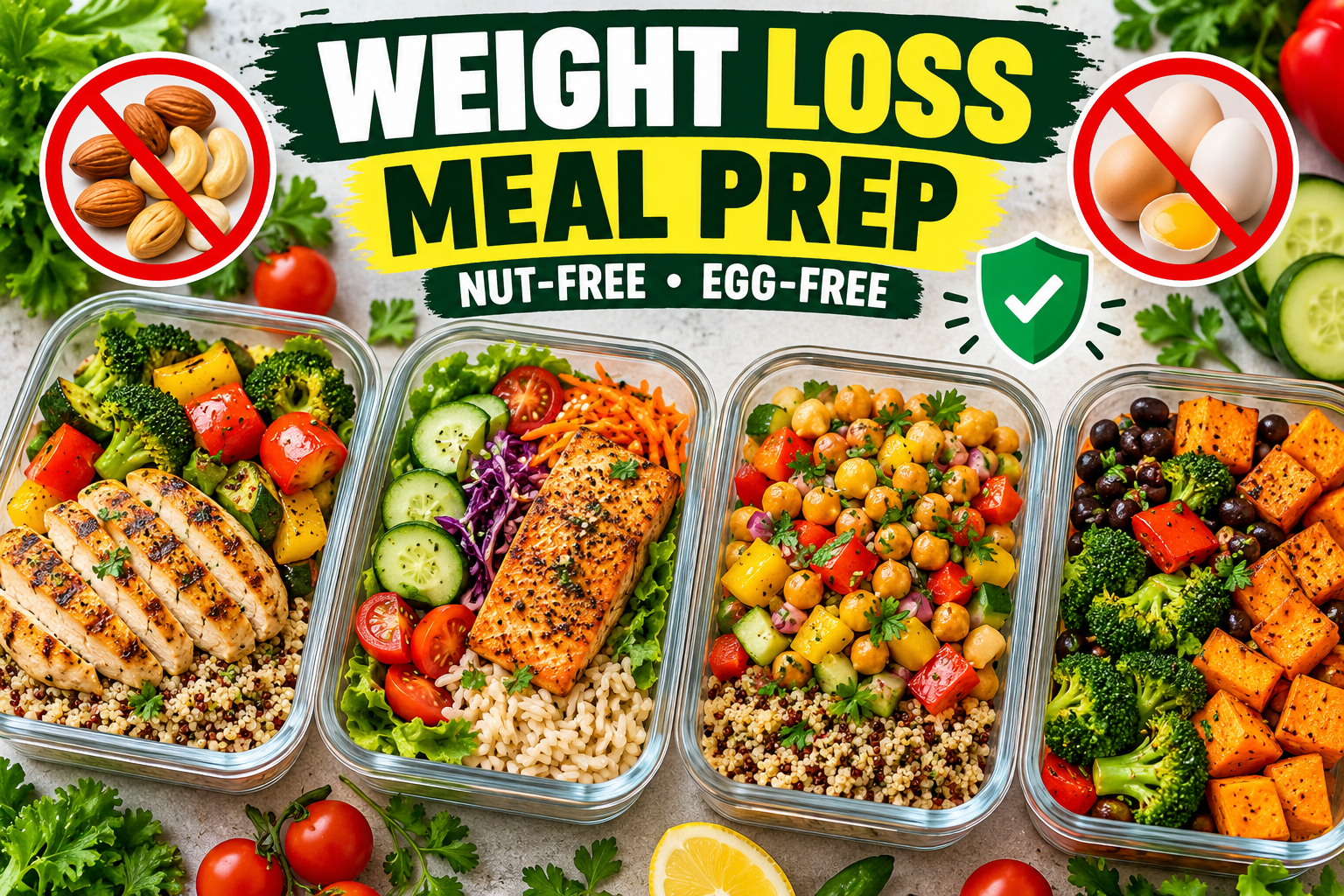

Meal prepping gets harder when food allergies enter the picture. Many popular weight-loss recipes contain eggs, peanut butter, almonds, cashews, or nut-based sauces.
Still, how to meal prep for weight loss when you are allergic to nuts and eggs does not need to become complicated.
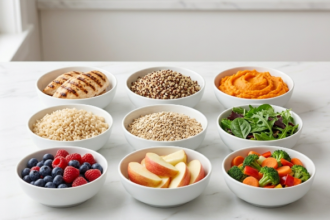
The goal is simple. Build meals around safe protein, vegetables, fruit, whole grains, legumes, and appropriate dairy or alternatives. Then control portions without turning every container into a tiny, unsatisfying meal.
Eggs and tree nuts are among the food groups responsible for many serious allergic reactions, according to the CDC. Therefore, allergy safety needs to come before calories, macros, or convenience.
Quick Meal Prep Formula
| Meal Component | Good Options |
|---|---|
| Protein | Chicken, turkey, fish, beans, lentils, tofu* |
| Vegetables | Broccoli, carrots, spinach, peppers, cucumber |
| Carbohydrates | Brown rice, oats, potatoes, quinoa |
| Fruit | Apples, berries, oranges, bananas |
| Fat | Olive oil, avocado, seeds* |
| Flavor | Lemon, herbs, garlic, spices, safe sauces |
Only use foods you personally tolerate. People can have allergies beyond nuts and eggs, and individual allergy plans differ.
Start With Allergy Safety, Not Calories
Weight loss matters only after your food is safe.
Check ingredient labels every time you buy packaged foods. Recipes and formulations can change. Sauces, breads, protein products, dressings, desserts, and processed foods can contain ingredients that are less obvious than whole eggs or visible nuts.
Cross-contact also deserves attention. If other people in your household eat your allergens, keep your preparation equipment and surfaces appropriately cleaned and follow the allergy-management advice given by your clinician.
CDC food-safety guidance recommends washing hands and food-preparation surfaces and keeping foods separated to reduce cross-contamination risks.
If you have experienced severe allergic reactions, follow the emergency plan provided by your healthcare professional. Do not experiment with foods that may contain your allergen simply because a recipe labels them “healthy.”
Build Every Meal Around Protein and Vegetables
One common meal-prep mistake is starting with rice, pasta, or bread and adding everything else afterward.
Try reversing that process.
Choose your safe protein first. Chicken breast, turkey, fish, lentils, chickpeas, beans, or tolerated soy foods can work well. Then add plenty of vegetables.
Vegetables generally provide relatively few calories while adding volume, fiber, vitamins, and minerals. USDA guidance specifically notes that replacing higher-calorie foods with lower-calorie vegetables may help reduce calorie intake.
Add a sensible portion of carbohydrates afterward.
Brown rice, quinoa, oats, potatoes, sweet potatoes, or whole-grain pasta can all fit into a weight-loss diet. You do not need to eliminate carbohydrates to lose weight.
A Simple Portion Method
You do not necessarily need to weigh every gram of food.
For a practical lunch or dinner container, think of the meal in three main sections:
- Half vegetables: broccoli, peppers, spinach, carrots, zucchini, cabbage.
- Protein section: chicken, fish, turkey, beans, lentils, or another safe protein.
- Carbohydrate section: rice, quinoa, potatoes, or whole grains.
- Small fat serving: olive oil, avocado, or tolerated seeds.
Your actual portions and calorie needs depend on factors such as body size, activity, age, and goals. A registered dietitian can provide individualized targets.
USDA meal-planning guidance also encourages variety across fruits, vegetables, grains, protein foods, and dairy or fortified alternatives while limiting excessive added sugars, saturated fat, and sodium.
Best Nut-Free and Egg-Free Breakfast Ideas
Breakfast often causes the most trouble because eggs and nuts appear in so many “fitness” recipes.
You still have plenty of alternatives.
Try oatmeal made with milk or a tolerated alternative. Add berries, banana, cinnamon, or tolerated seeds. Greek yogurt with fruit can work for people who tolerate dairy.
Another option is a breakfast bowl with potatoes, vegetables, and lean chicken or turkey. Breakfast does not have to contain traditional breakfast foods.
You could also prepare overnight oats. Just verify every packaged ingredient fits your personal allergy requirements.
For more protein, consider tolerated yogurt, cottage cheese, legumes, tofu, meat, fish, or another protein source appropriate for you.
Easy Lunch Meal Prep
A simple chicken-and-rice box works because it is easy to portion and customize.
Cook seasoned chicken separately. Prepare brown rice or quinoa. Roast broccoli, carrots, zucchini, or bell peppers.
Divide everything between containers.
Change the seasonings throughout the week rather than cooking completely different meals. Lemon and herbs can create one flavor profile. Tomato-based seasoning can create another.
This approach reduces preparation time without forcing you to eat an identical-tasting lunch every day.
A plant-based version can use lentils or chickpeas instead of chicken.
Nut-Free, Egg-Free Dinner Ideas
Dinner should remain filling enough to prevent constant evening snacking.
One option is baked salmon with potatoes and roasted vegetables.
Another is lean turkey with brown rice and peppers.
For a meat-free dinner, combine lentils with vegetables and quinoa. Beans with sweet potato, vegetables, and avocado can also create a substantial meal.
The basic framework stays consistent:
protein + vegetables + controlled carbohydrate portion + moderate fat.
That consistency makes weekly planning easier.
Example One-Day Weight-Loss Meal Prep
| Meal | Example |
|---|---|
| Breakfast | Oatmeal, berries and Greek yogurt |
| Snack | Apple and tolerated yogurt |
| Lunch | Grilled chicken, brown rice and broccoli |
| Snack | Carrots with an allergy-safe dip |
| Dinner | Salmon, roasted potato and mixed vegetables |
This is an example rather than a prescribed diet. Portions should match your nutritional needs.
People with multiple food allergies may need substitutions. Anyone with medical conditions affecting diet should seek personalized professional guidance.
Don’t Forget Hidden Calories
Healthy food can still supply significant calories.
Oil is a good example. Pouring it directly from the bottle makes portions difficult to judge. Measure what you use during meal preparation.
The same principle applies to dressings, cheese, avocado, sauces, and calorie-dense toppings.
You do not have to eliminate these foods. Instead, portion them deliberately.
Drinks matter too. Water, unsweetened tea, or other low-calorie drinks can make calorie management easier than frequently drinking sugary beverages.
Prep Once, Eat Safely
Cooking seven days of food and leaving every container in the refrigerator is not the best strategy.
USDA guidance says refrigerated leftovers generally should be used within three to four days. Food that will not be eaten within that window can be frozen instead.
Refrigerate prepared food promptly. USDA guidance says perishable leftovers should not remain at room temperature for more than two hours under ordinary conditions. Shallow containers help food cool more quickly.
A practical strategy is preparing several refrigerated meals and freezing later portions.
Label containers with the preparation date. That removes the guesswork by the end of the week.
A Simple Weekly Preparation Routine
Choose two proteins, two carbohydrate sources, and several vegetables.
For example, prepare chicken and lentils as your proteins. Cook brown rice and potatoes for carbohydrates. Roast broccoli, carrots, peppers, and zucchini.
Then mix those ingredients differently.
Monday might be chicken, rice, and broccoli. Tuesday could use lentils, potatoes, and mixed vegetables. Wednesday can return to chicken with potatoes and salad.
This system creates variety without requiring seven separate recipes.
USDA meal-planning advice similarly recommends planning meals ahead, checking foods already at home, making a grocery list, and preparing useful staples such as grains, vegetables, and beans when you have extra time.
Common Mistakes to Avoid
- Skipping label checks: Never assume a familiar packaged food remains safe.
- Eating tiny meals: Extreme restriction can make a plan difficult to sustain.
- Ignoring protein: Build meals around a reliable, tolerated protein source.
- Pouring fats freely: Portion oils, dressings, and other calorie-dense extras.
- Preparing too much: Refrigerate only what you’ll safely use and freeze later meals.
- Eating boring food: Rotate spices, vegetables, proteins, and safe sauces.
3-Day Nut-Free and Egg-Free Meal Prep Example
Day 1
Breakfast: Oatmeal with banana, berries, and cinnamon.
Lunch: Grilled chicken, brown rice, broccoli, and carrots.
Dinner: Baked salmon, potatoes, and green vegetables.
Day 2
Breakfast: Greek yogurt with oats and fruit, if dairy is tolerated.
Lunch: Lentil and quinoa bowl with cucumber, tomato, and greens.
Dinner: Turkey, roasted sweet potato, and mixed vegetables.
Day 3
Breakfast: Overnight oats with berries and an allergy-safe milk choice.
Lunch: Chickpea, rice, cucumber, tomato, and vegetable bowl.
Dinner: Chicken, quinoa, roasted broccoli, and peppers.
Frequently Asked Questions
Can I lose weight without eating eggs?
Yes. Eggs are one protein option, not a requirement for weight loss. You can build meals around other tolerated protein foods while maintaining an overall calorie intake appropriate for your goals.
What can I eat instead of nuts while losing weight?
Depending on your individual allergies, options may include avocado, olive oil, dairy foods, or tolerated seeds. Do not assume seeds are safe simply because they are not tree nuts. Follow your personal allergy guidance.
What can replace eggs at breakfast?
Oatmeal, yogurt, cottage cheese, tofu-based dishes, meat, beans, or other tolerated protein foods can replace eggs. Your breakfast does not need to resemble a traditional egg-based breakfast.
How many days should I meal prep at once?
For refrigerated cooked leftovers, USDA generally recommends a three-to-four-day window. Freeze additional portions if you prepare more food than you can eat safely during that period.
Is meal prep enough to cause weight loss?
Meal prep itself does not guarantee weight loss. Its value comes from making portions and food choices easier to plan. Your overall energy intake, nutrition, activity, sleep, health status, and consistency still matter.
Final Takeaway
Learning how to meal prep for weight loss when you are allergic to nuts and eggs starts with safety.
Remove your allergens first. Then keep the system simple.
Choose a tolerated protein. Add plenty of vegetables. Include a sensible serving of grains or potatoes. Measure calorie-dense extras. Prepare several meals together and freeze portions that exceed the safe refrigerator window.
Most importantly, do not turn weight loss into starvation.
A useful meal-prep routine should be safe, satisfying, nutritionally varied, and realistic enough to repeat next week.
Disclaimer: This article provides general educational and informational guidance. Food allergies can cause serious reactions, and individual nutritional needs vary. It does not replace personalized advice from a physician, allergist, or registered dietitian. Follow your healthcare professional’s allergy-management and emergency-treatment instructions.
Read more:How to Eat 3500 Calories a Day Clean With a Small Appetite