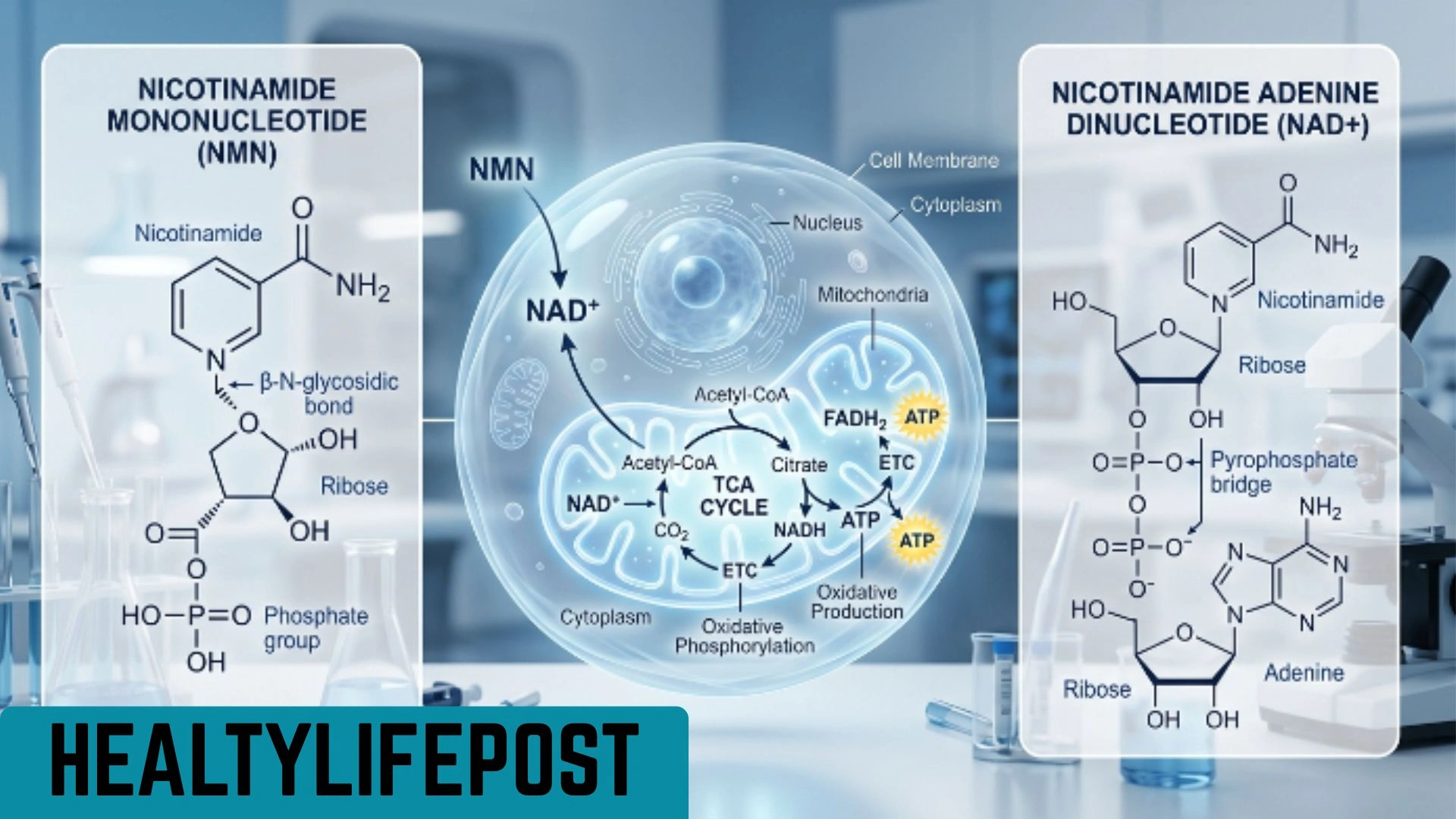

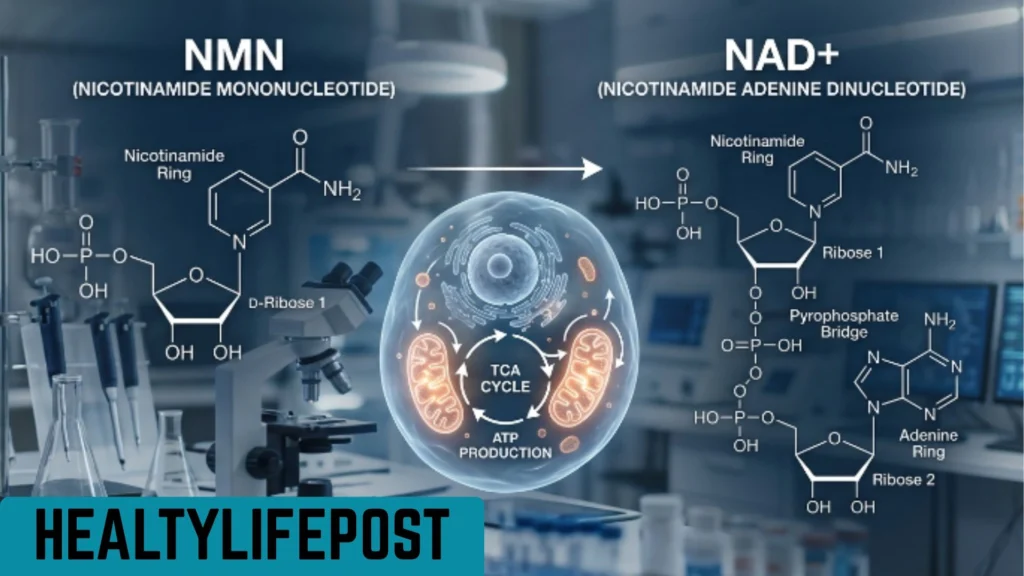
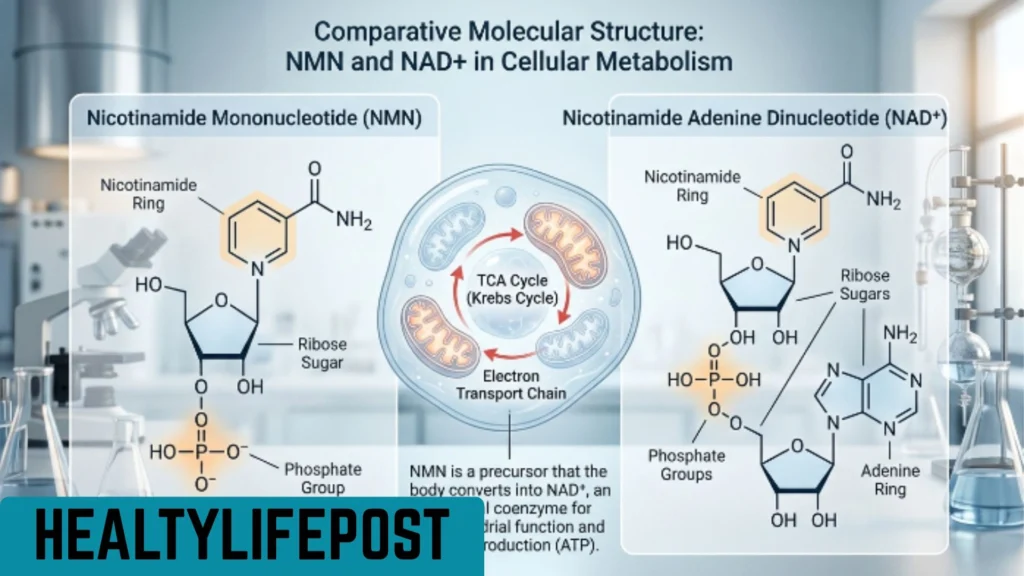
The main difference in NMN vs NAD is their biological role. NAD+ is a coenzyme cells use for metabolism, while NMN is a precursor the body can use to produce NAD+.
Human studies show that oral NMN can raise NAD-related biomarkers. However, a 2026 systematic review found that improvements in actual health outcomes remain inconsistent.
Source: https://pubmed.ncbi.nlm.nih.gov/41655607/
What Are NMN and NAD+?
NAD+, or nicotinamide adenine dinucleotide, participates in essential cellular reactions. It is involved in energy metabolism and serves as a substrate for enzymes involved in processes such as DNA repair and cellular signaling.
NMN, or nicotinamide mononucleotide, is different. It participates in pathways that produce NAD+, which explains why researchers investigate NMN as an oral NAD-boosting strategy.
NMN vs NAD at a Glance
| Feature | NMN | NAD+ |
|---|---|---|
| Type | NAD+ precursor | Cellular coenzyme |
| Main role | Helps form NAD+ | Supports cellular reactions |
| Oral human research | Several trials | More limited |
| Biomarker evidence | Supported | Depends on approach |
| Long-term benefits | Uncertain | Uncertain |
| IV wellness evidence | Not primary route | Very limited |
This distinction matters because raising a biological marker does not automatically prove a clinical benefit.
NMN vs NAD: What Human Studies Show
The strongest evidence for NMN involves its ability to influence NAD-related biomarkers.
A systematic review and meta-analysis published in Critical Reviews in Food Science and Nutrition evaluated 12 studies involving 513 participants. Researchers found that NMN significantly increased blood NAD levels. However, most clinically relevant glucose and lipid outcomes were not significantly different from control groups.
The review also identified methodological concerns. Seven studies had some risk-of-bias concerns, while five were rated at high risk of bias.
Source: https://pubmed.ncbi.nlm.nih.gov/39116016/
A larger 2026 systematic review evaluated 113 studies: 33 human intervention studies and 80 rodent studies. Oral NMN and nicotinamide riboside consistently affected NAD-related metabolites in humans, but metabolic, vascular, physical, and other health-related outcomes were heterogeneous and often absent or endpoint-specific.
Source: https://pubmed.ncbi.nlm.nih.gov/41655607/
Evidence Snapshot
| Evidence level | Current finding |
|---|---|
| Human evidence | NMN can increase NAD-related biomarkers |
| Mixed human evidence | Metabolic and physical benefits |
| Animal research | Broader metabolic and age-related effects |
| Not established | Longer human lifespan |
The most defensible conclusion is therefore narrow: NMN can affect NAD biology, but its long-term clinical importance remains uncertain.
Does NMN Improve Metabolic Health?
One notable randomized trial studied postmenopausal women with prediabetes who were overweight or obese. After 10 weeks, NMN improved muscle insulin sensitivity and insulin-signaling measurements compared with placebo.
The finding was clinically interesting but specific. Other measurements, including body composition, blood pressure, circulating glucose and insulin, and liver insulin sensitivity, did not show corresponding improvements.
Sources:
https://pubmed.ncbi.nlm.nih.gov/33888596/
https://www.nih.gov/news-events/nih-research-matters/supplement-improves-glucose-metabolism-womens-muscle
Broader analyses have been less convincing. A separate meta-analysis reviewed eight randomized controlled trials involving 342 middle-aged or older adults. NMN doses ranged from 250 to 2,000 mg daily for 14 days to 12 weeks.
The analysis found no significant overall benefit for fasting glucose, fasting insulin, HbA1c, insulin resistance, or lipid profiles.
Source: https://pubmed.ncbi.nlm.nih.gov/39531138/
This 342-participant figure and the earlier 513-participant figure come from different evidence reviews with different inclusion criteria, so they should not be treated as conflicting numbers.
Human Evidence vs Animal Research
Animal research has produced broader findings than human trials. Rodent studies have linked NAD+ augmentation with changes involving metabolism, mitochondrial function, inflammation, and physical function.
The 2026 systematic review found these positive effects appeared frequently in rodent models. Human clinical results were considerably more variable.
Source: https://pubmed.ncbi.nlm.nih.gov/41655607/
Animal studies are valuable for investigating biological mechanisms. However, results from mice or other laboratory models cannot establish that NMN prevents disease, reverses aging, or extends lifespan in humans.
Is Taking NAD+ Directly Better Than NMN?
There is currently no strong evidence showing that direct NAD+ administration produces better health outcomes than oral NMN.
This becomes particularly important with NAD+ IV therapy, which some clinics market for energy, recovery, wellness, or longevity.
The 2026 systematic review found no eligible clinical outcomes trials of intravenous or intramuscular NAD+ itself for anti-aging or wellness indications. One intravenous NAD+ pharmacokinetic pilot was identified, but it lacked eligible clinical outcomes.
Source: https://pubmed.ncbi.nlm.nih.gov/41655607/
Therefore, IV administration should not automatically be considered more effective simply because NAD+ is delivered directly.
NAD+ IV Therapy Has Additional Safety Concerns
Injectable NAD+ also introduces sterility and manufacturing considerations.
The FDA has warned compounders about using food-grade NAD+ ingredients to produce sterile injectable drugs. According to the agency, food-grade ingredients can carry microbial or endotoxin contamination risks when they are unsuitable for sterile compounding.
The FDA has also received adverse-event reports after injectable NAD+ products. Reported reactions included severe chills, shaking, vomiting, and fatigue. Some patients required medical treatment. The agency stated that these reactions were consistent with excessive endotoxin exposure.
This warning concerns injectable product quality and sterile compounding. It does not establish that NAD+ itself caused every reaction.
Source: https://www.fda.gov/drugs/human-drug-compounding/fda-reminds-compounders-use-ingredients-suitable-sterile-compounding
Is NMN Safe?
Short-term human studies generally suggest NMN is reasonably well tolerated. Long-term safety is much less certain.
One randomized, double-blind, placebo-controlled trial involved 31 healthy adults aged 20 to 65. Participants received 1,250 mg of NMN daily for four weeks. Researchers reported no severe adverse events or clinically important changes outside expected physiological variation.
The study was small and short. It was also funded by Mitsubishi Corporation Life Sciences, and several authors were company employees. Those disclosures do not invalidate the results, but they are relevant when evaluating the strength and independence of the evidence.
Source: https://pubmed.ncbi.nlm.nih.gov/36002548/
Importantly, 1,250 mg was a research dose, not a universal recommended dose. Clinical trials test interventions under controlled conditions and should not automatically become self-treatment instructions.
People taking prescription medications or living with medical conditions should discuss NMN with a qualified healthcare professional before starting supplementation. Extra caution is appropriate during pregnancy, breastfeeding, or cancer treatment because evidence in these populations is limited.
Which Has Better Evidence: NMN or NAD+?
For oral NAD boosting, NMN currently has clearer human research than direct NAD+ supplementation.
Clinical trials show that NMN can raise NAD-related biomarkers. Evidence for metabolic, physical, cardiovascular, and longevity outcomes remains much less consistent.
Direct NAD+, especially IV NAD+ marketed for general wellness or anti-aging, has an even thinner clinical outcomes evidence base.
A practical evidence summary is:
NMN → increased NAD-related biomarkers: Supported by human studies.
Increased NAD+ → consistent health improvements: Not established.
NMN or NAD+ → longer human lifespan: Not demonstrated in clinical trials.
That distinction provides a more evidence-based answer to NMN vs NAD than claims that either option is a proven longevity treatment.
FAQs
Is NMN the same as NAD+?
No. NMN is a precursor involved in producing NAD+. NAD+ is a coenzyme that participates directly in numerous cellular reactions.
Does NMN really increase NAD+?
Human trials and systematic reviews indicate that oral NMN can increase blood or cellular NAD-related biomarkers. Individual responses can vary.
Source: https://pubmed.ncbi.nlm.nih.gov/39116016/
Is NMN proven to slow aging?
No clinical evidence currently establishes that NMN extends human lifespan or broadly reverses aging. Research is stronger for changes in NAD biomarkers than long-term clinical outcomes.
Source: https://pubmed.ncbi.nlm.nih.gov/41655607/
Is NAD+ IV better than NMN?
Current evidence does not establish that NAD+ IV therapy is superior. A 2026 systematic review found no eligible IV or intramuscular NAD+ outcomes trials for anti-aging or wellness indications.
Source: https://pubmed.ncbi.nlm.nih.gov/41655607/
What is the recommended NMN dose?
There is no universally established medical dose for anti-aging or longevity. Studies have tested different doses and durations, but research protocols should not be interpreted as personal dosage recommendations.
Sources & Medical References
1. Gallagher C, Emmanuel OO. NAD+ supplementation for anti-aging and wellness: A PRISMA-guided systematic review of preclinical and clinical evidence. Ageing Research Reviews. 2026.
https://pubmed.ncbi.nlm.nih.gov/41655607/
2. Zhang J, Poon ETC, Wong SHS. Efficacy of oral nicotinamide mononucleotide supplementation on glucose and lipid metabolism for adults: a systematic review with meta-analysis on randomized controlled trials.
https://pubmed.ncbi.nlm.nih.gov/39116016/
3. Chen F, et al. Effects of Nicotinamide Mononucleotide on Glucose and Lipid Metabolism in Adults: A Systematic Review and Meta-analysis of Randomised Controlled Trials.
https://pubmed.ncbi.nlm.nih.gov/39531138/
4. Yoshino M, et al. Nicotinamide mononucleotide increases muscle insulin sensitivity in prediabetic women. Science. 2021.
https://pubmed.ncbi.nlm.nih.gov/33888596/
5. National Institutes of Health (NIH). Supplement improves glucose metabolism in women’s muscle.
https://www.nih.gov/news-events/nih-research-matters/supplement-improves-glucose-metabolism-womens-muscle
6. Fukamizu Y, et al. Safety evaluation of β-nicotinamide mononucleotide oral administration in healthy adult men and women. Scientific Reports. 2022.
https://pubmed.ncbi.nlm.nih.gov/36002548/
7. U.S. Food and Drug Administration (FDA). FDA reminds compounders to use ingredients suitable for sterile compounding.
https://www.fda.gov/drugs/human-drug-compounding/fda-reminds-compounders-use-ingredients-suitable-sterile-compounding
Medical Disclaimer
This article provides general, evidence-based health information and is not personal medical advice. It does not diagnose, treat, cure, or prevent any medical condition.
Speak with a qualified healthcare professional before starting NMN, NAD+ products, or other supplements, especially if you take prescription medicines, have an existing medical condition, are pregnant or breastfeeding, or are receiving medical treatment.