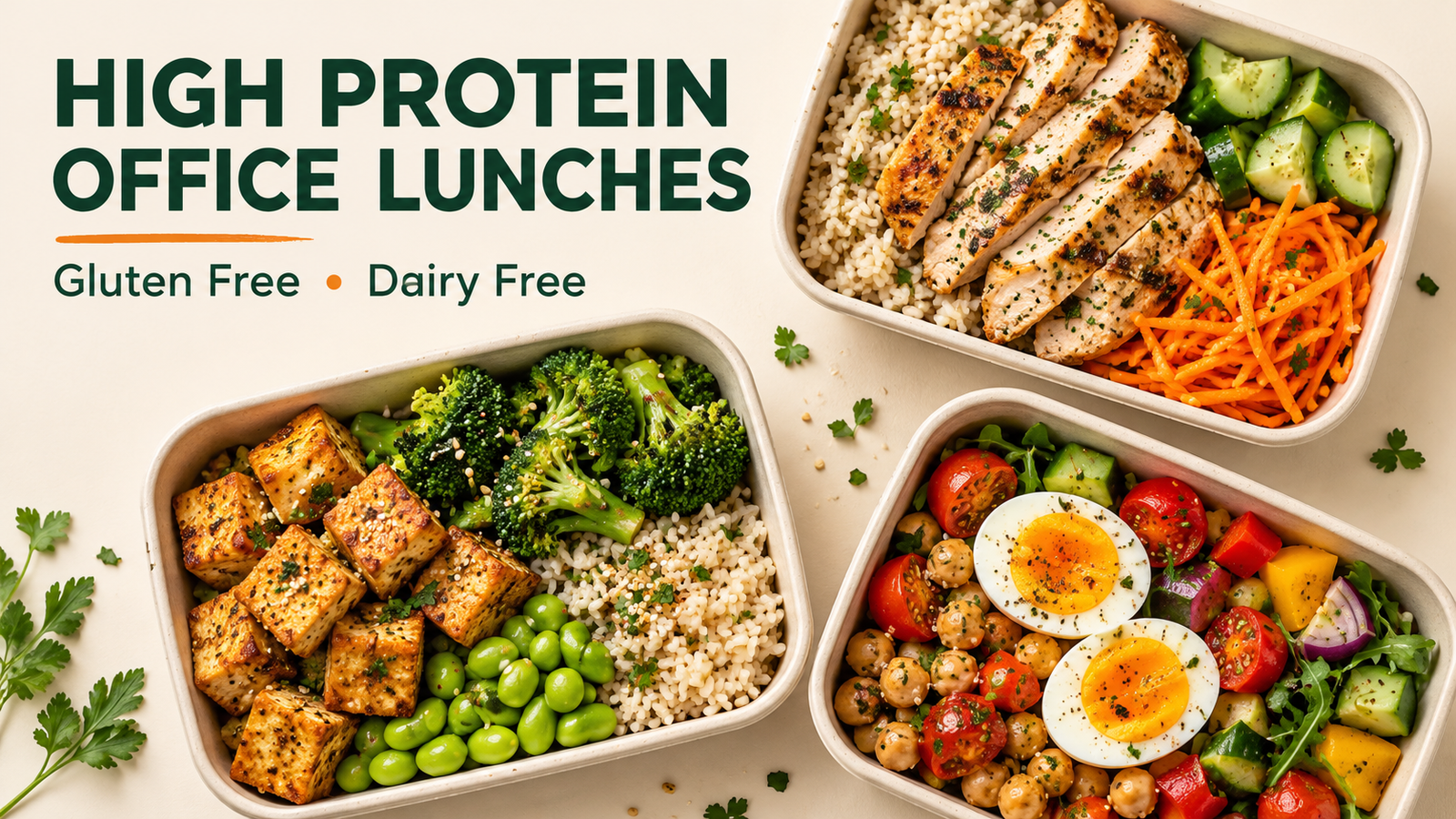

When you avoid gluten and dairy, the usual office sandwich or creamy pasta may not suit your needs. These gluten free dairy free high protein lunch ideas for office workers offer practical alternatives.
Explore seven meals for cold lunchboxes and microwave breaks, with portion estimates and storage advice. Start with protein, add vegetables and a suitable carbohydrate, then choose a dressing.
Build Your Lunch Around a Protein Source
Build lunch around chicken, fish, eggs, tofu, or pulses. Small garnishes alone may provide little protein.
These estimates cover the main ingredients, not the whole meal. Brands and raw, cooked, or drained weights affect calculations; check your label.
| Lunch idea | Main protein portion | Approximate protein from that portion |
|---|---|---|
| Chicken rice bowl | 95g cooked, grilled chicken breast | 30g |
| Salmon potato salad | 125g salmon | 24g |
| Tofu vegetable bowl | 125g tofu | 17g |
| Egg and chickpea box | 2 medium eggs + 120g drained canned chickpeas | 22g |
| Lentil and seed salad | 234g canned lentils + 30g mixed sunflower and pumpkin seeds | 23g |
These NHS estimates illustrate portions, not a universal lunch target. CUH
Seven Lunch Ideas You Can Pack for Work
1. Lemon Chicken Rice Bowl
Combine cooked chicken, rice, cucumber, carrot, and spinach. Pack lemon juice and olive oil separately.
Use plain chicken or check its marinade, and keep the bowl chilled until lunchtime.
2. Salmon and Potato Salad
Pair cooked salmon with boiled potatoes, green beans, and parsley. Choose lemon and olive oil instead of butter or creamy dressing.
Pack this as a cold lunch and keep it refrigerated.
3. Tofu and Vegetable Rice Bowl
Bake firm tofu with oil, garlic, and ginger, then add rice and broccoli. Include edamame for extra protein.
Choose soy sauce or tamari specifically labelled gluten free, and check tofu’s protein label.
4. Egg and Chickpea Lunchbox
Pack two boiled eggs with chickpeas, cucumber, tomatoes, and gluten-free crackers. Add a suitable lemon dressing.
Keep crackers separate for crunch, while chilling the eggs and chickpea mixture until you eat.
5. Lentil and Seed Salad
Mix drained canned lentils with roasted peppers, carrot, parsley, and lemon juice. Add seeds before eating.
Use a substantial lentil portion, and check packaged seasonings for gluten or milk ingredients.
6. Chicken and Black Bean Corn Wraps
Fill gluten-free corn tortillas with chicken, black beans, lettuce, and avocado. Pack salsa separately.
Check tortilla and seasoning labels, since some corn tortillas contain wheat; skip cheese and sour cream.
7. Turkey and Bean Chilli
Cook turkey mince with kidney beans, tomatoes, onion, and spices, then serve with rice. Check stock and seasoning blends.
Freeze portions for later workdays and reheat thoroughly in a microwave-safe container.
Check Labels Before Calling a Lunch Gluten Free and Dairy Free
For coeliac disease, shared utensils and crumbs matter alongside ingredient checks. Gluten-free food can pick up gluten during preparation. NHS
Check sauces, stock, and seasoned meats for wheat, barley, and rye. These grains naturally contain gluten. FDA
Check for milk, whey, and casein. Lactose-free dairy retains milk proteins and is unsuitable for milk allergy. CUH
| Common claim | Accurate answer |
|---|---|
| Eggs count as dairy | Eggs are separate from milk products. |
| Lactose-free milk is dairy free | It remains a milk product. |
| Any corn tortilla is gluten free | Check for added wheat and the product’s label. |
| Gluten-free food cannot suffer cross-contact | Shared preparation can introduce gluten. |
| Plant-based automatically means gluten free | Check ingredients and gluten-free suitability separately. |
Prepare Lunches Without Creating a Storage Problem
Prepare two proteins and a base, then vary vegetables and dressings. For example, use chicken and lentils with rice, changing the vegetables across different meals.
Cool food promptly in shallow containers. Use most cooked leftovers within three to four days; freeze later portions. Food Safety and Inspection Service
Carry perishable lunches in an insulated bag with at least two cold sources. Put them in the office fridge when you arrive, and keep refrigerated food at 40°F/4°C or below. USDA
Do not leave perishable food at room temperature for more than two hours, or one hour above 90°F/32°C. When reheating leftovers, check that the food reaches 165°F/74°C throughout. Food Safety and Inspection Service
Five Useful Facts for Better Lunch Planning
- Eggs provide protein without being dairy.
- Tofu’s protein content varies, making label checks useful.
- Wheat-free does not necessarily mean gluten free; barley and rye also contain gluten.
- Lactose-free dairy retains milk proteins.
- Gluten-free ingredients still need protection from cross-contact.
Check the whole meal’s ingredients instead of relying on one claim on the packet. whittington.nhs.uk
Frequently Asked Questions
1. What are easy gluten free dairy free high protein lunches?
Chicken rice bowls, egg and chickpea boxes, and tofu vegetable bowls are useful starting points. Choose plain ingredients, then check sauces and seasonings separately. A complete lunch should also include vegetables and a suitable carbohydrate, rather than relying on protein alone. Pick a meal that fits the refrigeration and reheating options at your workplace.
2. How much protein should an office lunch contain?
There is no single lunch requirement for every office worker. Your daily needs, appetite, activity, and other meals affect a suitable portion. Use the table as a planning aid, then check labels to estimate your own meal. If a clinician has given you a protein target or restriction, build your lunches around that advice.
3. Can I make these lunches without meat?
Yes. Tofu, lentils, chickpeas, beans, edamame, nuts, and seeds provide plant-based options. Combining ingredients can increase the total protein in your lunch. For example, add seeds to a substantial lentil salad or edamame to a tofu bowl. Check portion sizes and labels rather than assuming every vegetarian meal contains a large amount of protein. CUH
4. Are eggs suitable for a dairy-free lunch?
Yes, eggs are not dairy products. Dairy refers to milk and foods made from milk, such as cheese and yoghurt. However, an egg dish can contain dairy if someone cooks it with butter or adds milk. Pack plain boiled eggs or prepare an omelette with suitable oil. Eggs remain unsuitable for someone with an egg allergy. FDA
5. Is lactose-free yoghurt suitable for dairy-free meal prep?
Lactose-free dairy yoghurt still contains milk proteins, so it is not dairy free. Choose a suitable plant-based alternative if you need to avoid dairy. However, compare protein amounts because different products can provide very different amounts. Read the ingredients and allergen information too, particularly if milk allergy rather than lactose intolerance drives your dietary choice. CUH
6. What can I pack if my office has no microwave?
Choose chilled meals such as chicken rice salad, lentil salad, or an egg lunchbox. Cook ingredients properly before packing, cool them promptly, and keep them refrigerated. The absence of a microwave does not remove the need for cold storage. Use an insulated lunch bag with cold packs, especially when you cannot access an office fridge. USDA
7. Can I prepare five work lunches on Sunday?
You can prepare ingredients and portions ahead, but avoid refrigerating every cooked meal until Friday. USDA guidance generally allows three to four days for cooked leftovers under proper refrigeration. Freeze later portions promptly, then thaw them safely in the fridge. Pack fresh vegetables and dressing separately when this helps maintain the texture you prefer. ask.fsis.usda.gov
8. How do I calculate protein more accurately?
Start with the food label’s protein amount and serving weight. If tofu contains 12g protein per 100g, a 150g portion supplies 18g before adding other ingredients. Repeat the calculation for each component and add the results. Match cooked, raw, or drained weights correctly; these differences can make an otherwise careful calculation misleading.
9. How can I avoid gluten cross-contact at work?
Pack lunch in a closed container and bring clean utensils. Avoid shared spreads or serving tools that may carry bread crumbs. Wash preparation surfaces and keep your food separate from gluten-containing ingredients. If you have coeliac disease, these handling steps matter alongside choosing suitable products; a gluten-free ingredient list alone does not prevent contamination. NHS
10. What are affordable lunch ingredients for this diet?
Eggs, canned lentils, chickpeas, beans, rice, and frozen vegetables are practical ingredients to compare at your local shop. Prices vary, so check unit prices and portion costs. Use beans alongside chicken or eggs when you want variety. Keep the plan manageable by using the same base ingredients with different seasonings across several meals.
A Lunch Routine You Can Keep
Choose meals you enjoy, check ingredients, and match portions to your needs. A manageable routine and safe storage make office lunches easier.
Research Transparency Note: This guide draws on publicly available FDA, NHS, and USDA guidance. Guidance and product formulations can change. Protein figures are estimates; recipes have not undergone laboratory analysis. No unverifiable information or personal testing experience is presented as confirmed fact.
Read more:Packing a healthy lunch shouldn’t feel like another full-time job.