
A chemo port can make treatment easier and reduce repeated needle sticks.
But infection around the incision or port needs quick medical attention.
Important: This article provides general health information. During chemotherapy, suspected infection should be reported to your oncology team promptly.
At a Glance
| Key Point | What You Should Know |
|---|---|
| Topic | Signs of infection around a chemo port incision |
| Main concern | Local infection or bloodstream infection |
| Common skin signs | Redness, swelling, warmth, pain, or drainage |
| General warning sign | Fever or chills |
| Higher-risk period | When chemotherapy lowers white blood cells |
| Urgent fever threshold | 100.4°F (38°C) or higher |
| Best action | Contact your cancer care team immediately |
| Diagnosis | Requires assessment by a healthcare professional |
What Is a Chemo Port Incision?
An implanted chemo port sits beneath the skin. It connects to a large blood vessel. Healthcare professionals access it through the skin with a special needle. Ports commonly support chemotherapy and other treatments.
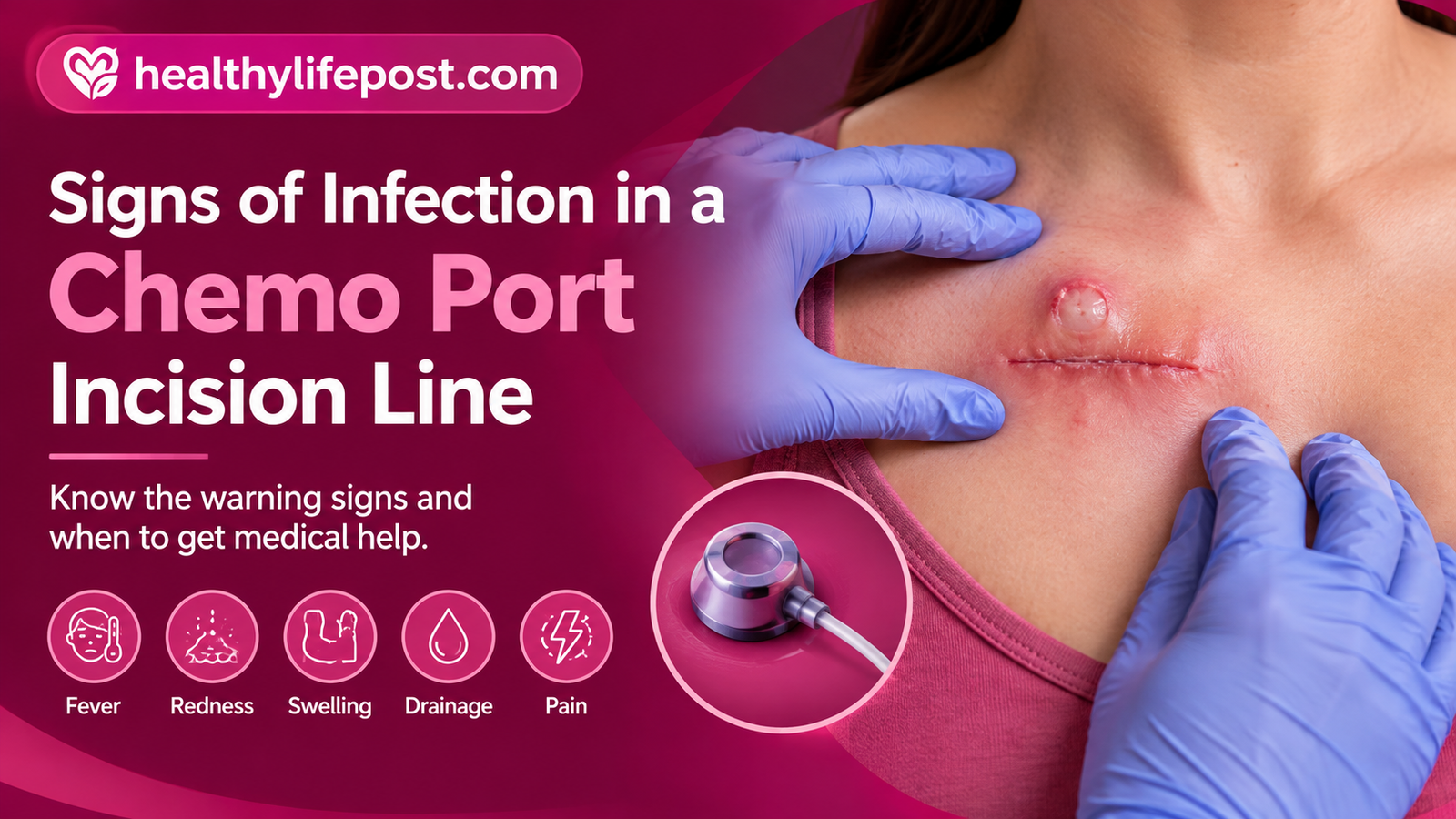
The incision usually heals after port placement. Some tenderness can occur during early healing. However, worsening redness, pain, swelling, or drainage deserves medical attention. The CDC specifically lists ports among areas where infection can cause redness, soreness, or swelling.
Signs of Infection in a Chemo Port Incision Line
Several changes can indicate infection. One sign alone does not confirm an infection. A healthcare professional should evaluate concerning changes.
1. Increasing Redness
Mild redness can occur after surgery. Increasing redness is more concerning.
Watch for redness that:
- Spreads beyond the incision.
- Becomes increasingly noticeable.
- Appears with swelling or warmth.
- Occurs with worsening pain.
The CDC recommends reporting redness, soreness, or swelling around ports.
2. Swelling or Warmth
Infection may cause swelling around the incision. The surrounding skin may also feel warmer.
CDC guidance for implanted ports recommends checking for swelling, redness, drainage, pain, or tenderness.
3. Increasing Pain or Tenderness
Some soreness may follow port placement. Pain should generally improve as healing progresses.
New or worsening pain deserves attention. MD Anderson identifies pain and inflammation around a chemo port as possible infection signs.
4. Fluid, Pus, or Unusual Drainage
Drainage from an incision can indicate a wound problem. Pus or cloudy fluid is especially concerning.
Do not squeeze the incision. Do not attempt to drain it yourself. Contact your oncology or surgical team promptly.
5. Fever or Chills
Fever can be particularly important during chemotherapy. The CDC states that fever may sometimes be the only infection sign.
The CDC recommends immediate medical contact for a temperature of 100.4°F (38°C) or higher during chemotherapy.
Why Port Infections Need Fast Attention
Chemotherapy can reduce infection-fighting white blood cells. This condition is called neutropenia. It can make infections harder for the body to control.
A port infection may remain near the skin. However, infections involving central lines can also enter the bloodstream. Bloodstream infections can become serious quickly.
This creates an important distinction. A small-looking wound problem should not be ignored during chemotherapy.
Local Signs Versus Whole-Body Warning Signs
Understanding the difference can help you act quickly.
| Local Changes | Whole-Body Changes |
|---|---|
| Redness around the incision | Fever |
| Swelling | Chills |
| Warmth | Sweating |
| Increasing tenderness | Feeling unusually weak |
| Drainage | New or worsening illness |
| Pain around the port | Shortness of breath |
These symptoms can have different causes. Only a healthcare professional can determine whether infection is present.
When Should You Contact Your Cancer Team?
Do not wait for several symptoms to appear. During chemotherapy, infection can become serious quickly.
Contact your healthcare team immediately if you notice:
- A temperature of 100.4°F (38°C) or higher.
- New redness around the port.
- Increasing swelling or pain.
- Drainage from the incision.
- Chills or unusual sweating.
- Feeling suddenly unwell.
The CDC specifically advises chemotherapy patients to contact their doctor immediately for suspected infection.
Fever Is Especially Important
Do not assume fever is simply a chemotherapy side effect. During chemotherapy, fever can represent an infection. The CDC considers chemotherapy-associated fever a medical emergency.
Keep your oncology team’s emergency number available. If you need emergency care, tell staff that you are receiving chemotherapy.
What About Normal Incision Healing?
Not every change means infection. Fresh surgical wounds can remain tender initially. Some discomfort can therefore be part of normal healing.
The important issue is the pattern over time. Increasing redness, worsening pain, new drainage, or systemic symptoms are more concerning than stable mild tenderness.
Your surgeon or oncology team knows your procedure details. Their instructions should take priority over general online information.
How Can You Reduce Infection Risk?
Good hand hygiene is one important precaution. The CDC recommends cleaning hands before and after caring for a port or catheter.
Other practical steps include:
- Follow your port-care instructions carefully.
- Keep the area clean as instructed.
- Avoid touching the incision unnecessarily.
- Do not apply creams without medical advice.
- Report unusual changes promptly.
- Follow dressing instructions from your care team.
Never change port-care procedures based only on online advice.
An Often-Missed Point: Infection May Not Look Dramatic
Chemotherapy can weaken the body’s infection response. Therefore, infection symptoms may not always look severe. Fever can sometimes be the only obvious warning.
That makes small changes worth reporting. A slightly different appearance may matter more during periods of low white blood cell counts.
The CDC notes that white blood cell counts often reach their lowest point several days after chemotherapy. The exact timing varies by treatment.
Can a Port Infection Be Treated?
Treatment depends on the infection’s location and severity. Doctors may examine the port, incision, and surrounding tissue. They may also order tests when bloodstream infection is suspected.
Some infected ports may require antibiotics. In certain cases, healthcare professionals may need to remove the port. MD Anderson notes that an infected port may need removal before replacement later.
Treatment decisions should always come from the patient’s medical team.
Final Takeaway
Signs of infection in a chemo port incision line include redness, swelling, warmth, pain, drainage, fever, and chills. These signs should not be ignored during chemotherapy.
The most important warning is a fever of 100.4°F (38°C) or higher. Contact your oncology team immediately rather than waiting for symptoms to worsen.
Medical Sources
- CDC: Infection Signs During Chemotherapy
- CDC: Chemotherapy and Infection Prevention
- CDC: Fever During Chemotherapy
- CDC: Implanted Port Infection Control
- MD Anderson: Chemo Port Risks and Infection Signs
Read more :How Long After Chemo Port Removal Can You Lift Weights?