
Building muscle requires more than eating everything in sight. Adult athletes need enough calories to support training, recovery, and muscle growth while still getting quality carbohydrates, fats, protein, fiber, vitamins, and minerals.
A 3500 calorie high protein clean bulk menu can suit some highly active athletes whose maintenance needs make 3,500 calories an appropriate surplus. It is not a universal calorie target. Body size, sex, sport, training volume, goals, and metabolism can change energy requirements significantly.
The practical goal is simple: eat enough to support gradual weight gain while keeping protein high and food quality strong.
What Should a 3,500-Calorie Clean Bulk Look Like?
A clean bulk is controlled weight gain rather than uncontrolled overeating.
Protein supplies amino acids needed for muscle repair. Carbohydrates provide fuel for demanding training. Dietary fats support overall health and help make a high-calorie diet easier to sustain.
For athletes trying to build muscle, a practical protein target is often around 1.6–2.2 grams per kilogram of body weight per day. Individual requirements can vary.
A 3,500-calorie plan might therefore look roughly like this:
| Nutrition Target | Approximate Daily Amount |
|---|---|
| Calories | ~3,500 kcal |
| Protein | ~190–220 g |
| Carbohydrates | ~430–480 g |
| Fat | ~90–110 g |
| Meals/Snacks | 5–6 |
These numbers are targets, not medical prescriptions. Exact totals depend on brands, serving sizes, preparation methods, and the athlete.
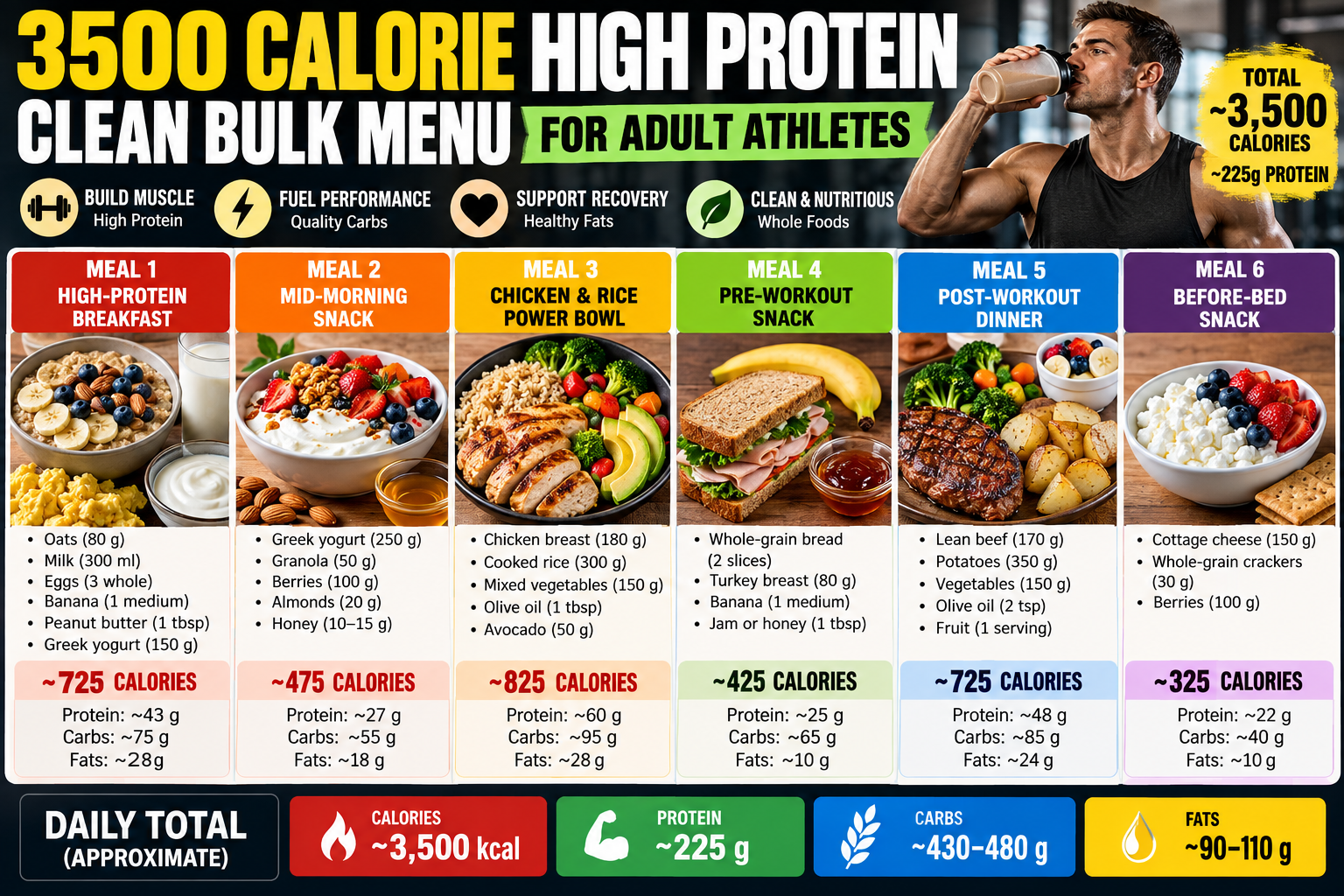
3500 Calorie High Protein Clean Bulk Menu
Here is a practical one-day example built around familiar whole and minimally processed foods.
Meal 1: High-Protein Breakfast
Start with a substantial breakfast after the overnight fast.
Breakfast:
- Oats: 80 g
- Milk: 300 ml
- Eggs: 3 whole
- Banana: 1 medium
- Peanut butter: 1 tablespoon
- Greek yogurt: 150 g
This meal combines protein with slow-digesting and faster carbohydrates. Oats and fruit also provide fiber and micronutrients.
Approximate energy: 700–750 calories
Protein: roughly 40–45 grams
Athletes training early can reduce the fat immediately before training and move those calories to a later meal if that feels better during exercise.
Meal 2: Mid-Morning Fuel
A clean bulk becomes easier when calories are distributed throughout the day.
Try:
- Greek yogurt: 250 g
- Granola: 50 g
- Berries: 100 g
- Almonds: 20 g
- Honey: 10–15 g
Approximate energy: 450–500 calories
Protein: roughly 25–30 grams
This meal is compact enough for school, university, or work. Greek yogurt contributes protein while fruit and granola add carbohydrates.
Meal 3: Chicken and Rice Power Bowl
Lunch can carry a large share of daily carbohydrates.
Use:
- Chicken breast: 180 g cooked
- Cooked rice: 300 g
- Mixed vegetables: 150 g
- Olive oil: 1 tablespoon
- Avocado: 50 g
Approximate energy: 800–850 calories
Protein: approximately 60 grams
Rice provides easily usable carbohydrate for athletes. Chicken offers a concentrated protein source. Vegetables add fiber and micronutrients without making the meal excessively heavy.
Olive oil and avocado raise calories without requiring huge portions.
Meal 4: Pre-Workout Snack
Training nutrition should be practical.
Try:
- Whole-grain bread: 2 slices
- Turkey breast: 80 g
- Banana: 1
- Jam or honey: 1 tablespoon
Approximate energy: 400–450 calories
Protein: around 25 grams
Carbohydrates dominate this meal because they help provide training fuel.
Keep the meal relatively low in heavy fats if eating close to your session. Large amounts of fat and fiber immediately before intense exercise can cause digestive discomfort for some athletes.
Meal 5: Post-Workout Beef and Potato Dinner
Dinner can restore energy while supplying another substantial protein serving.
Use:
- Lean beef: 170 g cooked
- Potatoes: 350 g
- Vegetables: 150 g
- Olive oil: 2 teaspoons
- Fruit: 1 serving
Approximate energy: 700–750 calories
Protein: approximately 45–50 grams
Lean beef supplies protein, iron, zinc, and vitamin B12. Potatoes provide carbohydrate and potassium.
Chicken, fish, turkey, tofu, or another protein source can replace beef.
Meal 6: Before-Bed Protein Snack
Finish the day with something simple.
Try:
- Cottage cheese: 150 g
- Whole-grain crackers: 30 g
- Berries: 100 g
Approximate energy: 300–350 calories
Protein: roughly 20–25 grams
Cottage cheese is protein-dense and convenient. Greek yogurt is an easy alternative.
Full 3,500-Calorie Menu at a Glance
| Meal | Example | Calories | Protein |
|---|---|---|---|
| Breakfast | Oats, eggs, milk, yogurt, banana | ~725 | ~43 g |
| Snack | Yogurt, granola, berries, almonds | ~475 | ~27 g |
| Lunch | Chicken, rice, vegetables, avocado | ~825 | ~60 g |
| Pre-workout | Turkey sandwich and banana | ~425 | ~25 g |
| Dinner | Beef, potatoes, vegetables, fruit | ~725 | ~48 g |
| Evening snack | Cottage cheese, crackers, berries | ~325 | ~22 g |
| Daily Total | — | ~3,500 | ~225 g |
Actual nutrition can differ considerably between products and portions. Weighing foods and checking their nutrition labels gives a more accurate total.
Why Carbohydrates Matter During a Clean Bulk
Protein gets most of the attention in muscle-building diets. Athletes should not overlook carbohydrates.
Hard training uses stored carbohydrate, particularly during repeated high-intensity activity.
Rice, oats, potatoes, bread, pasta, fruit, and other carbohydrate-rich foods can therefore form a substantial part of an athlete’s bulking menu.
More carbohydrate can also make hitting 3,500 calories easier without relying entirely on dietary fat.
Don’t Push Protein Unnecessarily High
More protein is not automatically better.
Once adequate protein is consumed, adding huge amounts can displace carbohydrates and fats that also serve important functions.
For example, an 85 kg athlete consuming 1.8 g/kg gets approximately 153 grams of protein daily.
At 2.0 g/kg, that becomes 170 grams.
This shows why a fixed 200+ gram target isn’t necessary for every athlete.
Protein requirements should reflect body weight and training rather than an arbitrary bodybuilding number.
Best Foods for a Clean Bulk
You do not need a complicated food list.
Protein choices: chicken, lean beef, eggs, fish, dairy, turkey, tofu, tempeh, beans and lentils.
Carbohydrate choices: oats, rice, potatoes, pasta, bread, fruit, cereals and legumes.
Fat choices: olive oil, nuts, seeds, avocado and nut butter.
Produce choices: berries, bananas, oranges, leafy vegetables, carrots, peppers and other varied fruits and vegetables.
Food variety makes a high-calorie diet easier to maintain and improves micronutrient coverage.
Easy Food Swaps Without Ruining the Plan
Eating identical foods every day gets boring.
Swap chicken for turkey or fish. Replace rice with pasta, couscous, potatoes, or bread. Greek yogurt can replace cottage cheese.
Vegetarian athletes can use tofu, tempeh, legumes, dairy, eggs, soy foods, and other suitable protein sources.
The exact food matters less than maintaining appropriate daily calories, protein, carbohydrates, fats, and overall diet quality.
How to Know Whether 3,500 Calories Is Working
The scale provides useful feedback, but don’t judge progress from one morning.
Track body weight under similar conditions several times per week. Look at the longer-term average.
Also monitor:
- Gym performance: strength and training quality
- Body weight: gradual rather than uncontrolled gain
- Recovery: soreness and readiness between sessions
- Digestion: appetite, comfort, and bowel habits
If weight is rising much faster than intended, the surplus may be excessive. If weight and performance remain unchanged for several weeks, calorie intake may need adjustment.
Common Clean-Bulking Mistakes
A “clean” diet can still be poorly designed.
Some athletes choose foods so filling that consuming enough energy becomes difficult. Others turn bulking into an excuse for constant fast food.
Another mistake is chasing protein while neglecting carbohydrates.
Hydration matters too. Athletes lose water and electrolytes through sweat. Needs rise with exercise duration, intensity, temperature, and individual sweat rate.
Sleep should also be treated as part of the plan. Food cannot compensate for consistently inadequate recovery.
FAQs
Is 3,500 calories enough to bulk?
It can be. A calorie surplus depends on the athlete’s maintenance energy needs. For one athlete, 3,500 calories could produce weight gain. For another, it may be maintenance or even insufficient during very heavy training.
How much protein should an adult athlete eat?
Needs vary by sport and goal. Resistance-trained athletes commonly use approximately 1.6–2.2 g/kg/day during muscle-building phases. Extremely high protein intake is not automatically more effective.
Can I clean bulk without protein powder?
Yes. Chicken, eggs, fish, meat, dairy, soy, legumes, and other foods can provide plenty of protein. Protein powder is mainly a convenient option.
Is rice good for clean bulking?
Yes. Rice provides carbohydrate and is easy to combine with lean protein, vegetables, and healthy fats. Its relatively low volume can also help athletes with high calorie requirements.
Should athletes eat six meals every day?
No. Meal frequency is flexible. Some athletes prefer four larger meals. Others find five or six smaller meals easier when consuming 3,500 calories. Total daily nutrition matters more.
Final Takeaway
A 3500 calorie high protein clean bulk menu for adult athletes should do more than hit a calorie number. It should support training, recovery, health, and sustainable muscle gain.
Build the diet around quality protein, plenty of carbohydrates, healthy fats, fruits, vegetables, and adequate fluids. Then adjust portions using real changes in body weight, performance, appetite, and training demands.
- Build gradually: Avoid uncontrolled calorie surpluses.
- Fuel performance: Keep carbohydrates high enough for training.
- Spread protein: Include quality protein across the day.
- Adjust individually: 3,500 calories isn’t right for everyone.
Disclaimer: This article provides general educational and informational nutrition guidance. Calorie and nutrient requirements vary between athletes. People with medical conditions, food allergies, digestive problems, or specialized performance goals should seek individualized advice from a qualified sports dietitian or healthcare professional.
Read more:Anti Inflammatory Breakfast Recipes With No Nightshades