
Breakfast should feel manageable, even with a long avoidance list. You can skip tomatoes, peppers, and potatoes without losing variety.
These anti inflammatory breakfast recipes use familiar, affordable ingredients. Expect warm oats, savory eggs, creamy yogurt, and simple pancakes. Each recipe includes quantities, cooking steps, and useful adjustments.
Searching for “anti inflammatory gut healing breakfast recipes with no nightshades” often starts with uncomfortable mornings. However, no breakfast can promise to repair your gut. These meals offer practical nutrition, rather than a treatment claim.
The recipes follow principles common to Mediterranean-style eating. That means plant variety, whole grains, and unsaturated fats. Research supports this broader pattern more than individual “superfood” promises. [Insert Harvard Nutrition Source Reference Link Here] The Nutrition Source
First, Check What You Actually Need to Avoid
Nightshades include tomatoes, eggplant, ordinary potatoes, and peppers. Paprika, cayenne, and many hot sauces also belong here. Sweet potatoes come from a different plant family. Therefore, they can replace ordinary potatoes in these recipes. [Insert Cleveland Clinic Reference Link Here] health.clevelandclinic.org
Check spice blends, breakfast sausages, and prepared sauces carefully. Their ingredient lists may include chili or tomato powder. For strict avoidance, check packaged flours and breads too.
Nightshade avoidance is a preference or individualized restriction, not a universal rule. Evidence does not establish that everyone benefits from excluding them. The Arthritis Foundation describes limited and conflicting evidence. [Insert Arthritis Foundation Reference Link Here] Arthritis Foundation
| Breakfast ingredient | Nightshade-free alternative |
|---|---|
| Potato hash | Sweet potato or diced squash |
| Tomato salsa | Chopped cucumber with dill |
| Paprika or cayenne | Ginger, turmeric, or dried herbs |
| Bell peppers | Zucchini or carrots |
| Ketchup | Plain yogurt with chopped herbs |
5 Anti Inflammatory Breakfast Recipes Without Nightshades
Choose according to your appetite, schedule, and ingredient tolerance. The times below are approximate. All recipes serve one unless stated otherwise.
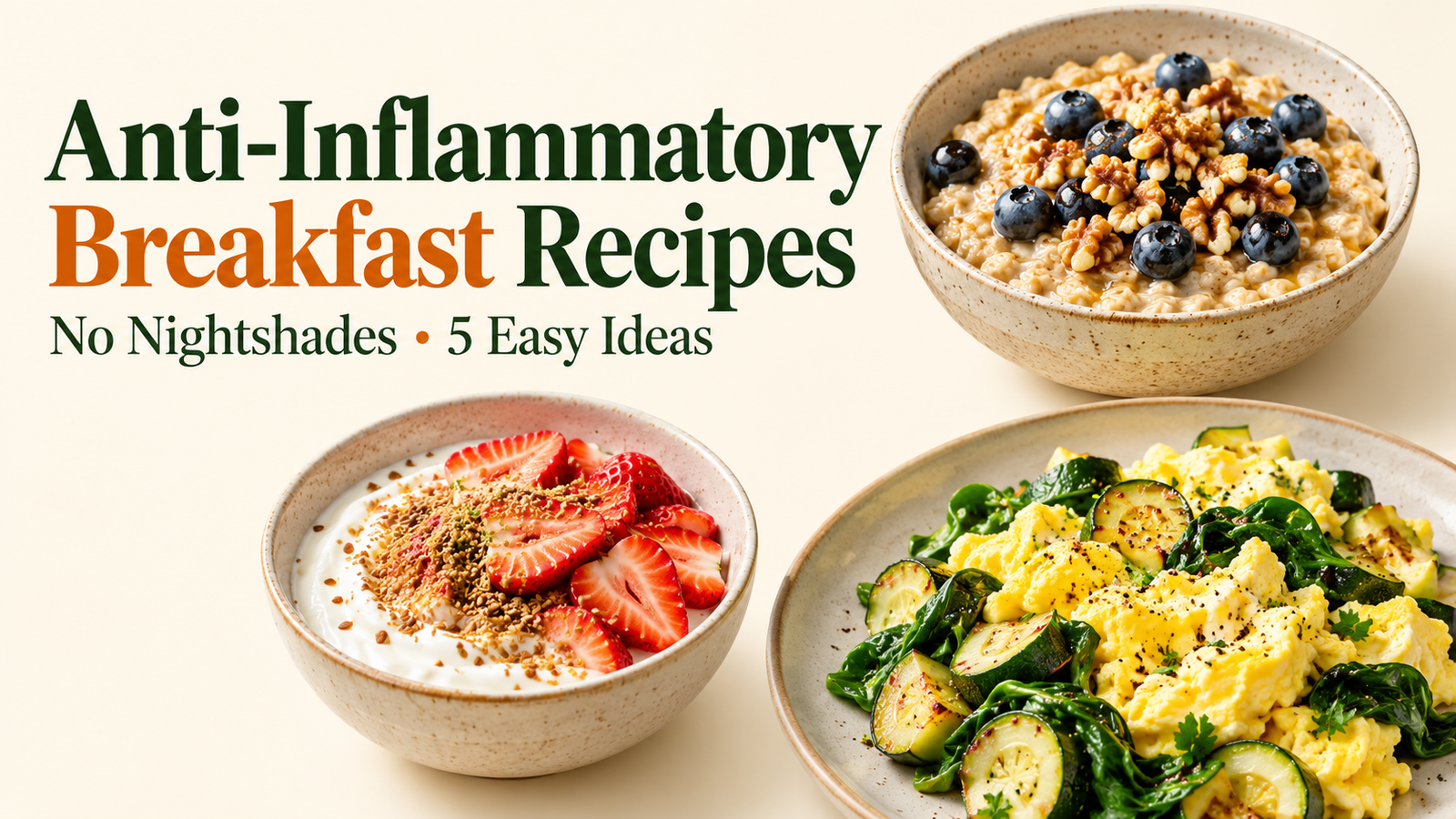
1. Warm Blueberry and Ginger Oats
Time: About 10 minutes
Best for: A warm breakfast with simple ingredients
Ingredients: ½ cup rolled oats, 1 cup water, ½ cup blueberries, ¼ teaspoon ground ginger, ¼ teaspoon cinnamon, and 1 tablespoon chopped walnuts.
Bring the water to a gentle boil. Stir in oats, ginger, and cinnamon. Reduce the heat, then simmer for five minutes. Add blueberries and cook another two minutes. Pour into a bowl and scatter walnuts on top.
Frozen blueberries work well; add them directly during cooking. For a creamier bowl, replace half the water with milk. Use lactose-free milk if regular milk causes symptoms.
Oats contain soluble fiber. NIDDK notes that soluble fiber can help IBS symptoms. However, increasing fiber suddenly may cause gas and bloating. Start with a smaller serving if needed. [Insert NIDDK Reference Link Here] NIDDK
2. Spinach and Zucchini Egg Skillet
Time: About 12 minutes
Best for: A savory breakfast without potatoes or peppers
Ingredients: 2 eggs, ½ cup diced zucchini, 1 cup baby spinach, 1 teaspoon olive oil, 1 tablespoon water, and ¼ teaspoon dried dill.
Warm the olive oil in a small skillet. Add zucchini and cook for five minutes. Next, add spinach and stir until wilted. Whisk eggs with water and dill in a bowl.
Pour the eggs over the vegetables. Cook gently, stirring, until the eggs are fully set. Serve immediately.
For extra energy, add a slice of whole-grain toast. Check its ingredients if strict nightshade avoidance applies.
This recipe builds flavor through herbs and softened vegetables. There is no need for paprika or bottled sauce. Chop the zucchini finely for a softer finished texture. Avoid overcooking the eggs, which makes them rubbery.
3. Sweet Potato, Kale, and Egg Hash
Time: About 20 minutes
Best for: A filling weekend breakfast
Ingredients: 1 small sweet potato, ½ cup chopped kale, 1 egg, 2 teaspoons olive oil, 2 tablespoons water, and ¼ teaspoon dried rosemary.
Peel the sweet potato and cut into small cubes. Heat olive oil in a skillet. Add the cubes, rosemary, and water. Cover and cook gently for eight to ten minutes.
Stir occasionally and add water if the pan dries. Once tender, uncover and add kale. Cook until the kale softens.
Move the vegetables aside, then add the egg. Scramble it until fully set. Combine everything and serve.
Use a smaller sweet potato portion if larger servings bother you. For convenience, begin with previously cooked sweet potato. That reduces the covered cooking time substantially. Squash also works, though cooking times will vary.
4. Strawberry Yogurt Bowl With Ground Flax
Time: About five minutes
Best for: Busy mornings without cooking
Ingredients: ¾ cup plain Greek yogurt, ½ cup sliced strawberries, 1 teaspoon ground flaxseed, 2 tablespoons rolled oats, and a pinch of cinnamon.
Spoon yogurt into a bowl. Add strawberries, flaxseed, oats, and cinnamon. Stir together or leave the toppings layered.
For softer oats, mix them into the yogurt beforehand. Refrigerate overnight in a covered container. Add strawberries before eating for a fresher texture.
Choose lactose-free yogurt if lactose causes symptoms. A fortified soy yogurt can provide a dairy-free alternative. Check protein content because plant yogurts vary considerably.
Yogurt may contain live cultures, depending on the product. However, specific probiotic benefits cannot be assumed from any yogurt. Effects depend on the microorganisms and health condition. [Insert NCCIH Reference Link Here] NCCIH
5. Banana and Buckwheat Pancakes
Time: About 15 minutes
Best for: A breakfast that feels like a treat
Ingredients: ¼ cup pure buckwheat flour, ½ small ripe banana, 1 egg, 2 tablespoons water, ¼ teaspoon cinnamon, and 1 teaspoon olive oil.
Mash the banana thoroughly in a bowl. Beat in the egg and water. Stir in buckwheat flour and cinnamon. Let the batter rest for two minutes.
Warm olive oil in a nonstick skillet over medium-low heat. Divide the batter into three small pancakes. Cook for roughly two minutes per side. Continue until the centers are cooked through.
Serve with strawberries or a spoonful of plain yogurt. The banana provides sweetness without syrup.
Check that the flour contains only buckwheat. If you need gluten-free food, choose certified gluten-free flour. Smaller pancakes turn more easily and cook more evenly.
Make Breakfast Fit Your Digestion
Nightshade-free does not mean low-FODMAP, allergy-safe, or suitable for everyone. Milk, wheat, fruit portions, and other ingredients may matter independently.
For IBS, NIDDK recommends individualized dietary changes. A clinician may suggest a temporary low-FODMAP trial. Reintroduction helps identify what you can tolerate. These recipes are not a validated low-FODMAP meal plan. NIDDK
Change one ingredient at a time. Record the portion, symptoms, and timing. This makes patterns easier to discuss with a dietitian.
Your Next Breakfast, Made Simpler
Start with one recipe you already have ingredients for. Keep a frozen berry bag and plain oats available. Then rotate savory meals when you want variety.
- Choose tolerated foods: Let your symptoms guide adjustments.
- Check packaged ingredients: Watch for pepper-based seasonings.
- Increase fiber gradually: Avoid changing everything overnight.
- Keep meals varied: Rotate grains, produce, and protein.
Disclaimer: This article draws on public guidance from established medical and nutrition organizations. It is intended for educational and informational purposes, not diagnosis or treatment. These recipes have not been clinically tested for gut healing. Consult a qualified clinician or registered dietitian about persistent symptoms or restrictive diets.
Read more:Ulcerative Colitis Flare Foods: What to Eat at Work