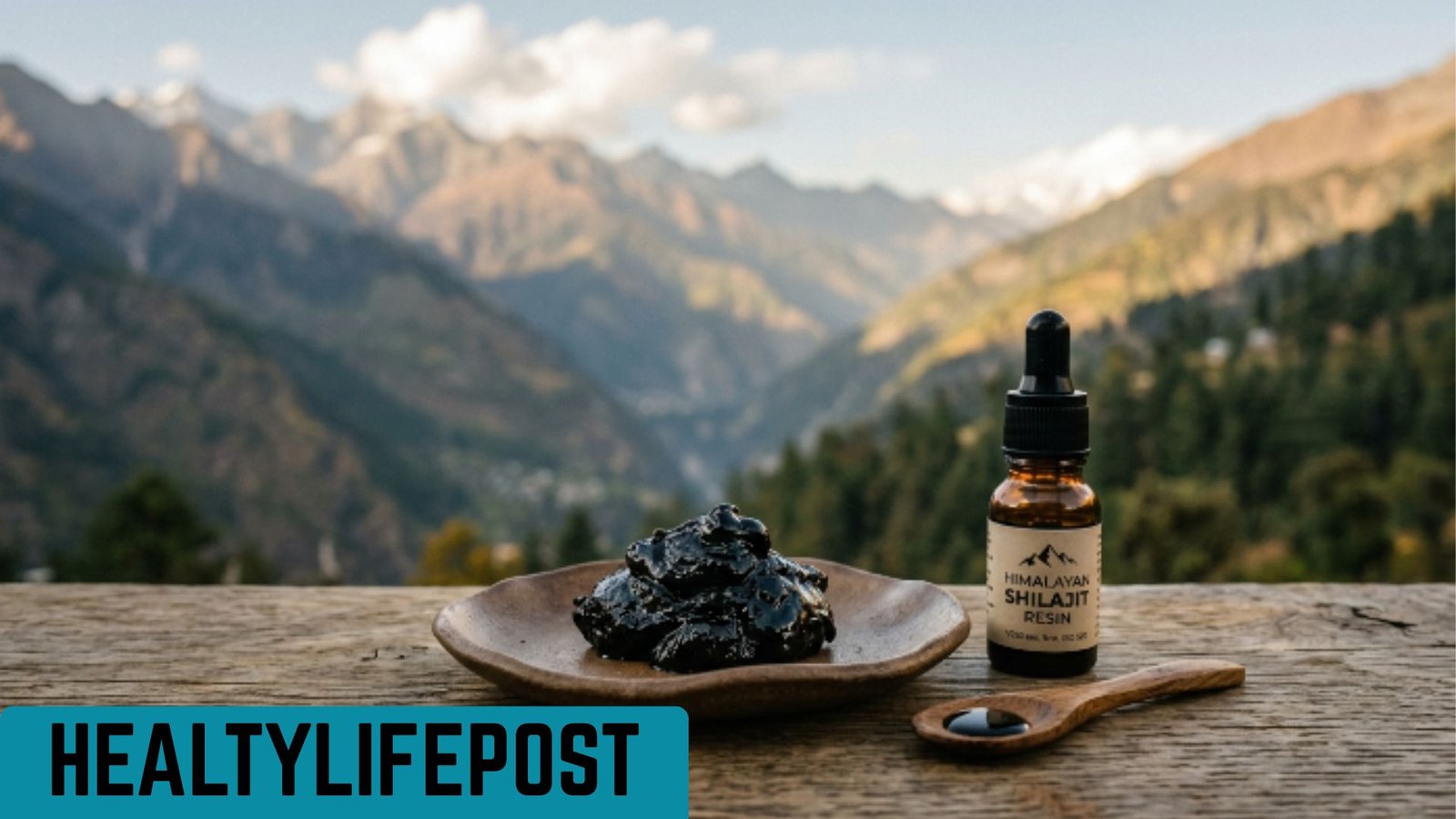

Shilajit has moved from traditional Ayurvedic use into modern supplement stores. Its most advertised benefits include better energy, testosterone, fertility, and healthy aging.
The research is more selective. A few shilajit benefits have promising human evidence, while many popular claims still depend heavily on laboratory, animal, or traditional-use data.
The 30-Second Evidence Check
Instead of treating every claimed benefit equally, here is what the evidence currently looks like:
| Claim | Evidence strength | Key limitation |
|---|---|---|
| Testosterone support | 🟡 Promising | Small human evidence base |
| Bone health | 🟡 Promising | Studied in a specific population |
| Energy | 🟠 Early | Limited clinical confirmation |
| Antioxidant effects | 🟠 Early | Often based on biomarkers |
| Brain health | 🔴 Insufficient | No strong clinical proof |
| Anti-aging/longevity | 🔴 Unproven | No human lifespan evidence |
This difference between possible, promising, and proven is essential when evaluating supplement claims.
First, What Exactly Are You Taking?
Shilajit is not a single purified chemical.
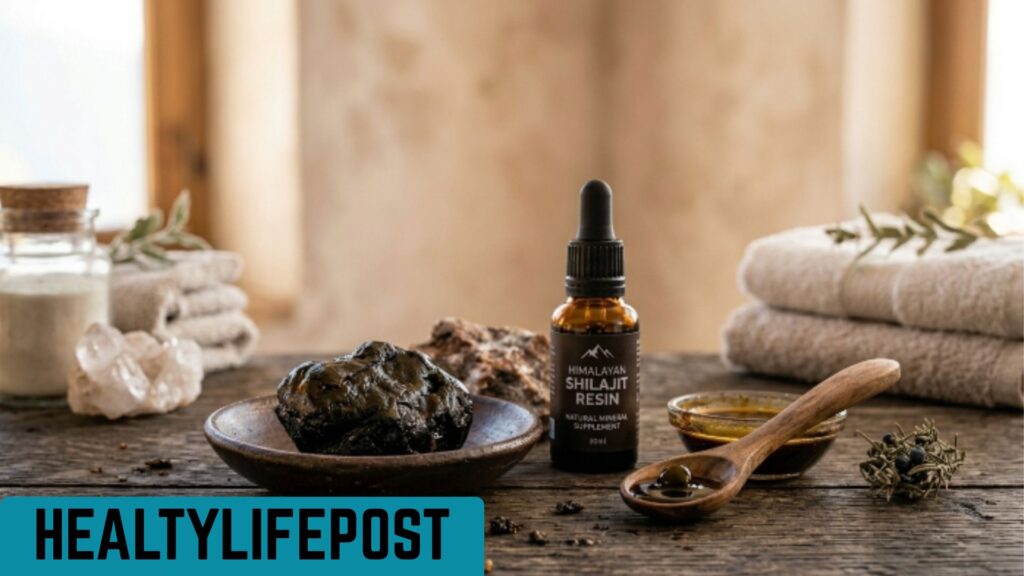
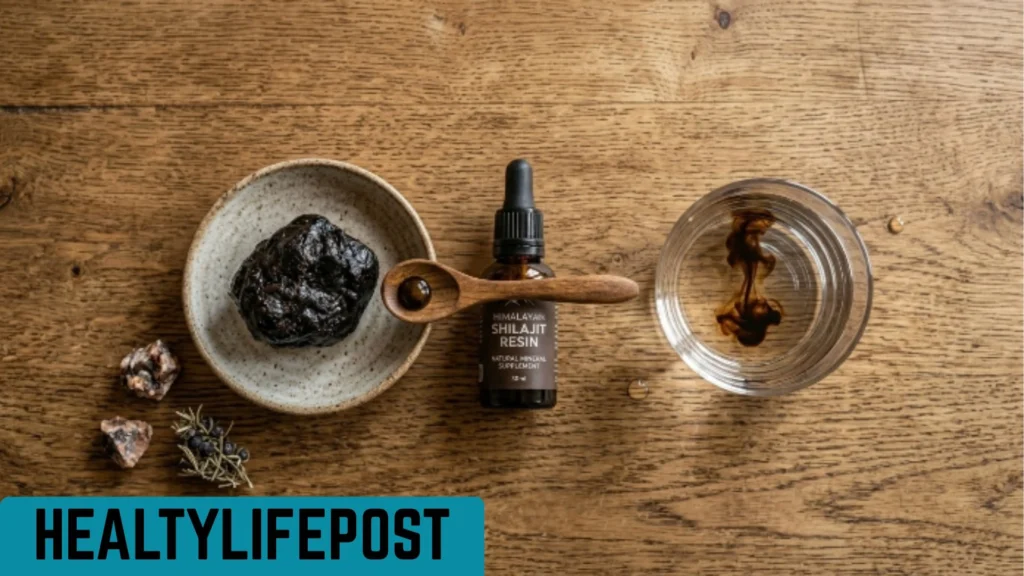
It is a dark, resin-like natural substance traditionally associated with mountainous regions. Chemical investigations have identified humic substances, minerals, amino acids, fatty acids, and various organic compounds in different samples.
A detailed chemical review found substantial complexity in shilajit’s composition. Geographic origin and processing can influence what a particular sample contains.
Research:
https://pubmed.ncbi.nlm.nih.gov/38133965/
This creates an important limitation. A clinical trial using a standardized purified extract does not prove that every commercial resin, capsule, or powder will produce the same results.
Testosterone: One of the Better-Studied Claims
Among popular shilajit claims, testosterone has direct randomized human evidence.
A double-blind, placebo-controlled study examined healthy men aged 45–55. Participants receiving purified shilajit took 250 mg twice daily for 90 days.
Researchers reported significant increases in total testosterone, free testosterone, and DHEAS compared with placebo.
Clinical study:
https://pubmed.ncbi.nlm.nih.gov/26395129/
That sounds promising, but the boundaries of the evidence matter.
The trial involved a specific group of healthy middle-aged men. It does not establish shilajit as a medical treatment for testosterone deficiency, nor does it show that younger men or people with diagnosed hormonal disorders would experience the same effect.
Low testosterone symptoms should be medically evaluated rather than self-treated with a supplement.
A Surprisingly Interesting Area: Bone Health
Bone health receives less attention in shilajit marketing, yet it has noteworthy human research.
A 48-week randomized, double-blind, placebo-controlled trial studied 60 postmenopausal women aged 45–65 with osteopenia. Researchers compared placebo with standardized shilajit extract.
Women receiving shilajit experienced less loss of bone mineral density at the lumbar spine and femoral neck. Changes were also observed in bone-turnover and inflammatory biomarkers.
Clinical study:
https://pubmed.ncbi.nlm.nih.gov/35933897/
This does not mean shilajit has been proven to prevent osteoporosis or fractures.
The study involved women who already had osteopenia and used a particular standardized extract. Larger independent trials would strengthen confidence in the finding.
Shilajit should not replace osteoporosis medications or other clinician-recommended treatments.
The Popular Claim With Weaker Evidence: More Energy
Energy may be one of shilajit’s biggest selling points.
Unfortunately, marketing language is stronger than the clinical evidence.
Scientific reviews have discussed possible effects involving mitochondrial function, ATP production, fatigue, and physical performance. Much of the supporting evidence, however, has historically come from experimental models or relatively limited human research.
Scientific review:
https://pubmed.ncbi.nlm.nih.gov/23733436/
This means describing shilajit as a proven energy booster goes beyond current evidence.
Persistent tiredness also deserves attention because fatigue can have many causes. Sleep disorders, anemia, thyroid problems, medications, nutritional deficiencies, and other health conditions can contribute.
Antioxidants: A Biomarker Is Not a Health Outcome
Shilajit’s antioxidant reputation has substantial laboratory support, but human interpretation requires more caution.
In the 48-week osteopenia trial, researchers found changes in oxidative-stress and inflammatory markers. Malondialdehyde decreased, while glutathione increased in participants receiving shilajit extract.
Study:
https://pubmed.ncbi.nlm.nih.gov/35933897/
These findings demonstrate biological activity. They do not demonstrate that shilajit prevents cardiovascular disease, cancer, dementia, or another chronic illness.
This is a common problem in supplement research:
Better biomarker ≠ proven disease prevention.
Clinical outcomes matter more than isolated laboratory measurements.
What About Memory and Anti-Aging?
This is where claims should be treated much more cautiously.
Shilajit has been investigated for biological activities that could theoretically relate to neurological health and aging. Earlier reviews, however, noted substantial gaps between traditional claims and strong clinical evidence.
Critical review:
https://pubmed.ncbi.nlm.nih.gov/21530631/
Research conducted since then has expanded our understanding of shilajit, but convincing human trials showing dementia prevention or lifespan extension remain lacking.
Claims such as “reverses aging,” “prevents Alzheimer’s,” or “extends lifespan” should therefore not be presented as established shilajit benefits.
The Part Supplement Ads Rarely Discuss: Contamination
Whether shilajit works is only half of the question.
What is actually inside the product may matter just as much.
Because shilajit is naturally derived and mineral-rich, researchers have investigated potentially toxic elements in both natural material and commercial products.
A 2024 review identified metals including lead, arsenic, cadmium, and mercury across published shilajit analyses. Most reported concentrations fell within referenced limits, but some investigations found levels exceeding applicable thresholds.
Research:
https://pubmed.ncbi.nlm.nih.gov/38393486/
Another laboratory investigation of Indian and Pakistani shilajit samples detected several potentially toxic elements, with some measurements exceeding referenced permissible limits.
Laboratory analysis:
https://pubmed.ncbi.nlm.nih.gov/34800280/
A Newer Concern: Thallium
More recent research identified another contaminant worth watching.
A 2025 study detected thallium in both raw shilajit and commercial shilajit supplements. Some commercial supplements contained higher concentrations than crude samples.
Researchers emphasized the importance of better testing and standardized quality control.
Study:
https://pubmed.ncbi.nlm.nih.gov/39827344/
However, contamination is not uniform across all shilajit.
A 2026 chemical analysis examining 12 geographically diverse samples found substantial differences in elemental composition. Toxic metals in those particular samples remained below established toxicity thresholds.
Study:
https://pubmed.ncbi.nlm.nih.gov/42364294/
The combined evidence supports a practical conclusion: product quality cannot be assumed from the word “shilajit” alone.
Before Buying Shilajit: Check These Things
Rather than focusing only on whether a product says “Himalayan,” “premium,” or “natural,” look for meaningful quality information.
- Independent third-party contaminant testing
- Results for lead, arsenic, mercury and cadmium
- A recent certificate of analysis
- Clearly identified manufacturer
- Lot or batch information
- Transparent ingredient amounts
- Testing relevant to other potentially toxic elements
A marketing claim is not a substitute for laboratory testing.
Who Should Be Especially Careful?
Small human trials using standardized shilajit preparations generally suggest reasonable short-term tolerability within the populations studied.
That does not guarantee every commercial product is safe. Research products can differ significantly from poorly processed or contaminated supplements.
Extra caution is appropriate for people who:
- Take prescription medications
- Have an existing medical condition
- Are pregnant or breastfeeding
- Are receiving cancer treatment
- Want shilajit specifically for hormonal symptoms
- Have unexplained persistent fatigue
Discussing supplementation with a doctor or pharmacist is particularly important in these situations.
Shilajit Benefits: The Evidence Verdict
Shilajit is not scientifically empty, but it is also not the universal health enhancer sometimes portrayed online.
Most convincing so far: Human trials provide promising findings involving testosterone in healthy middle-aged men and bone mineral density in postmenopausal women with osteopenia.
Needs stronger research: Energy, physical performance, antioxidant-related clinical benefits, and broader metabolic effects.
Not clinically established: Dementia prevention, disease prevention, reversal of aging, or increased human lifespan.
There is also a second issue independent of effectiveness: purity. Published analyses demonstrate enough variability in elemental composition to make contaminant testing an important consideration.
Quick Questions
Does shilajit increase testosterone?
One placebo-controlled human trial reported higher total and free testosterone after 90 days of purified shilajit in healthy men aged 45–55. More independent research is needed.
https://pubmed.ncbi.nlm.nih.gov/26395129
Can shilajit help women’s bone health?
One 48-week trial found reduced bone mineral density loss among postmenopausal women with osteopenia taking standardized shilajit extract. This does not establish it as an osteoporosis treatment.
Is shilajit an energy booster?
Shilajit has biological mechanisms that make the claim scientifically interesting, but strong human clinical evidence demonstrating a reliable energy-boosting effect remains insufficient.
Can shilajit contain heavy metals?
Yes. Research has detected potentially toxic elements in some shilajit samples. Concentrations vary considerably, which makes product-specific testing important.
https://pubmed.ncbi.nlm.nih.gov/38393486
Does shilajit make you live longer?
There is no reliable human clinical evidence showing that shilajit increases lifespan.
Sources & Medical References
1. Clinical trial — Testosterone and purified shilajit
https://pubmed.ncbi.nlm.nih.gov/26395129/
2. Clinical trial — Bone mineral density in postmenopausal women
https://pubmed.ncbi.nlm.nih.gov/35933897/
3. Review — Safety and efficacy of shilajit
https://pubmed.ncbi.nlm.nih.gov/23733436/
4. Critical review — Traditional uses and scientific evidence
https://pubmed.ncbi.nlm.nih.gov/21530631/
5. Review — Shilajit chemical composition
https://pubmed.ncbi.nlm.nih.gov/38133965/
6. Review — Heavy metals and shilajit
https://pubmed.ncbi.nlm.nih.gov/38393486/
7. Laboratory analysis — Potentially toxic elements
https://pubmed.ncbi.nlm.nih.gov/34800280/
8. 2025 study — Thallium in shilajit and supplements
https://pubmed.ncbi.nlm.nih.gov/39827344/
9. 2026 study — Elemental composition across shilajit samples
https://pubmed.ncbi.nlm.nih.gov/42364294/
Medical Disclaimer
This article provides general health information based on available research. It does not provide diagnosis, treatment, or individualized medical advice.
Shilajit products can differ substantially in composition and purity. Consult a qualified healthcare professional before using shilajit, particularly if you take medications, have a medical condition, are pregnant or breastfeeding, or want to use it for a specific health problem.
READ PREVS ARTICAL : NMN vs NAD+: What Human Research Actually Shows