
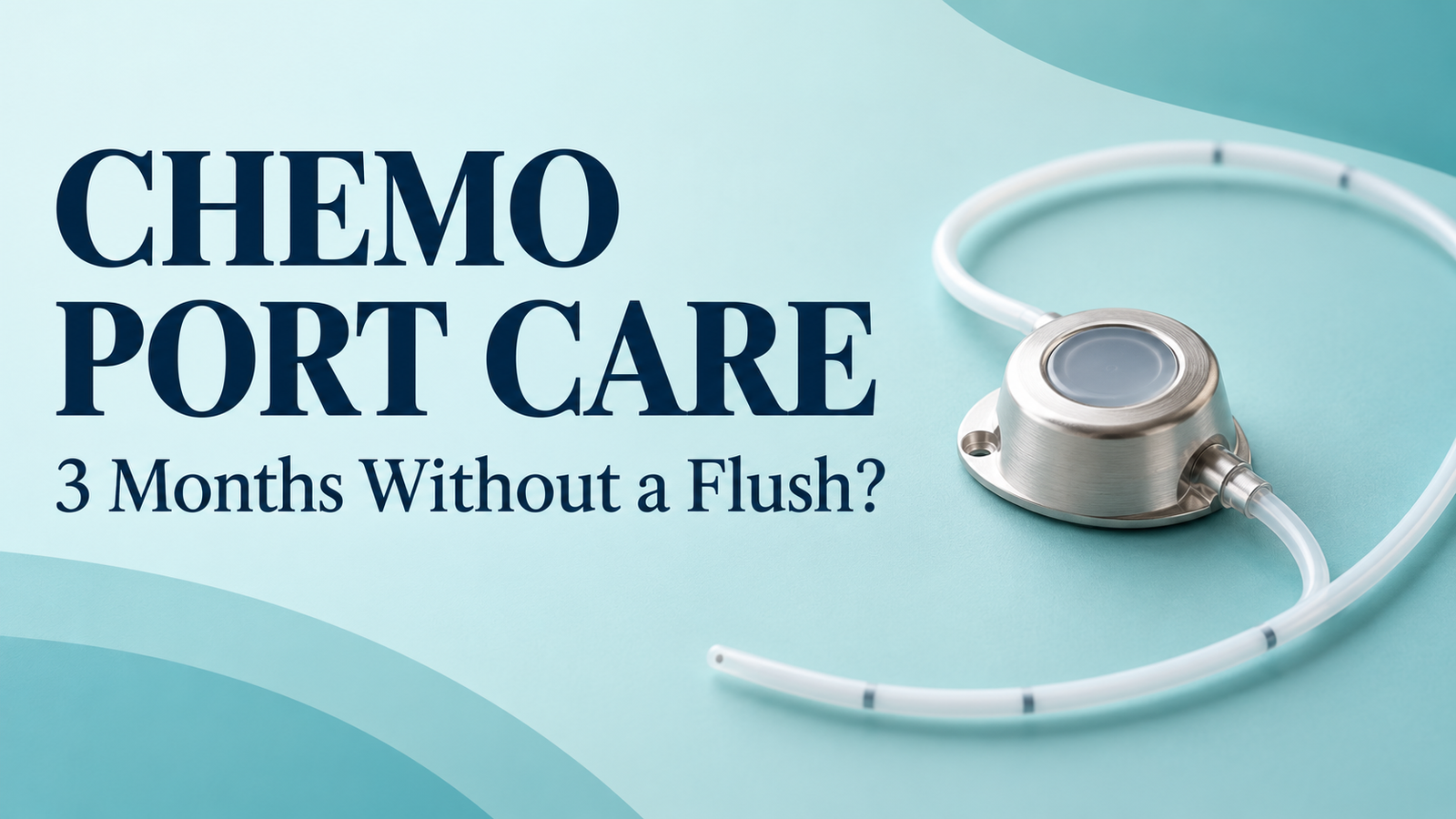

A chemo port that has not been flushed for three months may still work normally. Some cancer centres schedule unused implanted ports for flushing every 12 weeks. However, other centres require monthly maintenance, so three months could mean you have missed your prescribed appointments.
The answer to “what happens if a chemo port is not flushed for 3 months” therefore depends on your care plan. The time gap alone does not prove that the port has become blocked, infected, or permanently damaged.
If this has happened to you, contact your oncology or infusion team promptly to confirm the next step. Fever, chills, redness, drainage, or new swelling need urgent assessment rather than a routine flush appointment.
Is Three Months Between Port Flushes Ever Acceptable?
Yes, a planned interval of around 12 weeks can be appropriate for some unused implanted ports. For example, Memorial Sloan Kettering advises flushing unused ports at least every 12 weeks.
However, three calendar months usually exceed 12 weeks by several days. Therefore, follow the actual appointment date your team provides instead of treating these intervals as identical.
Research also supports longer intervals in selected patients. A 2022 observational study examined records from 1,059 participants and found no increase in recorded port-related complications with 12-week maintenance compared with four-to-eight-week schedules.
The study focused on maintenance after anticancer treatment. It does not establish that every port, patient, or treatment situation can safely follow the same schedule.
Why Do Port-Flushing Schedules Differ?
An implanted port sits beneath the skin and connects to a catheter that carries treatment into a large vein. Flushing helps keep this pathway open.
Hospitals do not all use the same maintenance protocol. Cambridge University Hospitals, for example, advises monthly flushing, while Memorial Sloan Kettering allows up to 12 weeks for unused ports.
These differences make your own instructions essential. Your team must account for the device and your clinical situation when deciding how often maintenance should happen.
Also, an unused port and a port receiving treatment have different care needs. A long maintenance interval does not replace flushing and other checks associated with treatment visits.
What Problems Can Occur With an Implanted Port?
Port complications can develop even when someone attends maintenance appointments. Consequently, a problem discovered after a missed flush does not automatically mean the delay caused it.
A blocked catheter
A blockage can make it difficult to withdraw blood or inject fluid through the port. This may prevent staff from using it until they assess and address the problem.
However, you cannot confirm that a port works simply because the skin looks normal. Nurses check its function when they access it.
A clot around the catheter
A blood clot can develop in the vein around the line. Possible symptoms include pain, swelling, or discomfort in the neck or arm on the same side.
This differs from a blockage inside the catheter. Tell your team about these symptoms so they can determine what assessment you need.
Infection
The port or surrounding tissue can become infected. Redness, soreness, swelling, or drainage can signal a problem.
However, missing a flush does not automatically cause infection. Infection requires clinical assessment, and treatment may include antibiotics or, in some cases, port removal.
Which Symptoms Need Urgent Medical Attention?
Contact your cancer team immediately if you develop:
- Fever, particularly a temperature of 38°C/100.4°F or higher.
- Chills or feeling suddenly unwell.
- New redness, warmth, tenderness, or drainage around the port.
- New or increasing pain or swelling near the port.
- Swelling or discomfort in the arm or neck on the port side.
Follow your oncology team’s temperature instructions if they use a lower threshold. Do not wait for a higher reading when your treatment plan tells you to call earlier.
Seek emergency care for sudden shortness of breath, chest pain, collapse, or severe illness. These symptoms need assessment regardless of when the port last received a flush.
What Should You Do After Missing a Port Flush?
If you feel well, call the oncology clinic or infusion service and explain the delay. Give the exact date of the last flush if you know it.
Ask whether you have exceeded your prescribed interval and how soon they want to see you. Also mention any previous port problems and whether you have treatment scheduled soon.
Do not attempt to access or flush the port yourself unless your care team has specifically trained and authorised you. Port access requires appropriate equipment, technique, and clinical checks.
Before your next visit, confirm these details:
- The date and location of the maintenance appointment.
- Whether the team needs to assess the port before treatment.
- Your future flushing schedule and who will arrange it.
Does a Blocked Port Always Need Removal?
No. A blocked port does not automatically need replacement.
After assessing the cause, clinicians may use a medicine that dissolves a clot within the catheter. However, some problems require further investigation or removal.
Do not try to overcome resistance by pushing harder during a flush. Let trained staff assess any difficulty, pain, or swelling before further use.
If treatment has finished and you no longer need the port, ask your oncology team whether removal would be appropriate. Until they make that decision, continue the maintenance schedule they prescribe.
Read more:How to Get 120 Grams of Protein a Day Without Eggs or Dairy