
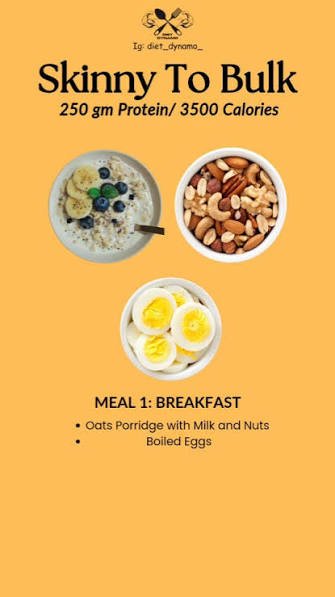

A 3500 calorie high protein clean bulk menu can support muscle growth and hard training.
The key is balancing calories, protein, carbohydrates, fats, recovery, and food quality.
Important: This is a general nutrition example, not a personalized medical plan. Athletes should adjust calories based on body size, sport, training load, and weight trends.
At a Glance
| Detail | Information |
|---|---|
| Plan Type | 3500-Calorie Clean Bulk |
| Primary Goal | Muscle and weight gain |
| Protein Focus | High-protein whole-food meals |
| Main Fuel | Rice, oats, potatoes, fruit, whole grains |
| Protein Sources | Eggs, chicken, Greek yogurt, fish, milk |
| Fat Sources | Nuts, olive oil, avocado, nut butter |
| Best For | Adult athletes with high energy needs |
| Meal Structure | 5–6 meals daily |
| Personalization | Depends on body weight and training |
| Evidence Base | Sports nutrition guidance |
What Makes a 3500-Calorie Bulk Different?
A 3500-calorie diet is not automatically a muscle-building diet.
Its effectiveness depends on the athlete’s actual energy needs.
Some athletes may need 3500 calories for maintenance.
Others may gain weight rapidly at that intake.
ACSM notes that intentional weight gain often starts around a 500-calorie daily surplus. However, individual responses vary widely.
That makes monitoring especially important during a bulk.
The clean bulk principle
“Clean bulk” is not a formal medical nutrition category.
It usually means prioritizing minimally processed, nutrient-dense foods.
A practical approach includes:
- Lean proteins
- Whole grains
- Fruits and vegetables
- Dairy or suitable alternatives
- Nuts and seeds
- Olive oil and other unsaturated fats
This approach can provide calories without relying heavily on ultra-processed foods.
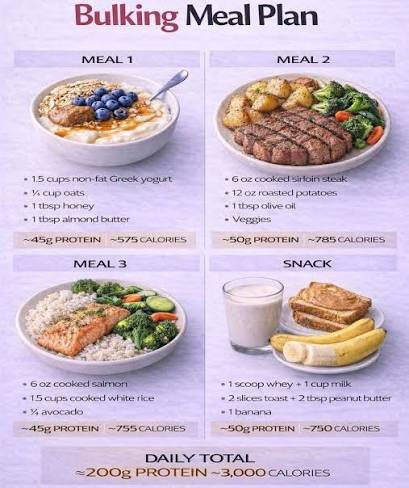
A Practical 3500 Calorie High Protein Menu
The following menu offers a useful starting framework.
Actual calories vary between brands and portion sizes.

| Meal | Example Foods | Approx. Calories |
|---|---|---|
| Breakfast | Oats, milk, banana, eggs, peanut butter | 750 |
| Mid-morning | Greek yogurt, granola, berries, nuts | 500 |
| Lunch | Chicken, rice, vegetables, olive oil | 800 |
| Pre-workout | Bagel, banana, Greek yogurt | 450 |
| Dinner | Salmon, potatoes, vegetables, avocado | 700 |
| Evening | Cottage cheese, fruit, nuts | 300 |
| Total | Full-day menu | ~3,500 |
These numbers are estimates, not laboratory measurements.
Breakfast: Start With Protein and Carbohydrates
Breakfast should provide substantial energy and protein.
Oats work well because they combine carbohydrates and fiber.
A sample breakfast could include:
- 100 grams oats
- 300 ml milk
- One banana
- Three eggs
- One tablespoon peanut butter
This meal also provides several useful micronutrients.
It can work especially well before a demanding training day.
The exact portions should match your calorie target.
Mid-Morning Meal: Add Calories Without Huge Portions
Large meals can become difficult during a high-calorie bulk.
A smaller meal can make the daily target easier.
Greek yogurt provides convenient high-quality protein.
Granola, berries, and nuts add carbohydrates and energy.
For athletes with poor appetite, calorie-dense foods can help.
Nuts and nut butter provide substantial calories in small portions.
However, fiber intake should remain appropriate for personal tolerance.
Lunch: Make Carbohydrates a Major Component
Lunch should support both recovery and later training.
Chicken and rice create a simple athlete-friendly combination.
A sample plate could contain:
- 200 grams cooked chicken
- 2–3 cups cooked rice
- Mixed vegetables
- One tablespoon olive oil
- Fruit
Carbohydrates matter because muscles rely heavily on glycogen during exercise.
Low glycogen can negatively affect demanding training sessions.
This is why a high-protein diet should not become a low-carb diet.
Pre-Workout Meal: Prioritize Usable Fuel
Your pre-workout meal should match your digestion and training schedule.
Carbohydrates are particularly useful before demanding exercise.
A simple option includes:
- One bagel
- One banana
- Greek yogurt
- Water
Avoid very large amounts of fat immediately before training.
High-fat meals can feel heavy for some athletes.
Individual tolerance matters more than rigid meal rules.
Dinner: Protein Plus Recovery Carbohydrates
Dinner can combine another protein source with substantial carbohydrates.
Salmon provides protein and dietary fat.
A sample dinner includes:
- 180–200 grams salmon
- Roasted potatoes
- Green vegetables
- Half an avocado
- Fruit
This meal provides more than protein alone.
It also supplies carbohydrates, fats, vitamins, minerals, and fiber.
A varied diet remains important during muscle-building phases.
Evening Meal: Finish the Day Strategically
The final meal does not need to be complicated.
Cottage cheese provides a convenient protein-rich option.
Try combining it with:
- Cottage cheese
- Berries or another fruit
- A small handful of nuts
This can help complete daily calories and protein.
It also gives athletes another opportunity to consume nutrient-dense foods.
How Much Protein Does an Athlete Actually Need?
More protein is not always better.
Total daily intake should match body weight and training demands.
The International Society of Sports Nutrition lists 1.4–2.0 grams per kilogram daily as a general range for exercising individuals.
For example, a 90-kilogram athlete would reach:
- 1.4 g/kg = 126 grams
- 1.6 g/kg = 144 grams
- 1.8 g/kg = 162 grams
- 2.0 g/kg = 180 grams
A 3500-calorie menu does not automatically require extremely high protein.
Spread protein across the day
Protein distribution also deserves attention.
Sports nutrition guidance commonly suggests 20–40 grams per feeding.
This makes six moderate protein feedings practical.
The goal is consistency rather than forcing huge protein portions.
What Does “Clean” Actually Mean?
Clean eating has no universally accepted scientific definition.
It should not mean avoiding every processed food.
A better interpretation is food quality and dietary balance.
Prioritize:
- Minimally processed staple foods
- Different fruits and vegetables
- Whole grains
- Lean proteins
- Healthy fats
- Adequate fluids
Some convenient foods can still fit the plan.
For example, whey protein can help when whole-food protein becomes inconvenient.
It should complement the diet rather than replace most meals.
The Overlooked Part: Carbohydrates
Many high-protein bulking plans focus too heavily on protein.
That can leave athletes under-fueled for training.
ACSM highlights carbohydrates as important exercise fuel.
It also warns against skimping on grains while overemphasizing protein.
Useful carbohydrate choices include:
- Rice
- Potatoes
- Oats
- Pasta
- Whole-grain bread
- Bananas
- Berries
- Other fruits
The right amount depends heavily on the athlete’s sport.
How to Know If 3500 Calories Is Right
Do not assume 3500 calories is your ideal intake.
Your body-weight trend provides useful feedback.
Track your morning weight several times weekly.
Then compare weekly averages rather than single measurements.
If weight rises too quickly, reduce calories modestly.
If weight remains unchanged, consider increasing intake.
ACSM’s recent discussion of athletic weight gain found substantial differences between individuals.
That finding supports individualized calorie adjustments.
Common Mistakes During a Clean Bulk
A good menu can still fail through poor execution.
Mistake 1: Eating protein but avoiding carbohydrates
This can compromise training fuel.
Carbohydrates deserve a meaningful place in an athlete’s diet.
Mistake 2: Increasing calories too aggressively
A larger surplus does not guarantee faster muscle growth.
It can increase unwanted body-fat gain.
Mistake 3: Ignoring recovery
Food alone cannot compensate for inadequate recovery.
Training quality, sleep, hydration, and rest all matter.
Mistake 4: Eating the same foods daily
Variety helps improve nutrient coverage.
Different protein, fruit, vegetable, and grain sources are useful.
Who Should Avoid Using 3500 Calories Without Guidance?
A fixed calorie target is not suitable for everyone.
Athletes have very different energy requirements.
Extra caution is appropriate for athletes with:
- Medical conditions
- Digestive problems
- History of disordered eating
- Rapid unexplained weight changes
- Specialized weight-class requirements
Professional guidance can make the plan safer and more precise.
Chronic under-fueling can also create serious performance and health problems.
ACSM discusses relative energy deficiency and its potential consequences in athletes.
A Better Way to Personalize the Menu
The most useful adjustment starts with body weight.
Then consider training volume, sport, schedule, and appetite.
For example, an endurance athlete may need more carbohydrates.
A strength athlete may emphasize protein and training-day carbohydrates.
Meal timing should also fit the training schedule.
The menu is therefore a framework, not a universal prescription.
Final Takeaway
A 3500 calorie high protein clean bulk menu for adult athletes should provide more than calories and protein. It should support training, recovery, performance, and long-term dietary quality.
The strongest approach combines adequate protein with sufficient carbohydrates.
Whole foods should provide most daily calories when practical.
Most importantly, adjust the plan using real progress data.
Your body weight, training performance, recovery, and appetite provide useful feedback.
For athletes pursuing serious muscle gain, a sports dietitian can personalize calories and macronutrients around the actual training load.
Read more :How to Eat 3500 Calories a Day Clean With a Small Appetite