
How long after chemo port removal can you lift weights? In many cases, patients should avoid heavy lifting for about one week after removal. Some instructions allow lighter activity sooner, depending on healing.
The safest return depends on the incision, your treatment history, and your doctor’s advice. Your cancer care team should clear heavy gym workouts before you restart them.
At a Glance
| Question | General Guidance |
|---|---|
| Main concern | Protecting the healing chest incision |
| Heavy weights | Usually avoided during the first week |
| First-week limit | Alberta Health advises no more than 10 lb (4.5 kg) |
| Upper-body workouts | Avoid movements that pull the incision |
| Light activity | Often possible if comfortable |
| Contact sports | Restrictions may last much longer |
| Best clearance | Your treating healthcare professional |
| Warning signs | Bleeding, swelling, redness, fever, worsening pain |
Important: These are general guidelines, not personal medical clearance.
How Long After Chemo Port Removal Can You Lift Weights?
A practical answer is about one week for heavy lifting, unless your healthcare provider gives different instructions.
Alberta Health specifically advises avoiding weights above 10 pounds (4.5 kg) during the first week after implanted port removal. It also recommends avoiding vigorous arm movements during that period.
This restriction protects the small incision made during removal. Weightlifting can increase tension around the chest and shoulder area. That tension may irritate the wound while it heals.
Memorial Sloan Kettering gives a shorter restriction for some patients. Its removal instructions say not to lift more than 10 pounds for three days.
These differences matter. There is no single recovery schedule for everyone.
Why Weightlifting Can Stress the Port Removal Site
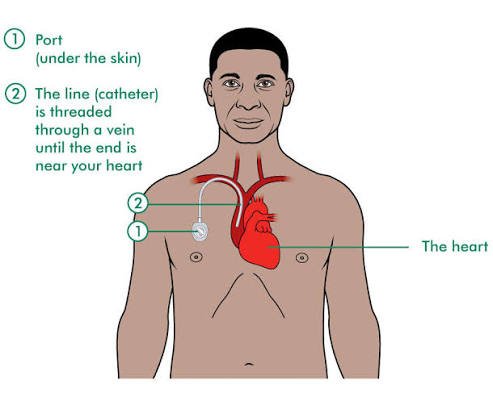
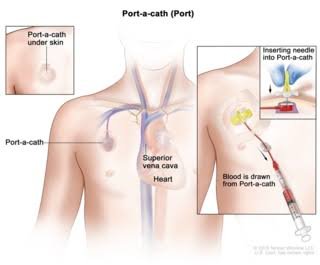
Port removal involves a small incision in the chest. The port and catheter are removed through that opening. The wound is then closed with stitches or another closure method.
Heavy lifting can engage the chest, shoulder, and upper-arm muscles. Those movements can pull on healing tissue.
The risk is not only about the weight itself. Certain exercises create more tension around the incision.
Examples include:
- Bench presses
- Push-ups
- Pull-ups
- Overhead presses
- Heavy rows
- Chest fly movements
- Heavy dumbbell exercises
You should especially avoid movements that stretch or pull the wound.
A Simple Return-to-Gym Timeline
There is a useful way to think about recovery: protect, test, progress.
First 3 Days: Protect the Incision
The first few days are mainly about protecting the wound.
Memorial Sloan Kettering advises avoiding lifting above 10 pounds during this period.
Normal gentle movement may be possible. However, avoid activities that strain the chest or upper body.
Watch the incision for changes.
Days 4–7: Follow the Wound, Not the Calendar
The one-week point is a common milestone. It does not automatically mean heavy lifting is safe.
Alberta Health recommends avoiding weights above 10 pounds for the entire first week. It also advises avoiding vigorous arm movements.
If the incision remains painful, swollen, open, or irritated, wait.
After One Week: Gradual Progression
If the wound has healed normally, some people can gradually resume exercise.
Start below your normal training intensity. Avoid immediately returning to maximum weights.
A cautious progression could look like this:
- Begin with light resistance.
- Keep movements controlled.
- Avoid exercises causing incision discomfort.
- Increase weight gradually.
- Stop if pain or wound problems develop.
Your healthcare provider may recommend a longer restriction.
What About Chest and Shoulder Workouts?
Chest exercises deserve extra caution after port removal.
The port usually sits beneath the skin around the upper chest. Removal leaves a healing incision in that region.
Exercises involving strong chest contraction may place additional tension on the area.
That does not mean chest training is permanently restricted. It means the timing should follow wound healing.
Memorial Sloan Kettering recommends discussing exercise with your healthcare provider while the incision heals. This includes running, stretching, lifting above 10 pounds, and contact sports.
When Can You Return to Heavy Weightlifting?
Heavy weightlifting should generally wait until the incision is adequately healed and your clinician approves it.
The exact timing can differ because recovery depends on several factors.
Factors That Can Change Your Recovery
Your doctor may consider:
- How the incision looks
- Whether stitches were used
- Pain or tenderness
- Bleeding or drainage
- Your overall recovery
- Recent chemotherapy
- Other medical conditions
- Any complications during removal
Cleveland Clinic also advises avoiding heavy lifting or strenuous activity until the provider gives approval.
This is particularly important for people who recently completed cancer treatment.
Can You Exercise After Chemo Port Removal?
Usually, exercise can return gradually after the wound starts healing.
The important distinction is between gentle movement and strenuous training.
Walking may be easier to tolerate than heavy resistance training. Light activity also allows you to monitor how the wound responds.
You should not use exercise as a test of whether the incision has healed.
Instead, check the wound and follow your medical team’s instructions.
When Should You Stop Exercising?
Certain symptoms deserve medical attention.
Contact your healthcare provider if you develop:
- New or increasing bleeding
- Worsening redness
- Significant swelling
- Increasing pain
- Drainage from the wound
- Fever of 100.4°F (38°C) or higher
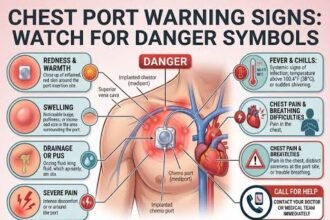
- New swelling or pain around the chest, neck, shoulder, or arm
Memorial Sloan Kettering specifically lists bleeding, worsening redness, swelling, fever, and persistent pain as reasons to contact the healthcare team.
Guy’s and St Thomas’ also advises reporting fever, pain, redness, inflammation, swelling, or painful swelling around the arm, chest, neck, or shoulder.
Why Different Hospitals Give Different Time Limits
A common mistake is treating one hospital’s timeline as universal.
Medical instructions can vary because procedures and patients vary.
For example, one source recommends avoiding weights above 10 pounds for three days. Another recommends the same limit for one week.
That does not necessarily mean one recommendation is wrong.
Your procedure may have involved different closure methods or circumstances. Your cancer treatment can also affect recovery.
Therefore, your own discharge instructions should take priority.
The Safest Way to Return to Weights
The safest approach is gradual progression.
Do not return to your previous training weight immediately after the restriction ends.
Instead, consider starting with lighter resistance. Focus on controlled movements and good technique.
Avoid exercises that cause pulling, pressure, or pain near the incision.
If everything feels comfortable, increase the workload slowly.
This approach gives the healing tissue time to adapt.
What Is the Main Takeaway?
For many people, one week is a useful minimum checkpoint for heavy lifting after chemo port removal. Alberta Health specifically recommends avoiding weights above 10 pounds during that first week.
However, medical instructions vary. Some guidance uses a shorter three-day restriction, while other clinicians may recommend longer limitations.
The best answer is therefore not simply “seven days.”
Wait until the incision is healing properly and your healthcare provider clears heavier exercise.
If you recently had chemotherapy, ask your oncology team before restarting intense training. Your overall recovery matters as much as the incision itself.
Frequently Asked Questions
Can I lift 10 pounds after chemo port removal?
Some instructions allow up to 10 pounds during the first week. Alberta Health specifically says not to exceed 10 pounds during that period. However, this is general guidance. Your doctor may recommend less activity depending on your wound and recovery.
Can I go to the gym after port removal?
You may be able to return to gentle activity before heavy training. Avoid strenuous exercise while the incision heals. Memorial Sloan Kettering recommends checking with your healthcare provider before starting activities such as running or weightlifting.
When can I do chest workouts after port removal?
Chest workouts should wait until the incision has healed sufficiently. Exercises like bench presses and push-ups can stress chest tissues. Start gradually after receiving appropriate medical clearance.
Can lifting weights reopen the port removal incision?
Heavy lifting can place tension on healing tissue. That is why hospitals commonly restrict lifting after removal. If the wound opens, bleeds, drains fluid, or becomes increasingly painful, contact your healthcare provider promptly.
Is one week always enough before lifting weights?
No. One week is a common guideline, not a universal rule. Some instructions use shorter restrictions, while individual patients may need longer recovery. Your healthcare provider should make the final decision.
Final Word
How long after chemo port removal can you lift weights? For many patients, heavy lifting should wait around one week, with lighter activity introduced carefully.
The key factor is proper wound healing, not simply the number of days.
Read more :3500 Calorie High Protein Clean Bulk Menu for Adult Athletes