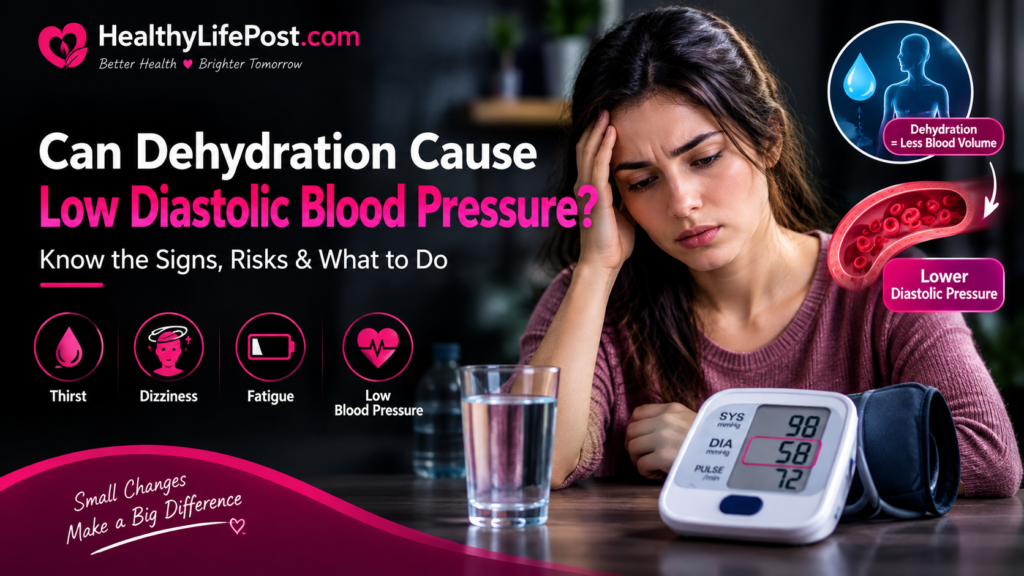
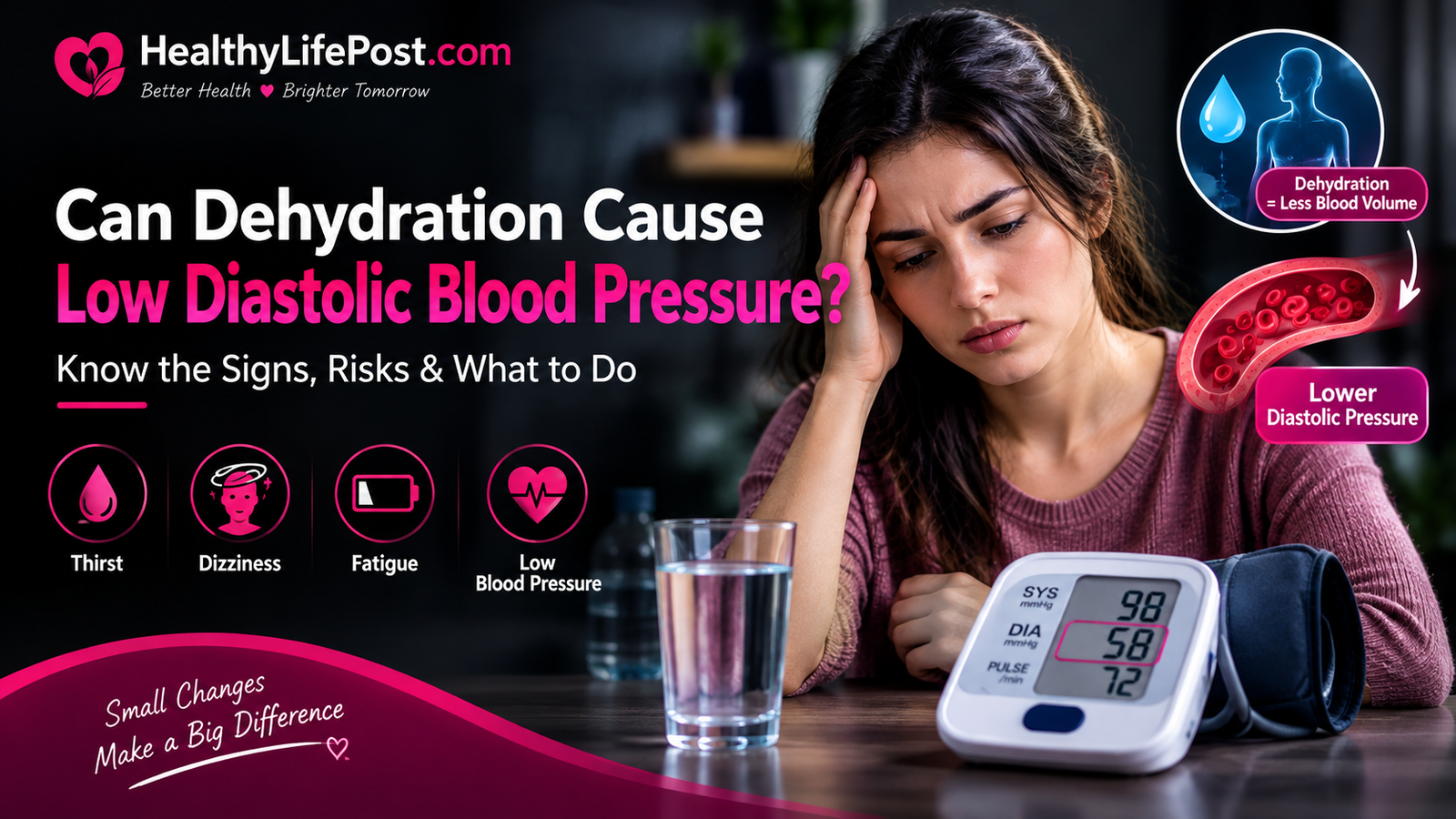

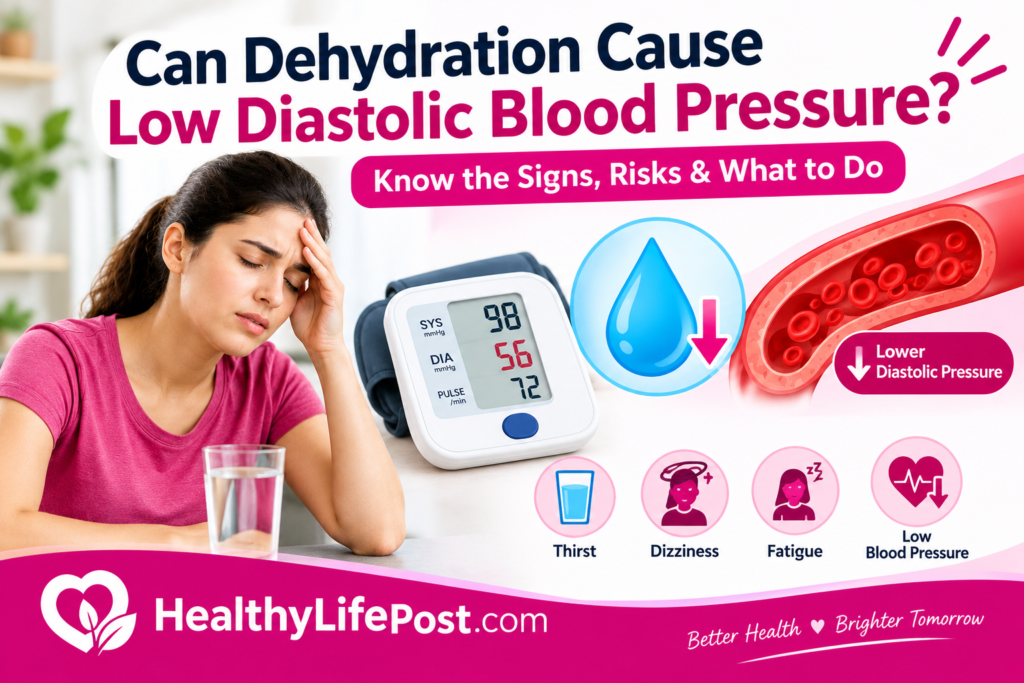
Low blood pressure can sometimes leave you feeling weak, dizzy, or unusually tired. If your diastolic blood pressure is low, you may wonder whether not drinking enough water could be the reason.
Yes, dehydration can cause or contribute to low diastolic blood pressure. When your body loses more fluid than it replaces, the amount of blood circulating through your blood vessels can decrease. This may cause blood pressure to fall, particularly when you stand up.
Quick Summary / Key Takeaways
- Dehydration can lower blood pressure, including the diastolic reading.
- Losing fluids can reduce the amount of blood circulating in your body.
- Common symptoms include dizziness, weakness, thirst, fatigue, and fainting.
- Severe or persistent low blood pressure may have other causes and should be evaluated by a healthcare professional.
How Can Dehydration Cause Low Diastolic Blood Pressure?
Your blood pressure has two numbers. The systolic number is the pressure when your heart contracts, while the diastolic number is the pressure between heartbeats.
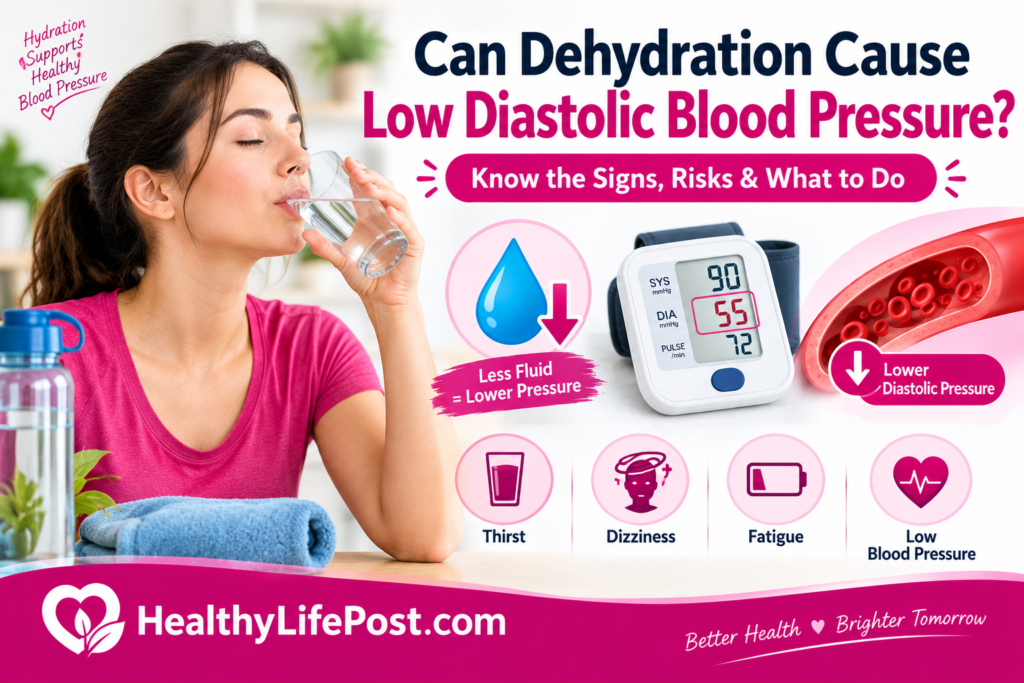
Dehydration reduces the amount of fluid in your bloodstream. Think of your circulatory system like a water-filled pipe: when there is less fluid inside, pressure can drop.
When blood volume falls, your heart may have less blood to pump around the body. As a result, blood pressure can decrease.
Why Does Diastolic Pressure Matter?
Diastolic pressure shows the pressure in your arteries while your heart is resting between beats.
A temporarily lower reading may occur because of dehydration, heat, sweating, vomiting, diarrhea, or not drinking enough fluids. However, consistently low readings can have other explanations.
What Are the Signs of Dehydration?
Dehydration does not always cause obvious symptoms at first. As fluid loss increases, you may notice changes in how you feel.
Common signs include:
- Thirst
- Dry mouth or lips
- Darker-than-usual urine
- Less frequent urination
- Headache
- Fatigue or weakness
- Dizziness or lightheadedness
- Feeling faint, especially after standing
If several of these symptoms occur alongside a low blood pressure reading, dehydration may be contributing to the problem.
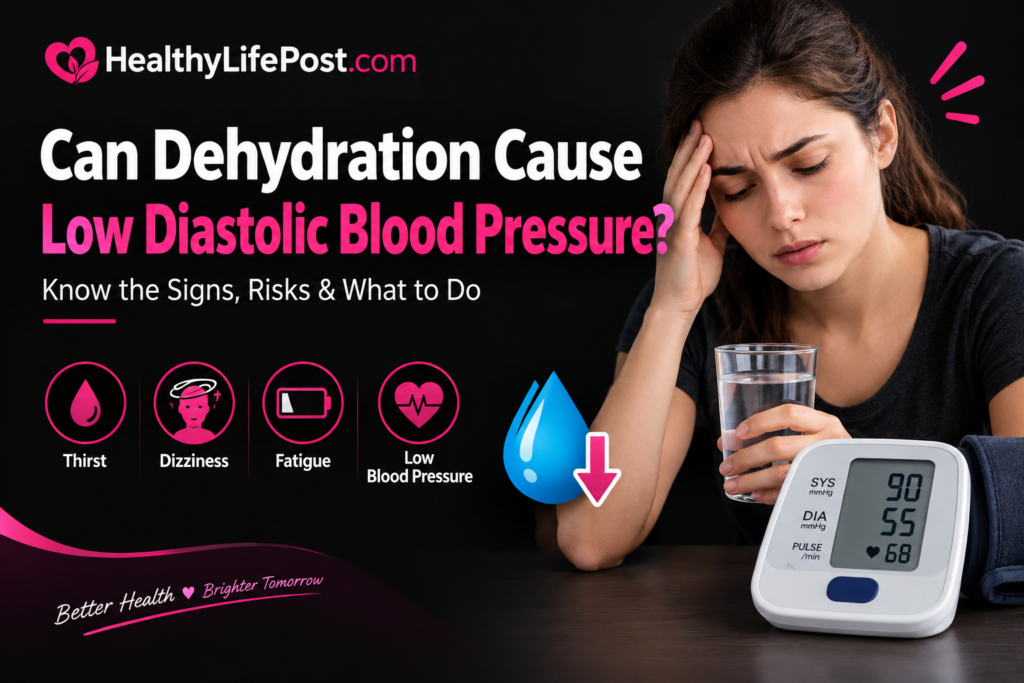
Can Dehydration Cause Low Blood Pressure When Standing?
Yes. Dehydration can contribute to orthostatic hypotension, which means blood pressure drops when you move from sitting or lying down to standing.
Normally, your body quickly adjusts blood flow when you stand. If you are dehydrated, there may not be enough circulating fluid to make this adjustment effectively.
You might experience dizziness, blurred vision, weakness, or lightheadedness for a short time after standing.
Low Diastolic Blood Pressure: Dehydration vs. Other Causes
Dehydration is only one possible reason for a low diastolic reading.
| Possible Cause | How It May Affect Blood Pressure |
|---|---|
| Dehydration | Reduces circulating blood volume |
| Blood loss | Can significantly reduce blood volume |
| Certain medications | May lower blood pressure |
| Heart problems | Can affect the heart’s ability to maintain pressure |
| Hormonal conditions | May interfere with blood-pressure regulation |
| Severe infection | Can cause a dangerous fall in blood pressure |
| Prolonged standing | May temporarily lower pressure in some people |
One low reading does not necessarily mean there is a serious problem. The circumstances surrounding the reading and whether symptoms are present are important.
What Should You Do If You Think Dehydration Is Causing Low Blood Pressure?
If dehydration appears mild, gradually replacing lost fluids may help your body restore normal blood volume.
Drink fluids regularly, particularly after sweating or during hot weather. If you have been losing substantial amounts of fluid through vomiting or diarrhea, an oral rehydration solution may be more appropriate than plain water because it replaces both fluids and electrolytes.
Avoid trying to correct persistent low blood pressure by consuming large amounts of salt or fluids without medical advice, particularly if you have an underlying medical condition.
Check Your Blood Pressure Again
If you get an unexpectedly low reading, sit quietly and repeat the measurement after a few minutes.
Keep track of:
- Your blood pressure readings
- Your symptoms
- When you took the measurement
- Recent fluid loss, exercise, heat exposure, vomiting, or diarrhea
This information can help a healthcare professional understand what may be happening.
When Is Low Blood Pressure an Emergency?
Low blood pressure can become dangerous when it prevents vital organs from receiving enough blood.
Seek urgent medical attention if low blood pressure occurs with symptoms such as fainting, confusion, severe weakness, chest pain, difficulty breathing, cold or clammy skin, or a rapid or very weak pulse.
Severe dehydration can also require urgent treatment, especially when a person cannot keep fluids down or is barely urinating.
Frequently Asked Questions
Can dehydration cause a low diastolic blood pressure reading?
Yes. Dehydration decreases the amount of fluid circulating in the bloodstream. This can reduce blood pressure, including the diastolic number. The effect may be more noticeable when dehydration is significant or when you stand up quickly.
How much water should I drink for low blood pressure?
There is no single amount that is appropriate for everyone. Fluid needs depend on factors such as body size, activity, climate, diet, and medical conditions. If you are dehydrated, drinking fluids gradually can help, but people with certain heart, kidney, or other medical conditions may need individualized fluid advice.
Can dehydration cause dizziness and low blood pressure together?
Yes. Dehydration can reduce circulating blood volume, which may lower blood pressure and contribute to dizziness or lightheadedness. These symptoms can be particularly noticeable when standing. However, dizziness and low blood pressure can have many other causes, so recurring symptoms should be discussed with a healthcare professional.
Is a low diastolic blood pressure always dangerous?
No. A single low reading without symptoms is not necessarily dangerous. However, persistently low blood pressure or low readings accompanied by fainting, confusion, chest pain, breathing difficulty, or severe weakness require medical evaluation.
Read more:Signs of Infection in a Chemo Port Incision Line: What to Watch