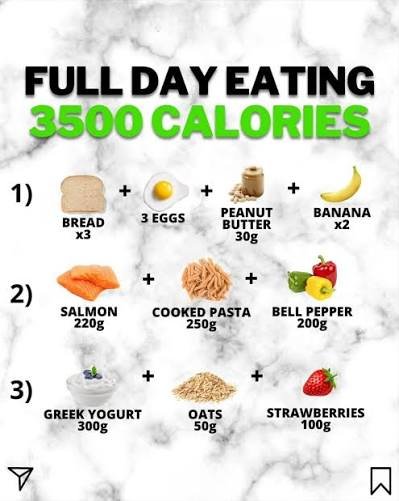

A 3500 calorie meal plan can support people with unusually high energy needs. That may include some athletes, highly active adults, or people intentionally gaining weight. However, 3,500 calories exceeds the needs of many adults, so it should match your body, activity, and goals rather than serve as a universal target.
The smartest approach is not simply eating larger portions. Instead, spread calories across the day and prioritize protein, grains, fruits, vegetables, dairy or alternatives, and calorie-dense unsaturated fats.
3500-Calorie Plan at a Glance
| Daily Target | Practical Approach |
|---|---|
| Calories | About 3,500 kcal |
| Meals | 3 main meals |
| Snacks | 2–3 |
| Main proteins | Eggs, chicken, fish, yogurt, beans |
| Main carbohydrates | Oats, rice, potatoes, bread, fruit |
| Calorie boosters | Nuts, nut butter, avocado, olive oil |
| Best suited for | People whose calculated needs justify it |
| Main goal | High calories without poor diet quality |
Important: Food labels, brands, cooking methods, and portion measurements differ. Therefore, the calories below are estimates rather than laboratory-precise totals.
Who Actually Needs 3,500 Calories?
A 3,500-calorie diet is not automatically a “bulking diet.”
Your energy requirements depend on several factors. These include age, sex, height, weight, activity, and individual physiology. Federal dietary guidance likewise notes substantial variation in calorie needs.
For someone maintaining weight on 3,300 calories, eating 3,500 creates only a modest surplus. Someone maintaining on 2,300 calories would face a much larger surplus.
That difference matters.
Therefore, 3,500 should be viewed as an energy target, not a prescription.
People considering this intake may include competitive athletes, people with physically demanding lifestyles, or adults following a supervised weight-gain plan. Unexpected weight loss is different. Mayo Clinic recommends discussing unexplained weight loss with a healthcare professional.
Sample 3500 Calorie Meal Plan
Here is a practical example built around familiar foods.
| Meal | Foods | Approx. Calories |
|---|---|---|
| Breakfast | Oats, milk, banana, eggs, peanut butter | 750 |
| Morning snack | Greek yogurt, granola, berries, almonds | 400 |
| Lunch | Chicken, rice, vegetables, avocado, olive oil | 850 |
| Afternoon snack | Milk-fruit-oat smoothie | 400 |
| Dinner | Salmon, potatoes, vegetables, bread | 850 |
| Evening snack | Cottage cheese and fruit | 250 |
| Daily Total | Six eating periods | ≈3,500 |
This structure solves a common problem with high-calorie diets: meal size.
Trying to consume 1,100–1,200 calories at every meal can feel uncomfortable. Six smaller eating periods make the same target easier to manage. Mayo Clinic also suggests eating more frequently when healthy weight gain is needed.
Breakfast: About 750 Calories
Start with a breakfast combining carbohydrates, protein, and fats.
A practical plate could contain oatmeal cooked with milk, a banana, two eggs, and peanut butter. Adjust the exact quantities according to the nutrition labels of your ingredients.
Oats and fruit provide carbohydrates. Eggs and milk add protein. Meanwhile, peanut butter increases calories without dramatically increasing food volume.
This matters when appetite becomes the limiting factor.
A person struggling with large meals can add calories through nut butter instead of simply doubling the oatmeal portion.
Morning Snack: About 400 Calories
Use Greek yogurt as the base. Add granola, berries, and almonds.
This snack packs several food groups into one bowl. It also provides a convenient bridge between breakfast and lunch.
Nuts work particularly well in higher-calorie diets. They contain substantial energy in relatively small servings. Mayo Clinic also lists nuts, seeds, and nut oils among sources of healthier unsaturated fats.
However, portion awareness still matters. A casual handful can vary significantly in size.
Measure servings initially if calorie accuracy matters.
Lunch: About 850 Calories
Build lunch around four components:
Protein + grain + vegetables + calorie booster.
For example, combine chicken with cooked rice and mixed vegetables. Then add avocado and olive oil.
This method creates a substantial meal without relying on fried foods or sugary drinks.
The High-Calorie Plate Formula
| Component | Example | Main Purpose |
|---|---|---|
| Protein | Chicken | Protein and minerals |
| Starch | Rice | Energy and carbohydrates |
| Produce | Mixed vegetables | Fiber and micronutrients |
| Healthy fat | Avocado | Energy density |
| Added fat | Olive oil | Easy calorie adjustment |
This formula is also flexible.
Chicken can become beans, tofu, turkey, or fish. Rice can become pasta, potatoes, quinoa, or bread.
Therefore, the plan does not depend on eating identical foods daily.
Afternoon Smoothie: About 400 Calories
Liquid calories can be useful when appetite falls.
Blend milk with banana, oats, and a measured amount of nut butter. Fruit can change depending on preference.
A smoothie should supplement nutritious meals rather than become an excuse for excessive added sugar.
Mayo Clinic specifically recommends nutrient-rich smoothies or shakes as one possible strategy for healthy weight gain.
There is another practical advantage.
Liquids require less chewing and preparation. Therefore, a smoothie can make a high calorie target easier during work, school, or training days.
Dinner: About 850 Calories
Dinner can feature salmon, roasted potatoes, vegetables, bread, and a small amount of olive oil.
Salmon provides protein alongside unsaturated fats. Potatoes and bread contribute carbohydrates needed to raise the meal’s energy content.
Vegetables should not disappear just because calories are high.
A calorie-surplus diet still needs micronutrients and fiber. Being naturally thin or highly active does not remove the importance of overall diet quality. Mayo Clinic makes the same distinction between body weight and nutritional quality.
Evening Snack: About 250 Calories
Finish with something simple.
Cottage cheese with fruit is one option. Yogurt with nuts is another.
The purpose is not to force food immediately before sleeping. Instead, this final snack can close a small calorie gap without making dinner enormous.
If you already reached your daily target, it may not be necessary.
A Better Way to Build 3,500 Calories
One useful strategy is creating a calorie framework instead of memorizing a fixed menu.
Consider this distribution:
| Eating Period | Calorie Budget |
|---|---|
| Breakfast | 700–800 |
| Snack 1 | 350–450 |
| Lunch | 800–900 |
| Snack 2 | 350–450 |
| Dinner | 800–900 |
| Final snack | 200–300 |
This gives you flexibility while keeping the daily total near target.
For example, breakfast can change from oatmeal to eggs and toast. Lunch can change from chicken and rice to beef and potatoes.
The calorie structure remains similar.
That makes the diet easier to sustain.
The “Calorie Lever” Method
Here is another useful way to manage a high-calorie plan.
Instead of rebuilding your meals whenever your needs change, use small foods as calorie levers.
| Need | Simple Adjustment |
|---|---|
| Need more calories | Add nut butter |
| Need more calories | Add olive oil |
| Need more calories | Add avocado |
| Need more calories | Add nuts or seeds |
| Too many calories | Reduce added oils first |
| Too filling | Replace some bulky food with denser foods |
| Hungry constantly | Add more whole grains and protein |
This makes adjustments much easier.
For example, suppose your normal menu reaches only 3,250 calories. You do not necessarily need another full meal. A measured portion of nuts, olive oil, avocado, or nut butter may close much of the gap.
Fat contains substantial energy relative to its volume. Consequently, foods rich in healthier fats can make high-calorie targets easier to reach.
Don’t Turn 3,500 Calories Into a Junk-Food Challenge
Reaching 3,500 calories is surprisingly easy with pizza, desserts, fries, and sugary drinks.
That does not make the diet nutritionally strong.
Calories measure energy. They do not measure overall food quality.
A better plan obtains most calories from nutrient-rich foods. Examples include whole grains, fruits, vegetables, legumes, dairy, fish, eggs, lean meats, nuts, seeds, avocados, and unsaturated oils.
You can still include enjoyable foods. However, they should not replace most nutrient-rich choices.
What About Protein?
More calories do not automatically mean unlimited protein.
Protein needs vary with body size, activity, training, health, and goals. A sedentary adult and a strength athlete should not automatically follow identical targets.
Protein shakes are also optional.
Mayo Clinic notes that many adults eating a balanced diet can meet protein needs through food. Common sources include eggs, fish, poultry, dairy, beans, lentils, soy, nuts, and seeds.
Therefore, first build meals around regular protein-rich foods. Use supplements only when they solve a genuine convenience or intake problem.
How to Meal Prep This Plan
High-calorie diets often fail because they require too much daily cooking.
Prepare staple foods in batches.
Cook several portions of rice or potatoes together. Prepare chicken, beans, or another protein ahead. Keep yogurt, fruit, nuts, bread, and nut butter ready for fast snacks.
You can also portion smoothie ingredients beforehand.
Then your daily task becomes assembly rather than cooking six separate meals.
Grocery List for a 3500-Calorie Diet
A simple weekly shop might include:
- Oats and whole-grain bread
- Rice, pasta, and potatoes
- Eggs, chicken, salmon, and beans
- Milk, Greek yogurt, and cottage cheese
- Bananas, berries, and other fruit
- Mixed vegetables and leafy greens
- Avocados
- Almonds or mixed nuts
- Peanut or almond butter
- Olive oil
- Seeds
- Herbs and seasonings
Choose quantities according to your household size and planned portions.
Signs 3,500 Calories May Be Too Much
The scale should not be your only feedback tool.
Watch appetite, digestion, energy, training performance, and body-weight trends. Persistent discomfort can indicate that the meal structure needs adjustment.
Most importantly, do not assume that difficulty gaining weight always means you simply need more food.
Unintentional weight loss deserves medical attention. Mayo Clinic advises seeking professional guidance when weight loss happens unexpectedly.
Likewise, people with diabetes, digestive disorders, kidney disease, food allergies, or other medical conditions may need individualized nutrition advice.
Final Takeaway
A useful 3500 calorie meal plan is not about eating everything available.
It is about distributing enough energy across manageable meals. Start with normal foods. Then use calorie-dense additions strategically.
Most importantly, confirm that 3,500 calories actually matches your needs. The right calorie target is personal, and a dietitian can individualize it when weight gain, athletic performance, or a medical concern is involved.
Sources
- Mayo Clinic — Healthy Weight Gain Guidance
- Dietary Guidelines for Americans
- Mayo Clinic — Energy Density and Food Choices
- Mayo Clinic — Protein and Protein Shakes
Read more :Healthy Midnight Snacks: Smart Choices When Hunger Hits Late