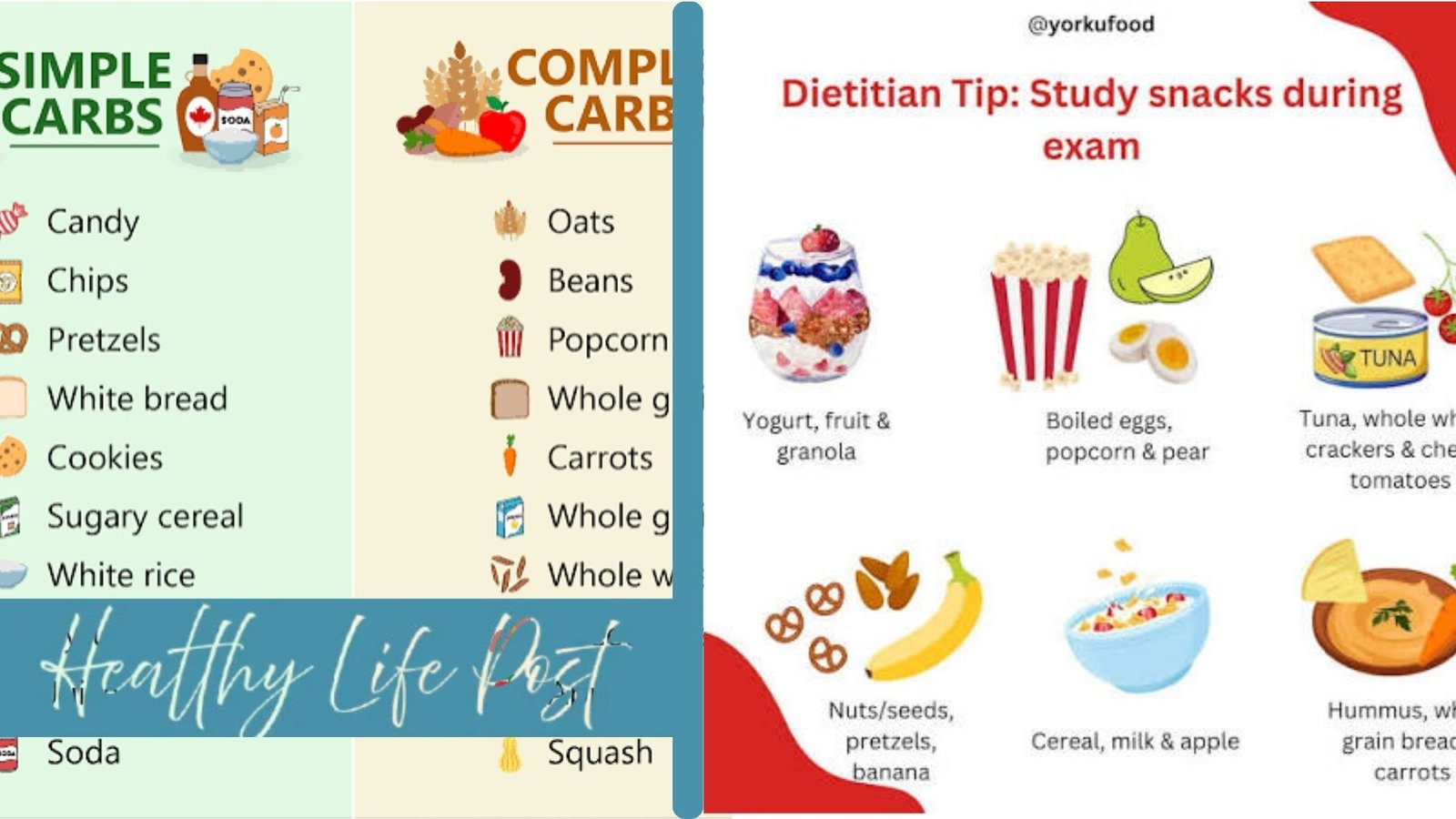

Long study sessions can leave you feeling tired, hungry, and distracted. The right snacks can help you stay satisfied while giving your body useful nutrients.
Instead of relying on chips, candy, or sugary drinks, choose simple snacks with protein, fiber, healthy fats, or whole-food carbohydrates.
At a Glance
| Category | Healthy Choices |
|---|---|
| Best protein snacks | Greek yogurt, eggs, nuts |
| Best fruit snacks | Apples, bananas, berries |
| Best crunchy snacks | Popcorn, roasted chickpeas |
| Quick energy options | Banana, oats, whole-grain toast |
| Healthy drinks | Water, milk, unsweetened drinks |
| Snacks to limit | Candy, sugary drinks, heavily processed foods |
Why Healthy Snacks Matter During Long Study Sessions
Studying for several hours can make it easy to forget about food until you suddenly become extremely hungry. When that happens, it is tempting to grab whatever is quickest.
Planning a few nutritious snacks before studying can make your routine easier. You can keep them beside your desk, pack them in your study bag, or prepare them ahead of time.
A good snack does not need to be large. The goal is simply to choose something that satisfies your hunger without turning your study break into a full meal every time.
What Makes a Good Study Snack?
The best snacks are usually simple, convenient, and satisfying.
Protein can help you feel full, while fiber-rich foods can add staying power to a snack. Fruits and whole grains can provide carbohydrates, while nuts and seeds offer healthy fats.
You can also combine foods instead of eating one item alone.
For example, an apple by itself is easy, but an apple with peanut butter can make a more substantial snack.
15 Healthy Snacks for Long Study Sessions
1. Apple With Peanut Butter
An apple is easy to carry and requires almost no preparation. Pairing it with a small amount of peanut butter makes the snack more satisfying.
You get the freshness of fruit along with protein and healthy fats from peanut butter.
Choose peanut butter without excessive added sugar when possible.
2. Greek Yogurt With Berries
Greek yogurt is an easy option when you have access to a refrigerator.
Add strawberries, blueberries, or another fruit you enjoy. You can also add a small amount of oats or nuts for extra texture.
For a simple study snack, keep the portion moderate and choose a yogurt with less added sugar.
3. Banana and a Handful of Nuts
Bananas are convenient because they come in their own natural packaging.
Pair one with a small handful of almonds, walnuts, or peanuts. This combination provides carbohydrates along with protein and fats.
It is especially convenient when you are studying at a library or somewhere without a kitchen.
4. Hard-Boiled Eggs
Hard-boiled eggs are an easy protein-rich snack that can be prepared ahead of time.
Prepare several at once and store them safely in the refrigerator. When you need a quick snack, you can have one with fruit or whole-grain crackers.
They are also easy to include in a packed study meal.
5. Roasted Chickpeas
If you enjoy crunchy snacks, roasted chickpeas can be an alternative to many highly processed snack foods.
Chickpeas provide plant protein and fiber. You can season them lightly with spices you enjoy.
Prepare them at home and portion them into small containers so they are ready when you start studying.
6. Popcorn
Plain or lightly seasoned popcorn can be a satisfying crunchy snack.
The key is how it is prepared. Popcorn covered in large amounts of butter, sugar, or salt can turn a simple snack into a much heavier choice.
A moderate portion of lightly seasoned popcorn can work well during a movie-like late-night study session.
7. Carrots and Hummus
Crunchy vegetables can make a refreshing study snack.
Cut carrots, cucumber, bell peppers, or celery into convenient pieces and pair them with hummus.
This combination gives you vegetables alongside a dip made from chickpeas and other ingredients.
8. Oatmeal With Fruit
If you want something warm, oatmeal can be a simple option.
Prepare oats with milk or water and add banana, berries, apple pieces, or nuts.
You can keep the recipe simple and avoid adding large amounts of sugar.
9. Whole-Grain Toast With Avocado
Whole-grain toast topped with avocado makes a filling snack when you are genuinely hungry.
You can add tomato slices or a boiled egg if you want something more substantial.
This option may be better suited to a longer break because it is closer to a small meal.
10. Cottage Cheese With Fruit
Cottage cheese can be paired with fruit for a quick snack.
Try it with berries, peaches, apples, or another fruit you enjoy.
If you do not like the taste of cottage cheese on its own, adding fruit and a few nuts can make it more appealing.
11. Trail Mix
A homemade trail mix can be very convenient for students.
Combine a moderate amount of nuts and seeds with dried fruit. If you want something sweeter, you can include a small amount of dark chocolate.
Making your own mix gives you more control over how much sugar and salt it contains.
12. Whole-Grain Crackers With Cheese
Whole-grain crackers and cheese can provide a combination of carbohydrates and protein.
Prepare a small portion before starting your study session rather than eating directly from a large packet.
This simple step can make it easier to stay aware of how much you are eating.
13. Fresh Fruit
Sometimes the simplest option is the best.
Apples, oranges, bananas, grapes, pears, and berries can all make convenient snacks.
Keep washed fruit somewhere visible while studying. If healthy food is easy to reach, you may be more likely to choose it.
14. Chia Pudding
Chia pudding can be prepared in advance and stored in the refrigerator.
Mix chia seeds with milk or a suitable alternative and allow the mixture to thicken. Add fruit on top before eating.
Because preparation takes time, it is better to make it before your study session rather than when you are already hungry.
15. Homemade Energy Bites
Homemade energy bites can be made using ingredients such as oats, peanut butter, seeds, and dried fruit.
Make small portions and store them appropriately. They are useful when you want something quick without preparing food during a study break.
Keep added sugar under control, especially if the dried fruit or other ingredients are already sweet.
Best Snacks for Late-Night Studying
Late-night studying can make food choices more difficult.
You may be tired and looking for something sweet or highly caffeinated. Instead, consider lighter options such as yogurt with fruit, a banana with nuts, oatmeal, or whole-grain toast.
If you are close to your normal bedtime, avoid turning a small hunger break into a very large meal. Heavy meals may feel uncomfortable for some people.
Also remember that sleep is an important part of learning and recovery. Food and caffeine should not become substitutes for adequate rest.
Healthy Snacks on a Student Budget
Eating nutritious food does not have to be expensive.
Some affordable choices include:
- Bananas
- Apples
- Oats
- Eggs
- Chickpeas
- Peanuts
- Popcorn
- Carrots
- Homemade yogurt bowls
- Whole-grain bread
Buying basic ingredients and preparing snacks at home can often be more economical than purchasing packaged snacks every day.
How to Prepare Study Snacks in Advance
Preparation can save you from making food decisions when you are already tired.
Before a busy study day, wash fruit, portion nuts, prepare boiled eggs, make overnight oats, or cut vegetables.
Keep snacks in suitable containers so they are ready when you need them.
A simple system is to prepare two or three snack choices rather than making a huge collection of foods. This gives you variety while keeping preparation manageable.
How Much Should You Eat While Studying?
There is no universal snack size for everyone.
Your needs depend on factors such as your age, body size, activity level, previous meal, and how long you will be studying.
Instead of eating automatically every hour, check whether you are actually hungry. Eat slowly and pay attention to how satisfied you feel.
If you find yourself constantly snacking while studying, consider whether you are actually hungry, bored, stressed, or simply taking a break from difficult work.
Snacks and Hydration
Food is not the only thing to think about during a long study session.
Keep water nearby and drink regularly according to your thirst and needs.
Sometimes students rely heavily on soda, sweetened coffee, or energy drinks when studying late. These can add significant amounts of sugar or caffeine to your routine.
If you use caffeine, pay attention to the timing because consuming it too late may interfere with your sleep.
Common Study-Snacking Mistakes
One common mistake is keeping a large packet of snacks beside the laptop and eating directly from the package.
Instead, put a reasonable portion into a bowl or container before you start.
Another mistake is skipping proper meals and trying to survive entirely on snacks. Snacks can complement meals, but they do not necessarily need to replace balanced meals.
Finally, avoid believing that one particular “brain food” will suddenly make studying easy. Your overall eating pattern, hydration, sleep, movement, and study habits all matter.
Final Thoughts
Choosing healthy snacks for long study sessions can make your study routine more comfortable and help you avoid relying on highly processed convenience foods.
You do not need expensive products or complicated recipes. Simple options such as fruit, Greek yogurt, nuts, eggs, roasted chickpeas, oatmeal, popcorn, vegetables with hummus, and whole-grain toast can fit easily into a student’s routine.
The best approach is to prepare snacks ahead of time, keep portions sensible, drink enough water, and avoid using sugary foods or caffeine as your main source of energy.
Most importantly, remember that snacks are only one part of a healthy study routine. Good sleep, regular meals, hydration, movement, and focused study breaks are just as important.
FAQs
1. What are the best healthy snacks for studying?
Some useful choices include fruit with peanut butter, Greek yogurt with berries, nuts, hard-boiled eggs, roasted chickpeas, popcorn, vegetables with hummus, and oatmeal. The best option depends on your hunger and personal preferences. Combining different food groups can make a snack more satisfying. For example, pairing fruit with nuts provides a mixture of carbohydrates, protein, and fats. Keeping several simple choices available can also make it easier to avoid less nutritious snacks when you are busy.
2. What should I eat during a long study session?
Choose snacks that contain nutritious ingredients and can keep you satisfied. Fruit, yogurt, nuts, eggs, chickpeas, whole-grain crackers, vegetables, and oatmeal are practical options. You do not need to eat constantly throughout a study session. If you are hungry, have a reasonable portion and continue studying afterward. If your study session is several hours long, you may also need a proper balanced meal rather than relying only on small snacks.
3. Are nuts good snacks for students?
Nuts can be a convenient snack because they contain protein, fats, and other nutrients. Almonds, peanuts, walnuts, and pistachios are easy to carry and require no cooking. However, nuts are energy-dense, so a small handful can be enough for a snack. Choosing unsalted or lightly salted varieties can help reduce excess sodium. You can also combine nuts with fruit or yogurt to create a more varied snack.
4. What are healthy snacks for studying at night?
Good nighttime options include Greek yogurt with fruit, a banana with nuts, oatmeal, a small serving of popcorn, or whole-grain toast. If you are planning to sleep soon after studying, you may prefer a lighter snack rather than a large or very heavy meal. Caffeine should also be considered carefully because it can interfere with sleep in some people. Staying hydrated and getting enough sleep are important parts of maintaining a productive study routine.
5. How can I stop eating too much while studying?
Start by identifying whether you are actually hungry or simply eating because you are bored, stressed, or taking a study break. Portion snacks into a bowl or container instead of eating directly from a large package. Keep water nearby and take regular breaks away from your desk. Eating balanced meals can also reduce extreme hunger later. If you regularly feel unusually hungry or have concerns about your eating habits, consider speaking with a qualified healthcare professional or registered dietitian.
Read more :Best Anti-Inflammatory Foods for Gut Health: What Matters Most