
Hungry before bed? You do not automatically need to skip food.
A small, filling snack can fit a weight-loss diet.
The key is choosing food that satisfies hunger without turning into another meal. Protein-rich and fiber-containing foods are especially useful because both can support fullness. Research also suggests that meal timing may matter, so regularly eating large meals very late differs from having a small planned snack.
At a Glance: The Late-Night Snack Formula
| What to Look For | Practical Target |
|---|---|
| Portion | Small snack, not another dinner |
| Calories | Often around 100–200 calories |
| Protein | Include when practical |
| Fiber | Choose fruit, oats, or whole grains |
| Added sugar | Keep relatively low |
| Best texture | Slow-eating, satisfying foods |
| Avoid | Large fried or sugary meals |
| Main goal | Control hunger without overeating |
Calories are not a strict universal rule. Individual needs vary. The bigger goal is keeping the snack compatible with your daily energy needs.
Why Late-Night Snacking Gets a Bad Reputation
Eating after a certain clock time does not magically create body fat.
Weight management depends heavily on overall energy balance. However, late eating can become problematic when it adds unnecessary calories. Nighttime snacks also tend to include highly palatable foods.
Think about common evening choices: cookies, chips, ice cream, pizza, and sugary drinks. These foods can make portion control difficult.
Meal timing may also deserve attention. In one randomized clinical trial, women eating dinner earlier lost more weight than those eating dinner around 10:30–11:00 p.m. Both groups participated in a weight-loss program. This does not prove every bedtime snack causes weight gain. It does suggest that consistently shifting substantial food intake very late may be less helpful.
The useful distinction is simple: a planned snack differs from an unplanned second dinner.
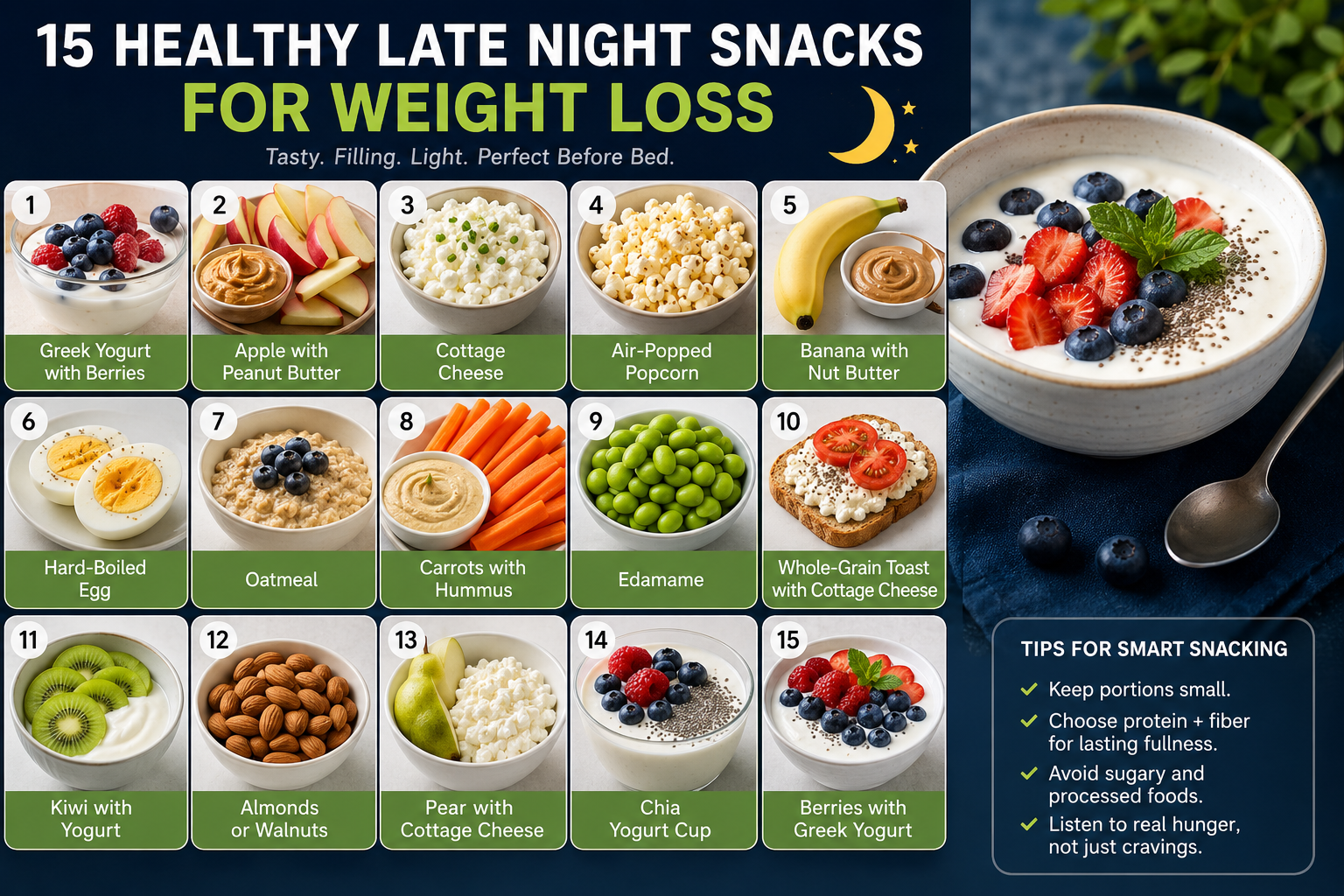
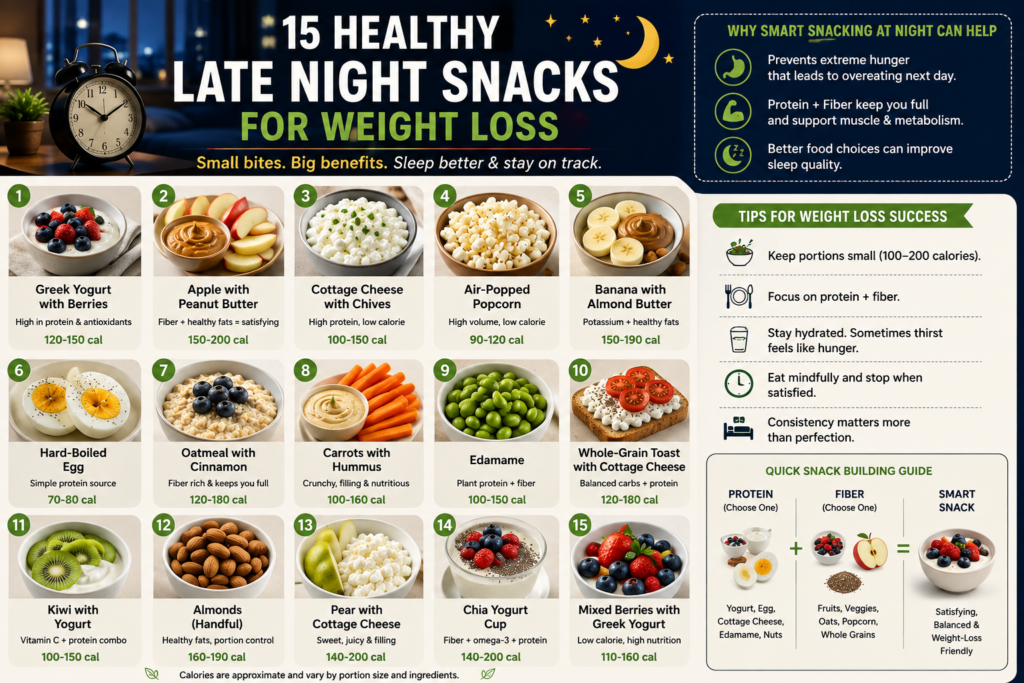
15 Healthy Late-Night Snacks for Weight Loss
Here are practical options for different cravings.
| Late-Night Snack | Why It Works | Approx. Calories* |
|---|---|---|
| Plain Greek yogurt | Protein-rich and creamy | 90–150 |
| Apple with peanut butter | Fiber plus satisfying fat | 150–200 |
| Cottage cheese | High-protein option | 100–160 |
| Air-popped popcorn | High-volume snack | 90–120 |
| Banana with nut butter | Sweet and filling | 150–200 |
| Berries with yogurt | Protein, fiber, sweetness | 100–170 |
| Hard-boiled egg | Simple protein source | 70–80 |
| Oatmeal | Warm and filling | 120–180 |
| Kiwi with yogurt | Fruit plus protein | 100–160 |
| Carrots with hummus | Crunchy and fiber-containing | 100–160 |
| Whole-grain toast | Controlled carbohydrate portion | 80–150 |
| Almonds or walnuts | Convenient and satisfying | 160–190 |
| Edamame | Protein plus fiber | 100–150 |
| Chia yogurt cup | Fiber and protein combination | 140–200 |
| Pear with cottage cheese | Sweet, juicy, protein-rich | 140–200 |
*Calories vary by brand, recipe, and serving size.
1. Plain Greek Yogurt With Berries
This combination handles several cravings together. Yogurt brings creaminess and protein. Berries provide sweetness and fiber.
Higher protein intake can increase fullness in some people. A systematic review found improved fullness or satiety in several higher-protein interventions involving adults with overweight or obesity. The overall evidence was limited by differences between studies.
Choose plain yogurt when possible. Add fresh fruit for sweetness.
2. Apple With Peanut Butter
An apple alone works for mild hunger. Add peanut butter when you need something more substantial.
The apple provides fiber and considerable chewing volume. Peanut butter adds fat and some protein. Measure the peanut butter rather than eating directly from the jar.
That small habit makes portion control much easier.
3. Cottage Cheese
Cottage cheese requires almost no preparation. It also delivers considerable protein in a relatively small serving.
Pair it with berries or sliced fruit. Choose a portion fitting your calorie needs.
4. Air-Popped Popcorn
Sometimes nighttime hunger is partly about wanting to munch.
Popcorn can satisfy that urge without requiring a huge calorie load. Keep butter and sugary coatings modest.
A bowl also takes longer to eat than several cookies. That makes popcorn useful for people who prefer volume.
5. Banana With Nut Butter
A banana makes a convenient naturally sweet dessert substitute.
Pair half or one small banana with measured nut butter. You get carbohydrates, fiber, and fat in one simple snack.
Keep the nut butter portion controlled. Its calories accumulate quickly.
6. Hard-Boiled Egg
A hard-boiled egg works well when hunger feels physical.
It provides protein without added sugar. Prepare several eggs earlier for an easy refrigerator snack.
One egg may handle mild hunger. Pair it with vegetables when you need more volume.
7. Small Bowl of Oatmeal
Oatmeal is not only breakfast food.
A small warm bowl works particularly well on cold evenings. Avoid turning it into dessert with excessive syrup or sugar.
A 2026 systematic review found higher cereal-fiber intake generally improved measures of satiety. Oat and rye fibers showed particularly favorable appetite effects. Effects on actual energy intake remained limited.
Try cinnamon and berries instead of heavy sweeteners.
8. Carrots With Hummus
This combination works for salty cravings.
Carrots provide crunch and volume. Hummus adds flavor and makes vegetables more satisfying.
Measure several tablespoons instead of using the container as your serving bowl.
9. Edamame
Edamame deserves more attention as a nighttime snack.
It naturally combines plant protein and fiber. Eating beans from their pods also slows the eating process.
Choose lightly salted versions when sodium matters to you.
10. Whole-Grain Toast With Cottage Cheese
Want something closer to real food?
One slice of whole-grain toast topped with cottage cheese creates a compact mini-meal. It combines carbohydrates, fiber, and protein without requiring much preparation.
Avoid automatically making two or three slices.
11. Kiwi With Plain Yogurt
Kiwi adds natural sweetness without needing syrups.
Dice it into plain yogurt. The combination offers fruit, fiber, and protein while remaining relatively light.
It is also useful when berries are unavailable.
12. Almonds or Walnuts
Nuts are nutritious but portion-sensitive.
A small measured serving can satisfy crunchy cravings. Eating freely from a large bag can quickly increase calories.
Put your portion into a small bowl first.
13. Pear With Cottage Cheese
Pears provide sweetness and fiber. Cottage cheese adds protein.
This pairing is especially useful when you want dessert but still feel genuinely hungry.
The combination offers more staying power than candy.
14. Chia Yogurt Cup
Mix chia seeds into plain yogurt and refrigerate briefly.
The seeds absorb liquid and change the texture. You also gain additional fiber.
Research on fiber and appetite remains nuanced. Systematic reviews show some fibers improve satiety, while many interventions show little immediate effect. Fiber type and food structure matter.
15. Berries With Greek Yogurt
For a dessert-like option, keep things simple.
Use plain Greek yogurt and naturally sweet berries. Frozen berries work too.
This provides far more nutritional value than many traditional frozen desserts.
The “Hunger Test” Before Opening the Refrigerator
Here is a useful practical framework.
Ask yourself: Would I eat yogurt, fruit, eggs, or oatmeal right now?
If yes, genuine hunger is plausible. Choose a sensible snack.
If only cookies, chips, or ice cream sound acceptable, you may be experiencing a specific craving instead.
This test is not a medical hunger assessment. It is simply a behavioral tool for separating broad hunger from food-specific desire.
Quick Decision Table
| What You Feel | Better Response |
|---|---|
| Mild stomach hunger | Small protein-rich snack |
| Strong hunger | Balanced mini-snack |
| Sweet craving | Fruit + yogurt |
| Crunchy craving | Popcorn or vegetables |
| Salty craving | Edamame or hummus |
| Boredom | Change activity first |
| Thirst | Drink water |
| Regular nightly hunger | Review dinner composition |
Protein vs. Fiber: Which Matters More at Night?
You do not need to choose one.
Protein may improve short-term fullness. A meta-analysis found acute protein intake reduced hunger and increased fullness. Long-term findings were less conclusive.
Fiber works differently. It can add food volume and may slow digestion. Certain fiber types appear more effective than others for appetite control. Research therefore does not support treating every “high-fiber” product equally.
For practical weight management, combining both often makes sense.
Examples include:
- Greek yogurt + berries
- Cottage cheese + pear
- Hummus + vegetables
- Oatmeal + yogurt
- Edamame
- Whole-grain toast + cottage cheese
These pairings create what we can call a satiety stack: protein or healthy fat combined with fiber-rich food.
Snacks That Can Quietly Disrupt Weight-Loss Progress
A food does not become unhealthy simply because it is eaten at night.
Portion size matters more than labels like “good” and “bad.” Still, certain foods make overeating especially easy.
| Food | Main Problem | Smarter Swap |
|---|---|---|
| Chips | Easy to overeat | Air-popped popcorn |
| Ice cream | Dense portions | Greek yogurt + berries |
| Cookies | Low staying power | Fruit + nut butter |
| Sugary cereal | Added sugar | Plain oatmeal |
| Pizza leftovers | Can become second dinner | Toast + cottage cheese |
| Candy | Little fullness | Fruit + yogurt |
| Sweet drinks | Calories without much fullness | Water or unsweetened drink |
You do not need to ban favorite foods.
Instead, avoid turning nighttime eating into an automatic daily event.
A Better Way to Build Your Own Night Snack
Forget complicated diet rules.
Use this three-part formula:
1. Pick a protein or satisfying base.
Try yogurt, cottage cheese, eggs, or edamame.
2. Add fiber or food volume.
Choose berries, apples, pears, vegetables, oats, or whole grains.
3. Control the calorie-dense extras.
Measure nuts, nut butter, granola, oils, and sweeteners.
This method creates dozens of combinations without needing special “weight-loss” products.
It also addresses the real problem: getting enough satisfaction from a reasonable portion.
What If You Get Hungry Every Night?
Frequent nighttime hunger can reveal something about daytime eating.
Your dinner may be too small. It might also lack protein, fiber, or overall energy. Extremely restrictive dieting can make evening hunger harder to manage.
Rather than fighting hunger every night, examine your whole eating pattern.
Try tracking when hunger appears for several days. Record dinner time, dinner composition, snack choice, and hunger level. Patterns become easier to identify.
Persistent or unusual appetite changes deserve professional advice. People with diabetes, digestive disorders, eating disorders, pregnancy, or medication-related dietary needs should seek individualized guidance.
Final Takeaway
Healthy late-night snacks for weight loss are not special diet foods. They are small, satisfying, portion-controlled foods that fit your overall eating plan.
Greek yogurt, fruit, cottage cheese, eggs, oatmeal, popcorn, vegetables, and edamame are practical choices. Combining protein with fiber can make a small snack more satisfying. Evidence supports possible appetite benefits from both nutrients, although individual responses vary.
Most importantly, separate a genuine snack from a second dinner. If nighttime eating regularly adds large amounts of food, adjusting your earlier meals may help more than searching for the “perfect” bedtime snack.
Frequently Asked Questions
Can I eat at night and still lose weight?
Yes. Overall calorie intake remains important. Food timing may also influence results.
What is the best late-night snack for weight loss?
Plain Greek yogurt with berries is a strong option. It combines protein, fiber, and sweetness.
Is fruit bad before bed?
No. Whole fruit can fit a balanced weight-loss diet.
Are bananas good for late-night hunger?
Yes. Keep portions appropriate for your overall eating plan.
Is popcorn suitable for weight loss?
Air-popped popcorn can be a useful high-volume snack. Heavy toppings change its calorie content.
Should I go to bed hungry to lose weight?
Not necessarily. A planned small snack may be more sustainable than severe restriction.
How many calories should a bedtime snack contain?
There is no universal number. Around 100–200 calories works practically for many snack ideas, but individual requirements differ.
Does eating after 8 p.m. cause weight gain?
There is no universal 8 p.m. cutoff. However, research suggests consistently eating substantial meals very late may affect weight-loss outcomes.
Sources: Research supporting this article includes peer-reviewed studies indexed by PubMed on late versus early evening meals, PubMed on dietary protein and appetite, and PubMed on cereal fiber and satiety.
This article provides general nutrition information. It does not replace personalized medical or dietetic advice.
Read more :Elimination Diet Meal Plan: A Practical 7-Day Guide