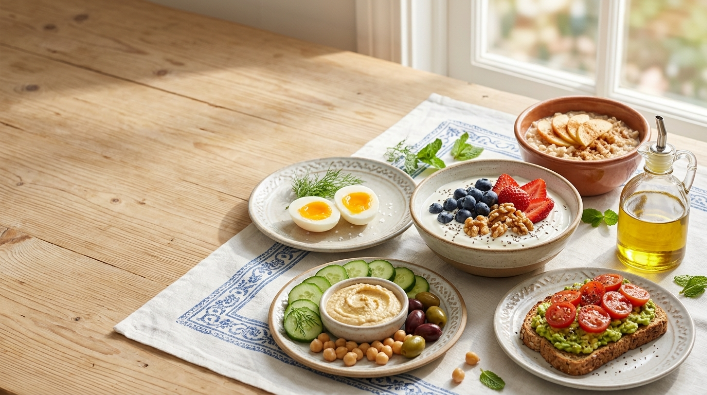

A Mediterranean diet breakfast combines minimally processed plant foods, protein, whole grains, and unsaturated fats. Good options include oatmeal with berries and walnuts, Greek yogurt with fruit, or eggs with tomatoes and whole-grain toast.
There is no single required Mediterranean breakfast. Foods and traditions vary across Greece, Italy, Spain, Turkey, Lebanon, North Africa, and other Mediterranean regions. The goal is to follow a balanced eating pattern rather than search for one perfect meal.
What Makes a Breakfast Mediterranean-Style?
A Mediterranean-style breakfast generally emphasizes:
- Fruits and vegetables
- Whole grains
- Beans and other legumes
- Nuts and seeds
- Olive oil and other unsaturated fats
- Moderate amounts of eggs and dairy
- Minimal added sugar
- Limited processed meat and refined grains
The American Heart Association considers Mediterranean-style eating a heart-healthy dietary pattern. However, its potential benefits come from the overall diet, not one ingredient or meal.
A simple four-part formula
Use this flexible formula to build your breakfast:
| Component | Practical portion | Examples |
|---|---|---|
| Fruit or vegetables | ½–1 cup | Berries, apples, tomatoes, spinach |
| Whole grain | 1 serving | Oats or whole-grain bread |
| Protein | 1 main source | Greek yogurt, eggs, beans, or hummus |
| Unsaturated fat | Small portion | Olive oil, nuts, seeds, or avocado |
Individual needs vary. Your ideal portions depend on your appetite, activity, health goals, medications, and total daily diet.
Mediterranean Breakfast Nutrition Comparison
The following nutrition figures are estimates based on standard portions. Actual values vary by brand, ingredients, and preparation method.
| Breakfast | Estimated calories | Estimated protein | Preparation time |
|---|---|---|---|
| Greek yogurt, berries, and walnuts | 300–350 | 20–23 g | 3 minutes |
| Oatmeal, milk, berries, and almonds | 330–400 | 12–16 g | 8 minutes |
| Eggs, tomatoes, and whole-grain toast | 330–390 | 18–21 g | 10 minutes |
| Hummus and vegetable toast | 300–360 | 10–13 g | 5 minutes |
| White bean and tomato toast | 320–380 | 13–16 g | 7 minutes |
| Overnight oats with yogurt and chia | 350–430 | 17–22 g | 5 minutes |
| Vegetable and feta omelet | 320–400 | 21–25 g | 12 minutes |
| Chickpea breakfast bowl | 370–450 | 15–19 g | 8 minutes |
Extra oil, cheese, nuts, sweeteners, or larger portions will increase the calorie total.
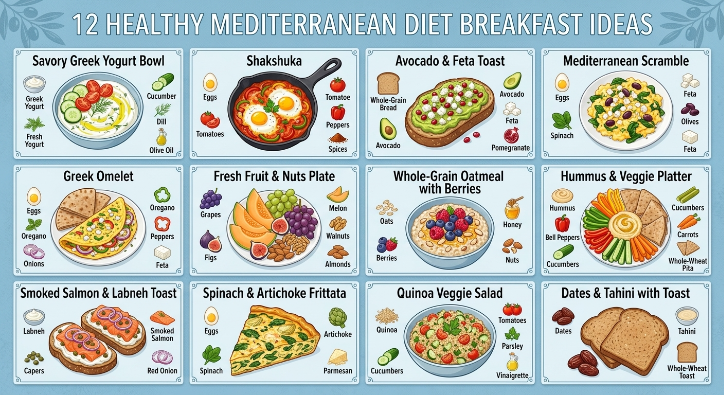
12 Mediterranean Diet Breakfast Ideas
1. Greek Yogurt With Berries and Walnuts
Combine:
- 1 cup plain Greek yogurt
- ½ cup fresh or frozen berries
- 1 ounce walnuts
- Cinnamon to taste
Estimated nutrition: 300–350 calories and 20–23 grams of protein.
Greek yogurt provides most of the protein. Berries add fruit and fiber, while walnuts contribute unsaturated fat.
Choose plain yogurt when possible. Many flavored yogurts contain substantial added sugar.
2. Apple-Cinnamon Oatmeal
Prepare:
- ½ cup dry rolled oats
- 1 cup low-fat milk or unsweetened fortified soy milk
- ½ chopped apple
- 1 tablespoon ground flaxseed
- Cinnamon
Estimated nutrition: 350–410 calories and 13–17 grams of protein.
Using dairy or soy milk provides more protein than cooking oats with water. Cooking the apple with the oats can add natural sweetness without requiring much honey or syrup.
3. Eggs, Tomatoes, and Whole-Grain Toast
Serve:
- 2 eggs
- 1 slice whole-grain toast
- Sliced tomatoes
- 1 teaspoon olive oil
- Black pepper and herbs
Estimated nutrition: 330–390 calories and 18–21 grams of protein.
This meal combines protein, vegetables, and whole grains. Cooking the eggs with a measured amount of olive oil can replace butter.
People with specific cholesterol concerns should discuss egg intake with their healthcare professional.
4. Hummus and Vegetable Toast
Top whole-grain bread with:
- ¼ cup hummus
- Sliced cucumber
- Chopped tomatoes
- Parsley
- Paprika or black pepper
Estimated nutrition: 300–360 calories and 10–13 grams of protein.
Hummus commonly contains chickpeas, tahini, lemon, and olive oil. It supplies plant protein and fiber, although it contains less protein than Greek yogurt or eggs.
Compare sodium levels when buying packaged hummus.
5. White Bean Breakfast Toast
Mash together:
- ½ cup rinsed white beans
- 1 teaspoon olive oil
- Lemon juice
- Garlic powder
- Black pepper
Spread the mixture over whole-grain toast. Add tomatoes and fresh herbs.
Estimated nutrition: 320–380 calories and 13–16 grams of protein.
This breakfast provides more fiber than many processed breakfast sandwiches. Choose no-salt-added beans when possible, or rinse regular canned beans before use.
6. Overnight Oats With Yogurt and Chia
Combine:
- ½ cup rolled oats
- ½ cup plain Greek yogurt
- ½ cup milk
- 1 tablespoon chia seeds
- ½ cup fruit
Cover and refrigerate overnight.
Estimated nutrition: 350–430 calories and 17–22 grams of protein.
The final nutrition values depend on the yogurt and milk selected. Flavored yogurt and sweetened plant milk can add considerable sugar.
7. Spinach and Feta Omelet
Cook:
- 2 eggs
- 1–2 cups spinach
- Chopped tomatoes
- 1 ounce feta
- 1 teaspoon olive oil
Estimated nutrition: 320–400 calories and 21–25 grams of protein.
Feta adds flavor, protein, and calcium. However, it may contain significant sodium. A smaller portion can provide flavor while reducing sodium.
8. Savory Mediterranean Oatmeal
Cook plain oats and add:
- Spinach
- Tomatoes
- White beans
- Oregano
- 1 teaspoon olive oil
Estimated nutrition: 350–420 calories and 14–18 grams of protein.
Savory oatmeal is useful for people who do not enjoy sweet breakfasts. It also makes vegetables and legumes easier to include in the morning.
9. Avocado, Chickpea, and Tomato Toast
Top whole-grain toast with:
- ¼ medium avocado
- ⅓ cup chickpeas
- Sliced tomatoes
- Lemon juice
- Black pepper
Estimated nutrition: 350–420 calories and 12–15 grams of protein.
Avocado is not traditional in every Mediterranean country. However, its unsaturated-fat content makes it compatible with the eating pattern.
Chickpeas provide additional protein and fiber.
10. Cottage Cheese, Fruit, and Almonds
Combine:
- 1 cup low-fat cottage cheese
- ½ cup berries or chopped peach
- ½ ounce unsalted almonds
- Cinnamon
Estimated nutrition: 330–400 calories and 28–32 grams of protein.
This is one of the highest-protein breakfasts on the list. Cottage cheese can contain considerable sodium, so compare Nutrition Facts labels.
11. Mediterranean Breakfast Pita
Fill a small whole-grain pita with:
- 1 cooked egg
- Chopped spinach
- Tomatoes
- 2 tablespoons hummus
Estimated nutrition: 350–430 calories and 17–21 grams of protein.
This portable option works well for busy mornings. Prepare the vegetables ahead of time and assemble the pita before eating.
12. Chickpea Breakfast Bowl
Combine:
- ½ cup chickpeas
- Chopped cucumber and tomatoes
- 1 cooked egg
- 1 teaspoon olive oil
- Lemon juice and herbs
Estimated nutrition: 370–450 calories and 15–19 grams of protein.
Chickpeas supply carbohydrates, protein, and fiber. Therefore, a grain-free chickpea bowl is not necessarily a low-carbohydrate meal.
Choose a Breakfast Based on Your Goal
No single breakfast is right for everyone. Use your nutritional needs and daily schedule to guide your choice.
For More Protein
Consider:
- Cottage cheese with fruit
- Greek yogurt with berries
- A vegetable omelet
- Eggs with whole-grain toast
A higher-protein breakfast may improve fullness for some people. However, eating extra protein does not automatically produce weight loss or muscle growth.
For More Fiber
Choose:
- Oatmeal with fruit and seeds
- White bean toast
- A chickpea breakfast bowl
- Hummus and vegetable toast
Increase fiber gradually if your current intake is low. Adding large amounts too quickly may cause bloating, gas, or abdominal discomfort.
For a Five-Minute Breakfast
Try:
- Greek yogurt with fruit and walnuts
- Hummus toast
- Cottage cheese with fruit
- Prepared overnight oats
Wash fruit and portion nuts ahead of time. This makes balanced breakfasts easier during busy mornings.
For a Lower-Cost Breakfast
Oats, eggs, canned beans, frozen fruit, and seasonal vegetables usually provide good value.
You do not need imported cheese, expensive bread, or premium olive oil to follow a Mediterranean-style diet.
For Weight Management
Start with a meaningful protein source and a high-fiber food. Measure calorie-dense additions such as olive oil, nuts, seeds, tahini, cheese, and avocado.
These foods provide valuable nutrients, but portions still affect total calorie intake. No Mediterranean breakfast guarantees weight loss.
Five-Day Mediterranean Breakfast Plan
This plan uses overlapping ingredients to reduce cost and food waste.
| Day | Breakfast | Estimated calories | Estimated protein |
|---|---|---|---|
| Monday | Greek yogurt, berries, and walnuts | 300–350 | 20–23 g |
| Tuesday | Apple-cinnamon oatmeal with milk | 350–410 | 13–17 g |
| Wednesday | Eggs, tomatoes, and whole-grain toast | 330–390 | 18–21 g |
| Thursday | White bean and tomato toast | 320–380 | 13–16 g |
| Friday | Spinach and feta omelet with fruit | 350–450 | 21–25 g |
These values are estimates rather than intake targets. Adjust portions according to your energy needs and professional medical guidance.
Potential Health Benefits
The strongest evidence relates to the complete Mediterranean eating pattern, not one breakfast recipe.
Cardiovascular health
Mediterranean-style diets emphasize plant foods and unsaturated fats. They also limit processed meats, refined carbohydrates, and foods high in saturated fat.
Replacing some saturated fat with unsaturated fat may support healthier blood cholesterol levels. For example, using olive oil instead of butter changes the type of fat in the meal.
Adding olive oil to an otherwise unbalanced diet will not necessarily provide the same benefits.
Fiber and digestive health
Oats, fruit, vegetables, beans, nuts, and seeds contain dietary fiber. Fiber supports regular bowel movements and may make meals more satisfying.
Increase your intake gradually and drink adequate fluids. People with certain digestive conditions may need modified fiber intake.
Blood sugar management
A breakfast containing fiber, protein, and fat may affect blood glucose differently from a meal based mainly on refined starch and sugar.
However, Mediterranean foods such as bread, oats, beans, milk, yogurt, and fruit still contain carbohydrates. People with diabetes should consider portions, medication timing, and their individual glucose responses.
Weight management
A Mediterranean breakfast may support weight management when it replaces less filling, heavily processed meals.
However, nuts, olive oil, tahini, cheese, and avocado contain concentrated calories. Including them does not make calorie awareness unnecessary.
Brain health
Some studies associate Mediterranean-style eating with better cognitive outcomes. Nevertheless, an association does not prove that the diet prevents dementia.
The National Institute on Aging notes that more research is needed before firm conclusions can be made about diet preventing Alzheimer’s disease.
Foods to Eat More Often
A Mediterranean breakfast can regularly include:
- Plain oats
- Whole-grain bread
- Fresh or frozen fruit
- Tomatoes and leafy vegetables
- Beans and chickpeas
- Plain yogurt
- Eggs
- Unsalted nuts and seeds
- Olive oil
- Herbs and spices
Variety is important. Rotating ingredients can provide a broader range of nutrients and prevent breakfast from becoming repetitive.
Foods to Limit
The Mediterranean diet does not completely prohibit foods. However, consider limiting:
- Bacon and sausage
- Sugary breakfast cereal
- Donuts and pastries
- Sweetened yogurt
- Refined white bread
- Large amounts of butter
- Sweetened coffee drinks
- Highly processed breakfast bars
An occasional pastry does not ruin an otherwise balanced diet. Your usual eating pattern matters more than one food choice.
Common Mistakes to Avoid
Using too little protein
Fruit and toast may not satisfy everyone. Add yogurt, eggs, beans, hummus, nuts, or seeds when appropriate.
Using unlimited olive oil
Olive oil provides unsaturated fat, but it remains calorie-dense. Measure it instead of pouring directly from the bottle.
Assuming “multigrain” means whole grain
“Multigrain” only means a product contains multiple grains. It does not confirm that those grains are whole.
Check the ingredient list. A whole grain should appear near the beginning.
Adding too much sugar
Honey and maple syrup count as added sugars. Use fruit and cinnamon before adding sweeteners.
Ignoring sodium
Feta, olives, hummus, cottage cheese, canned beans, and bread may all contain sodium. Combining several of these foods can create a surprisingly high-sodium meal.
Compare labels, rinse canned beans, and use herbs or lemon juice for flavor.
Affordable Shopping List
Fruits and vegetables
- Frozen or fresh berries
- Apples
- Tomatoes
- Cucumbers
- Spinach
- Lemons
Protein foods
- Plain Greek yogurt
- Eggs
- Chickpeas
- White beans
- Hummus
Whole grains
- Rolled oats
- Whole-grain bread
- Whole-grain pita
Fats and flavorings
- Olive oil
- Unsalted walnuts
- Almonds
- Chia or flaxseed
- Cinnamon
- Oregano
- Black pepper
Frozen produce can be nutritious and economical. Choose options without heavy sauces, sugary syrups, or excessive sodium.
Simple Meal-Prep System
Spend about 20 minutes preparing several breakfast components:
- Cook several eggs.
- Prepare two jars of overnight oats.
- Drain and rinse canned beans.
- Wash and chop vegetables.
- Divide nuts into small portions.
- Freeze whole-grain bread and toast it as needed.
This system creates several different meals from the same ingredients. It can also reduce reliance on breakfast bars and fast food.
Who Should Use Extra Caution?
People with diabetes
Fruit, bread, oats, beans, milk, and yogurt contain carbohydrates. Portions and meal timing may require adjustment around insulin or other medications.
Do not change diabetes medication based on dietary information alone.
People with kidney disease
Beans, nuts, dairy, whole grains, tomatoes, and some fruits may contain potassium or phosphorus that requires monitoring.
A renal dietitian can recommend appropriate portions and substitutions.
People with celiac disease
Use certified gluten-free oats and bread. Regular oats can experience gluten cross-contact during processing.
People with food allergies
These recipes may contain dairy, eggs, wheat, sesame, and tree nuts. Always check labels and replace allergens with nutritionally suitable alternatives.
People with digestive conditions
Beans, seeds, raw vegetables, and whole grains may aggravate symptoms in some people with gastroparesis, irritable bowel syndrome, or other digestive conditions.
Professional advice may be necessary before making a major dietary change.
Pregnant people
Use pasteurized dairy products and thoroughly cooked eggs. Discuss significant dietary restrictions or nutritional concerns with a prenatal healthcare professional.
Frequently Asked Questions
What is a typical Mediterranean diet breakfast?
Common foods include whole-grain bread, fruit, yogurt, eggs, tomatoes, beans, nuts, and olive oil. The exact meal varies by region.
Is oatmeal allowed on the Mediterranean diet?
Yes. Oats are whole grains. Combine them with fruit, nuts, seeds, milk, or plain yogurt.
Can I eat eggs on a Mediterranean diet?
Yes. Eggs can fit in moderate amounts, especially when served with vegetables and whole grains.
What is a high-protein Mediterranean breakfast?
Greek yogurt with walnuts, cottage cheese with fruit, or a vegetable omelet can provide approximately 20–30 grams of protein.
Is a Mediterranean breakfast good for weight loss?
It may support weight loss when it improves fullness and helps manage total calorie intake. It does not guarantee weight loss.
What can I eat if I dislike sweet breakfasts?
Try eggs with tomatoes, white bean toast, savory oatmeal, hummus toast, or a chickpea breakfast bowl.
The Bottom Line
A Mediterranean diet breakfast can be simple, affordable, and filling. Build your meal around fruit or vegetables, a whole grain, a meaningful protein source, and a moderate amount of unsaturated fat.
Greek yogurt with berries, oatmeal with nuts, vegetable eggs, and bean toast are practical options. Select portions that suit your appetite, schedule, health needs, and overall diet.
Nutrition estimates are helpful for comparison, but they are not personalized prescriptions. The quality of your complete eating pattern matters more than any single breakfast.
Read more :Mitosis vs Meiosis: Differences, Stages, and Health Impact