
Your body breaks carbohydrates into glucose. That glucose enters your bloodstream and supplies energy to your cells.
The amount and type of carbohydrate matter.
Refined carbohydrates and foods with added sugars can produce a faster glucose rise. Whole foods containing fiber generally digest more slowly. The CDC recommends choosing higher-fiber carbohydrate sources and limiting refined grains and heavily processed foods.
Lunch can therefore cause a larger glucose rise when it contains plenty of white bread, white rice, sugary drinks, sweets, or other refined carbohydrate sources without enough vegetables, protein, or fiber.
Portion size matters too.
The CDC’s plate method suggests filling half your plate with non-starchy vegetables, one-quarter with lean protein, and one-quarter with carbohydrate foods.
A snack should not be viewed as treatment for an already-high glucose reading. Think of smart snacking as part of your overall eating pattern.
What Makes a Blood-Sugar-Friendly Snack?
Three components deserve attention: fiber, protein, and healthy fats.
Fiber deserves special attention. Unlike sugars and starches, dietary fiber isn’t broken down and absorbed in the same way. Soluble fiber can also slow digestion. The CDC identifies foods including apples, oats, beans, vegetables, nuts, and seeds as useful fiber sources.
Protein can make a snack more satisfying. Nuts, seeds, legumes, yogurt, cheese, eggs, tofu, and similar foods can provide protein without relying on sugary snack foods.
The American Diabetes Association recommends snacks combining protein, healthy fats, and fiber, with or without carbohydrates. Its examples include fruit with nuts or cheese, vegetables with hummus, and apple slices with nut butter.
| Snack | Main Benefit | Smart Portion Idea |
|---|---|---|
| Plain Greek yogurt | Protein | Small bowl |
| Almonds or walnuts | Fat, protein, fiber | Small handful |
| Apple + peanut butter | Fiber + fat/protein | Small apple + thin spread |
| Vegetables + hummus | Fiber + protein | 1 cup vegetables |
| Cheese + whole-grain crackers | Protein + controlled carbs | Small serving |
| Hard-boiled egg | Protein | 1 egg |
| Berries + yogurt | Fiber + protein | Small bowl |
| Edamame | Protein + fiber | Small serving |
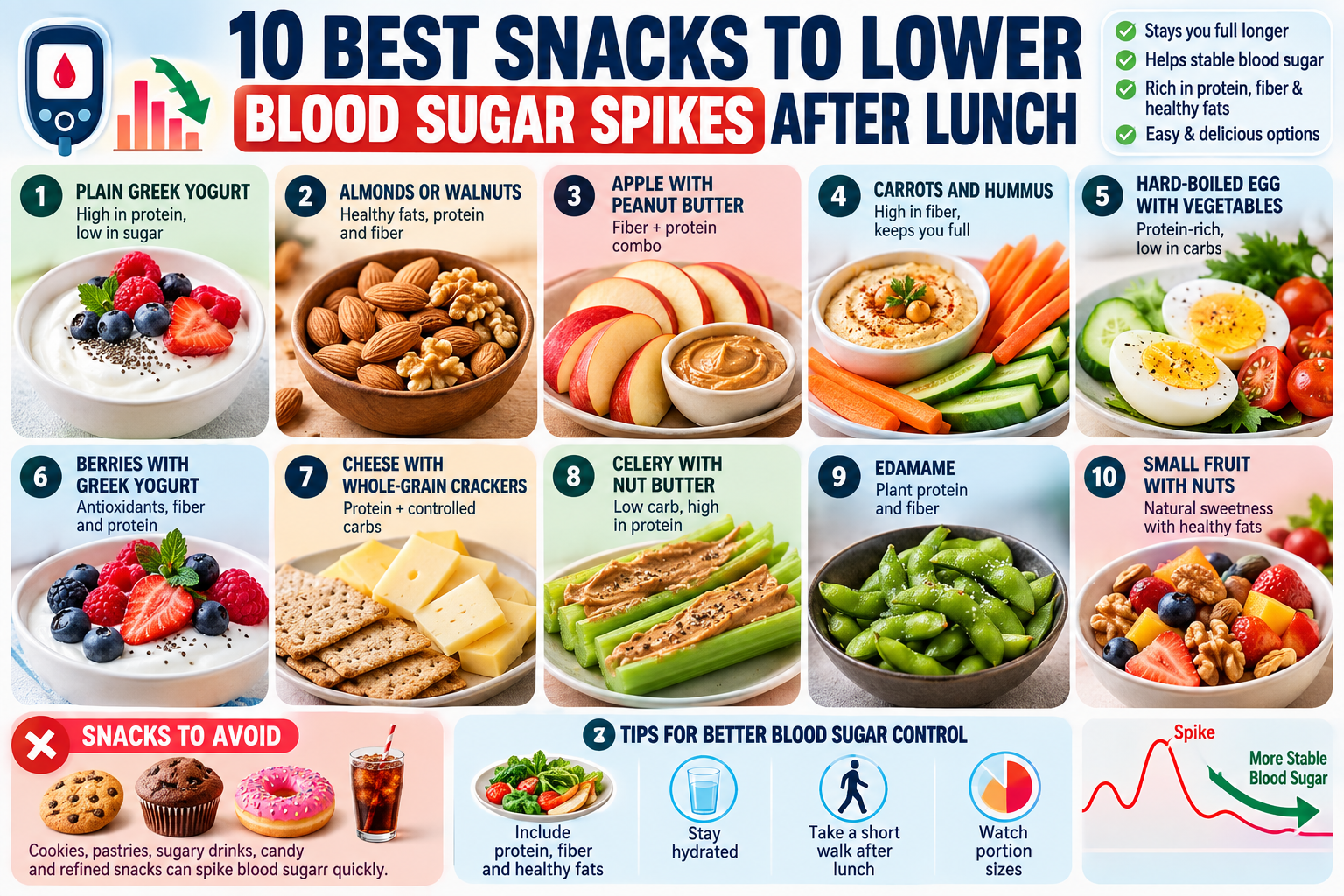
10 Best Snacks to Lower Blood Sugar Spikes After Lunch
1. Plain Greek Yogurt
Plain Greek yogurt makes a convenient afternoon snack.
It provides protein while avoiding the large amounts of added sugar found in many flavored yogurts. Check the Nutrition Facts label because carbohydrate and added-sugar amounts vary widely between products.
For extra fiber, add a small serving of berries or seeds.
The American Diabetes Association includes Greek yogurt among snack options for people managing blood glucose.
2. Almonds or Walnuts
A small handful of unsalted nuts requires almost no preparation.
Nuts provide healthy fats, plant protein, and fiber. The ADA’s 2026 nutrition guidance encourages nuts and seeds within eating patterns for people with diabetes or prediabetes.
Keep portions reasonable because nuts are calorie-dense.
3. Apple With Natural Peanut Butter
An apple alone contains carbohydrates. Pairing it with peanut butter adds fat and protein.
The apple also supplies fiber, especially when you eat the skin.
This combination follows the general principle of pairing a carbohydrate source with protein, fat, or fiber instead of choosing rapidly digested carbohydrates alone. The ADA specifically lists nut butter with apple slices as a healthy snack combination.
Choose peanut butter without lots of added sugar when possible.
4. Carrots and Hummus
Carrots and hummus offer crunch without turning to chips.
Carrots contribute fiber and nutrients. Hummus, made primarily from chickpeas, provides plant protein and fiber.
The ADA specifically recommends hummus with vegetables such as carrots or celery as a snack option.
This combination can also be useful when afternoon hunger is more about wanting something savory.
5. Hard-Boiled Egg With Vegetables
Eggs contain protein and very little carbohydrate.
Pair one with cucumber, tomato, bell pepper, or another non-starchy vegetable.
This creates a simple snack without adding a large carbohydrate load after lunch.
The broader ADA dietary pattern emphasizes lean proteins and non-starchy vegetables while limiting sweets, refined grains, and highly processed foods.
6. Berries With Plain Greek Yogurt
Berries offer sweetness without needing candy or cookies.
Combine a modest portion with unsweetened Greek yogurt. You get carbohydrates and fiber from the fruit alongside protein from the yogurt.
Whole fruit is generally preferable to fruit juice for glucose management. Juice lacks much of the intact fiber and can raise blood glucose more rapidly.
7. Cheese With Whole-Grain Crackers
This snack can work well when portions stay controlled.
Cheese supplies protein and fat. Whole-grain crackers provide carbohydrates and potentially more fiber than refined crackers.
Check the label carefully. “Whole grain” does not automatically mean low carbohydrate.
The CDC notes that roughly 15 grams of carbohydrate represents one carbohydrate serving for diabetes meal planning, although individual carbohydrate needs vary.
8. Celery With Nut Butter
Celery is low in carbohydrate and adds crunch.
Peanut, almond, or another unsweetened nut butter adds protein and fat. This makes the snack more substantial without requiring a large portion.
The ADA includes nut butter with celery among its healthy snack examples.
9. Edamame
Edamame can be an excellent savory option.
These young soybeans provide both protein and fiber. The ADA includes edamame among plant-based protein foods appropriate for diabetes-friendly eating patterns.
Choose plain or lightly seasoned varieties rather than versions coated in sugary sauces.
10. Small Fruit With Nuts
Whole fruit does contain natural sugars and carbohydrates. That doesn’t mean it must disappear from a blood-sugar-conscious diet.
Try pairing a small pear, orange, peach, or similar fruit with a modest serving of nuts.
The combination gives you fiber, protein, and healthy fat. The ADA specifically lists fruit with cheese or nuts as a healthy snacking option.
Snacks That May Make a Spike Worse
Some popular afternoon snacks can add another concentrated carbohydrate dose after lunch.
Cookies, candy, pastries, sweetened yogurt, sugary granola bars, sweet drinks, fruit juice, and many refined crackers deserve closer attention.
The problem isn’t that every carbohydrate is “bad.” Carbohydrates remain part of healthy eating.
The difference lies in quality, quantity, and the entire meal or snack.
Current ADA guidance emphasizes non-starchy vegetables, whole fruits, legumes, lean proteins, whole grains, nuts, and seeds. It recommends minimizing sugar-sweetened drinks, sweets, refined grains, and processed or ultraprocessed foods.
Do You Actually Need an After-Lunch Snack?
Not necessarily.
Healthy snacks can fit into a meal plan, but snacking isn’t automatically required. Hunger, medication, activity, meal timing, and individual glucose responses all matter.
Before grabbing food, consider whether you’re actually hungry. Water or another unsweetened drink may be enough if thirst is the real issue. The ADA recommends checking hunger versus thirst before snacking.
People using insulin or glucose-lowering medicines need more individualized guidance. Meal timing and carbohydrate intake may need to coordinate with medication.
A Better Strategy for Afternoon Blood Sugar
Start with lunch itself.
Build lunch around vegetables, adequate protein, sensible portions, and higher-fiber carbohydrate sources. Avoid making refined carbohydrates the largest part of the plate.
Then watch your personal response.
Glucose monitoring can provide useful information about responses to meals, physical activity, and medication changes. Current ADA standards emphasize that these responses can vary between individuals.
Physical activity matters too. ADA guidance notes that reducing prolonged sedentary time can lower post-meal glucose levels.
The goal isn’t a perfectly flat glucose line. It is building an eating pattern that supports your individual glucose targets.
Quick Takeaways
- Pair carbohydrates wisely: Add protein, fiber, or healthy fat.
- Choose whole foods: Favor nuts, vegetables, fruit, yogurt, and legumes.
- Watch portions: Healthy foods can still add carbohydrates and calories.
- Skip sugary drinks: Choose water or unsweetened beverages.
- Track your response: Individual glucose reactions can differ.
Frequently Asked Questions
What is the best snack after lunch for blood sugar?
There isn’t one universally best snack. Plain Greek yogurt, a small handful of nuts, vegetables with hummus, or apple with nut butter are practical options. These foods emphasize protein, fiber, or healthy fats rather than concentrated added sugars. Your ideal choice depends on hunger, medication, activity, and glucose goals.
Are nuts good for blood sugar?
Nuts can fit well into a diabetes-friendly eating pattern because they provide plant protein, healthy fats, and fiber. Current ADA recommendations encourage nuts and seeds as part of an overall nutrient-dense eating pattern. Keep portions modest because nuts contain substantial calories.
Can I eat fruit when my blood sugar tends to spike?
Whole fruit can still fit into a healthy eating plan. Portion size matters because fruit contains carbohydrates. Pairing fruit with nuts, cheese, or nut butter adds protein or fat. Choose whole fruit more often than juice because intact fruit provides fiber and generally affects glucose more slowly.
Is Greek yogurt a good afternoon snack?
Plain Greek yogurt can be a practical choice because it supplies protein. Choose unsweetened or plain varieties and inspect total carbohydrates and added sugars on the label. Adding berries, nuts, or seeds can contribute fiber and texture without relying on sugary toppings.
What if my blood sugar is actually low after lunch?
That situation is different. Low blood glucose requires appropriate treatment rather than a low-carb snack. For people with diabetes, glucose below 70 mg/dL (3.9 mmol/L) is considered clinically important. ADA guidance recommends fast-acting carbohydrate for hypoglycemia, followed by another glucose check after 15 minutes. Seek individualized medical guidance if lows occur repeatedly.
Medical Disclaimer: This article provides general educational information and does not replace medical advice, diagnosis, or treatment. Blood glucose responses vary by person, meal composition, activity, medication, and diabetes type. People taking insulin or other glucose-lowering medicines should discuss meal and snack changes with their healthcare professional or registered dietitian, especially if they experience frequent high or low blood glucose.
Read more:What Foods to Avoid Completely If You Experience Extreme Bloating After Eating?