
Extreme bloating after eating can turn a normal meal into hours of pressure, tightness, gas, and discomfort. If this happens regularly, the answer is rarely to stop eating a huge list of foods forever.
Certain foods are much more likely to cause trouble. Fermentable carbohydrates, lactose-containing foods, fizzy drinks, sugar alcohols, and some high-fat meals can increase gas or bloating in susceptible people. NIDDK explains that poorly digested carbohydrates can reach the large intestine, where bacteria break them down and produce gas.
The right approach is to identify your actual triggers. Severe or persistent bloating can also accompany constipation, food intolerances, celiac disease, irritable bowel syndrome (IBS), and other digestive conditions.
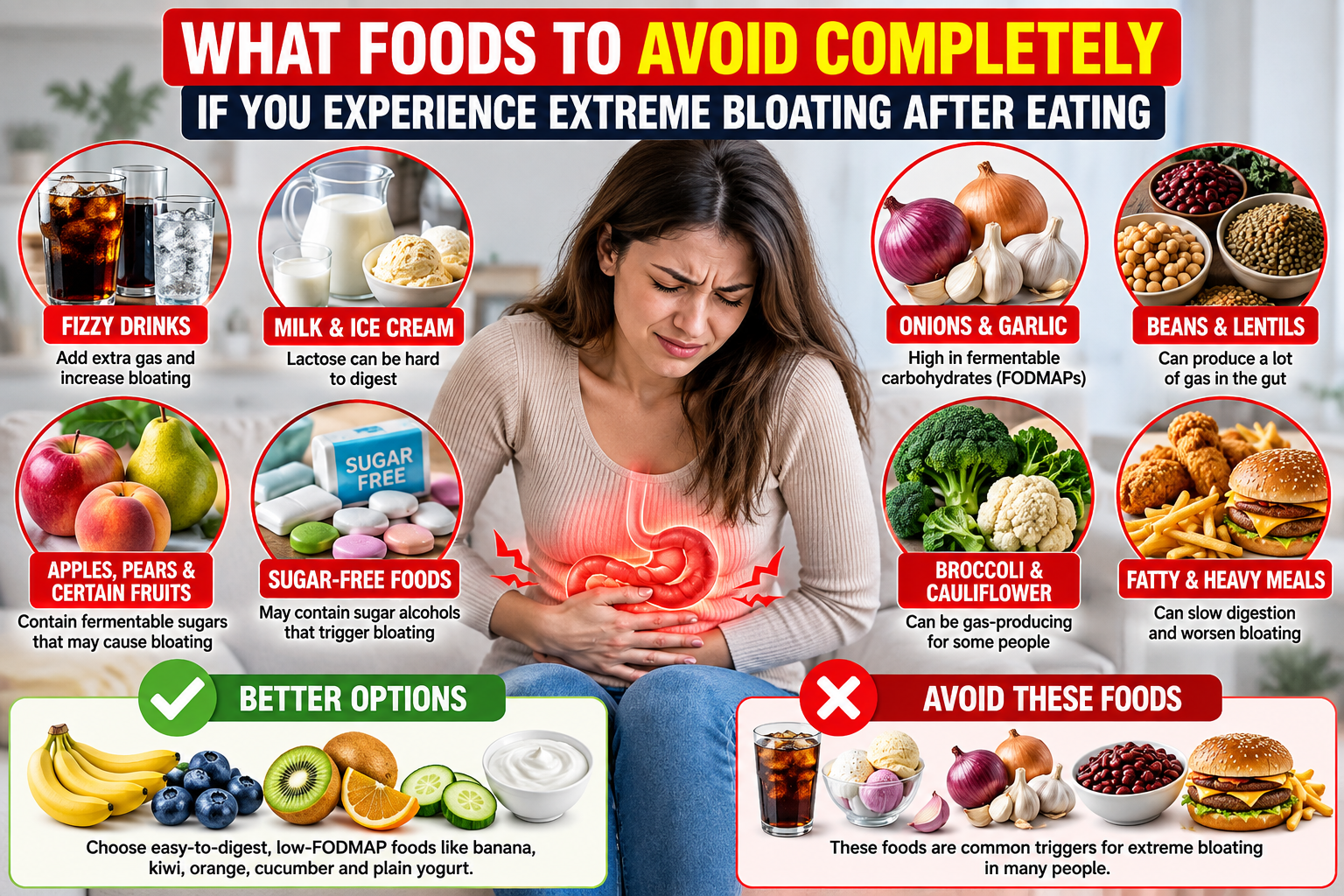
Quick Guide: Foods Commonly Linked With Bloating
| Food or Drink | Why It May Cause Bloating | What to Try |
|---|---|---|
| Fizzy drinks | Add swallowed/carbonated gas | Still water |
| Milk and ice cream | Lactose may be poorly digested | Lactose-free products |
| Beans and lentils | Fermentable carbohydrates | Smaller tolerated portions |
| Onions and garlic | High in fructans | Low-FODMAP alternatives |
| Apples and pears | Contain fermentable sugars | Oranges, kiwi or pineapple |
| Sugar-free sweets | May contain polyols | Check sweetener labels |
| Very fatty meals | May worsen bloating | Smaller, lighter meals |
These are potential triggers, not foods every person needs to ban.
1. Fizzy Drinks: A Simple Trigger to Cut First
Carbonated drinks are one of the easiest places to start.
Soda, sparkling drinks, and other fizzy beverages contain gas. Drinking them can increase the amount of gas entering your digestive tract. NIDDK also identifies carbonated beverages as a factor that can increase swallowed air and gas symptoms.
If your stomach becomes visibly distended after meals, try removing fizzy drinks temporarily.
Watch especially for:
- Regular soda: carbonation plus added sugars.
- Diet soda: carbonation plus some sweeteners.
- Energy drinks: some contain carbonation and high-fructose sweeteners.
- Sparkling water: harmless for many, troublesome for others.
Plain water is the simplest replacement.
2. Milk, Ice Cream and Other Lactose-Rich Foods
Dairy does not cause bloating in everyone.
For someone with lactose intolerance, however, milk products can trigger bloating, gas, abdominal pain, nausea, and diarrhea. The problem occurs when the small intestine does not produce enough lactase to digest all the lactose consumed.
Milk, ice cream, some yogurts, custards, and other lactose-rich foods deserve attention when symptoms consistently appear after dairy.
That does not automatically mean eliminating every dairy product.
NIDDK notes that many people with lactose intolerance can tolerate some lactose without symptoms.
Lactose-free milk may therefore work better than removing dairy completely.
3. Onions and Garlic
Onions and garlic can create major problems for some sensitive digestive systems.
Both are important sources of fructans, a type of FODMAP. FODMAPs are fermentable carbohydrates that may contribute to bloating and other IBS symptoms in susceptible people.
Monash University lists onion and garlic among common high-FODMAP vegetables.
The tricky part is hidden exposure.
Onion or garlic may appear in:
- Sauces and gravies
- Seasoning mixtures
- Restaurant meals
- Soups and stocks
If either food repeatedly produces symptoms, reducing it during a structured elimination period can help identify whether fructans are a problem.
4. Beans, Lentils and Certain Pulses
Beans have excellent nutritional value.
They can still produce substantial gas.
NIDDK lists beans, peas, and lentils among foods that may increase gas symptoms.
The reason involves digestion and fermentation. Some carbohydrates escape complete digestion in the small intestine. Gut bacteria then ferment them in the colon. Gas is produced during that process.
That does not make legumes unhealthy.
Portion size matters greatly. Some people tolerate small servings but become uncomfortable after large bowls of beans or lentils.
Instead of permanently banning them, test your tolerance carefully.
5. Apples, Pears, Peaches and Some Fruit Juices
Fruit can be another surprising trigger.
NIDDK specifically identifies apples, peaches, pears, and certain fruit juices among foods that can increase gas symptoms.
Monash also classifies several fruits as higher-FODMAP choices, including apples, cherries, mangoes, nectarines, peaches, pears, plums, dried fruits, and watermelon.
Fruit should not automatically disappear from your diet.
Try lower-FODMAP alternatives instead. Monash lists options such as kiwi, mandarin, orange, pineapple, blueberries, and cantaloupe.
This maintains nutritional variety while helping identify triggers.
6. Sugar-Free Gum, Candy and “Diet” Foods
Check the ingredient label.
Sugar-free products often contain sugar alcohols, also called polyols. Examples include sorbitol, mannitol, xylitol, erythritol, and maltitol.
NIDDK identifies products containing sweeteners ending in “-ol” among foods that can contribute to excess gas.
Common sources include:
- Sugar-free gum
- Sugar-free candy
- Protein products
- Low-sugar desserts
- Some diet snacks
Chewing gum can create another problem. It can make you swallow more air, which may increase gas symptoms.
If severe bloating started after adding “sugar-free” foods, inspect those labels first.
7. Broccoli, Cauliflower and Other Cruciferous Vegetables
Vegetables are essential parts of a nutritious diet. Yet certain vegetables can cause considerable gas.
NIDDK identifies cruciferous vegetables, including broccoli, cauliflower, collard greens, and kale, among foods that may increase gas symptoms in some people.
This does not mean broccoli or cauliflower is “bad.”
Your response matters more.
Try changing the portion size. Cooking vegetables thoroughly may also feel easier for some people than eating large raw servings.
Keep vegetables you tolerate well in your diet.
8. Very Fatty or Heavy Meals
Sometimes the problem is the meal rather than one ingredient.
NIDDK notes that high-fat foods can increase bloating symptoms for some people.
Large portions can make the situation worse.
Think about meals containing several heavy components at once: fried food, rich sauces, large portions, dessert, and a carbonated drink.
Testing smaller meals can provide useful information.
NIDDK notes that doctors may recommend smaller, more frequent meals when managing gas symptoms.
Should You Try a Low-FODMAP Diet?
A low-FODMAP diet can help some people with IBS-related bloating, but it should not become an unnecessarily restrictive lifetime diet.
Monash University describes three stages.
The first involves replacing high-FODMAP foods with lower-FODMAP options for roughly 2–6 weeks. Foods are then systematically reintroduced. The final stage creates a personalized diet based on what the individual actually tolerates.
This distinction matters.
Removing onions, garlic, dairy, wheat products, legumes, numerous fruits, and other foods forever without knowing your triggers could unnecessarily reduce dietary variety.
Working with a qualified dietitian is preferable when symptoms are severe or when considering a restrictive elimination diet.
What to Eat When Everything Seems to Cause Bloating
Do not keep removing foods randomly.
Start with simple meals containing foods you already tolerate. Keep portions moderate. Eat slowly. Avoid fizzy drinks. Record meals and symptoms.
A food-and-symptom diary can reveal patterns that memory misses. NIDDK specifically suggests that doctors may use such a diary to identify foods or drinks associated with gas symptoms.
For example, record:
Food eaten → portion → time → symptoms → symptom severity
Patterns may emerge after several days.
You may discover that dairy causes trouble. Perhaps large servings of onion are the problem. Maybe symptoms only appear after oversized meals.
That information is more useful than banning dozens of healthy foods.
When Extreme Bloating Needs Medical Attention
Occasional bloating is common. Extreme, frequent, or persistent bloating deserves attention.
The NHS recommends medical assessment when bloating happens regularly, continues despite dietary changes, or occurs alongside unexplained weight loss or blood in the stool.
Seek urgent medical care when bloating accompanies concerning symptoms such as severe sudden abdominal pain, vomiting blood, serious breathing difficulty, or inability to pass stool or gas.
Persistent bloating can have many explanations. IBS, constipation, lactose intolerance, celiac disease, and other digestive conditions can produce overlapping symptoms.
Do not diagnose the cause from a food list alone.
The Bottom Line
So, what foods should you avoid completely if you experience extreme bloating after eating?
There is no universal permanent blacklist.
Start by investigating common triggers such as fizzy drinks, lactose-rich dairy, onions, garlic, certain legumes, specific high-FODMAP fruits, sugar alcohols, and very fatty meals. Remove suspected triggers strategically rather than cutting out entire food groups indefinitely.
Then reintroduce foods when appropriate to learn your real tolerance.
The goal is simple: find the smallest restriction that gives you meaningful relief while keeping your diet nutritious and varied.
Quick Takeaways
- Track your triggers: Keep a food-and-symptom diary.
- Test strategically: Change one major variable at a time.
- Avoid over-restriction: Healthy foods may still be tolerated.
- Get evaluated: Persistent or extreme bloating needs medical attention.
Medical Disclaimer: This article is based on established public health and clinical nutrition guidance and is intended solely for educational and informational purposes. It does not provide a diagnosis or replace personalized advice from a doctor or registered dietitian. Seek professional medical care for severe, persistent, worsening, or unexplained bloating.
Read more:Healthy High Protein Snacks for Night Shift Workers That Don’t Require Heating