
Learning how to get 120 grams of protein a day without eggs or dairy is easier when you build meals around reliable protein sources. Chicken, fish, tofu, lentils, beans, and soy products can help you reach your target without relying on eggs, milk, cheese, or yogurt.
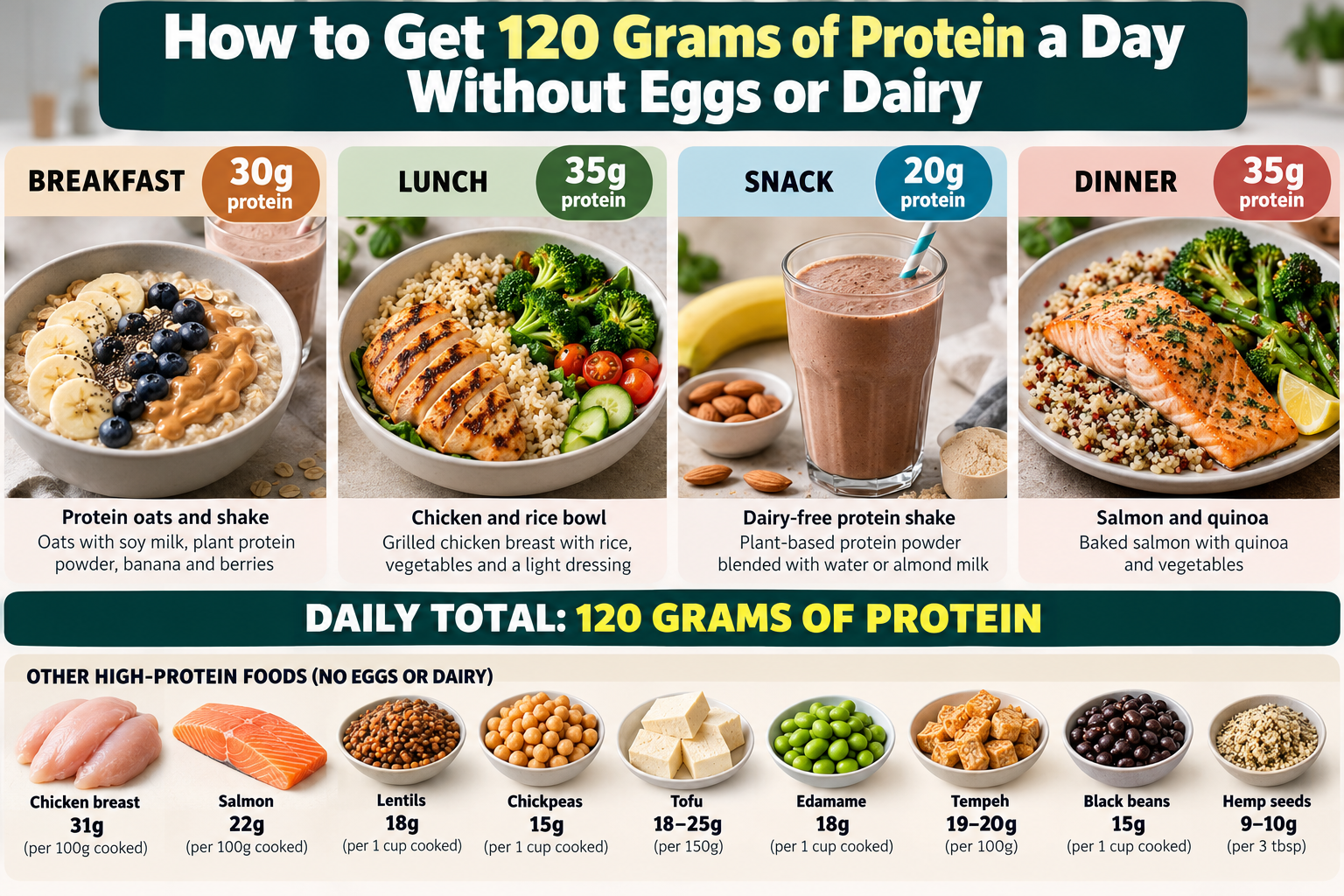
The simplest method is to divide your daily protein goal across three meals and one snack. For example, you could aim for 30 grams at breakfast, 35 grams at lunch, 35 grams at dinner, and 20 grams from snacks.
However, you don’t need to hit those exact numbers at every meal. Your total daily intake matters most for practical meal planning.
Whether you avoid eggs and dairy because of allergies, intolerance, dietary preferences, or a plant-based lifestyle, you have plenty of options.
How to Reach 120 Grams of Protein Without Eggs or Dairy
A 120-gram protein target may look difficult at first. Yet, spreading protein throughout the day makes the goal more manageable.
Instead of trying to eat most of your protein at dinner, include a substantial source at each meal. This approach also makes it easier to plan portions and grocery shopping.
Here is one way to organize your intake:
| Meal | Protein target |
|---|---|
| Breakfast | 30g |
| Lunch | 35g |
| Afternoon snack | 20g |
| Dinner | 35g |
| Daily total | 120g |
You can adjust these numbers around your appetite and schedule.
For example, someone who dislikes large breakfasts might eat 15 grams in the morning and add the remaining protein later.
Does Everyone Need 120 Grams of Protein?
Not necessarily. Protein needs depend on body weight, activity, age, health, and personal goals.
Many healthy adults need less than 120 grams daily. However, people who train regularly or want to build muscle may benefit from higher protein intake.
Therefore, treat 120 grams as a specific meal-planning target rather than a universal recommendation.
Best High-Protein Foods Without Eggs or Dairy
You don’t need complicated recipes or expensive specialty products to eat more protein. Instead, focus on foods that offer meaningful amounts per serving.
Both animal-based and plant-based foods can fit an egg-free, dairy-free diet.
High-Protein Animal Foods
If you eat meat or seafood, these foods can make your daily protein target easier to reach.
| Food | Serving size | Approximate protein |
|---|---|---|
| Chicken breast | 100g cooked | 31g |
| Turkey breast | 100g cooked | 29g |
| Tuna | 100g canned, drained | 25g |
| Salmon | 100g cooked | 22g |
| Lean beef | 100g cooked | 26g |
| Shrimp | 100g cooked | 24g |
These values are estimates. Cooking methods, cuts, species, and product labels can change the final amounts.
Chicken breast is especially convenient because it provides substantial protein in a relatively small portion. Meanwhile, fish offers variety and additional nutrients.
Best Plant-Based Protein Sources
Plant-based protein foods work well for vegetarians, vegans, and people who want to eat less meat.
| Food | Serving size | Approximate protein |
|---|---|---|
| Firm tofu | 150g | 18–25g |
| Tempeh | 100g | 19–20g |
| Cooked lentils | 1 cup | 18g |
| Cooked chickpeas | 1 cup | 14–15g |
| Cooked black beans | 1 cup | 15g |
| Shelled edamame | 1 cup cooked | 18g |
| Seitan | 100g | 20–25g |
| Hemp seeds | 3 tablespoons | 9–10g |
| Peanut butter | 2 tablespoons | 7–8g |
Tofu and seitan can vary considerably by brand, so check their nutrition labels.
Soy foods are particularly useful because they provide substantial protein without dairy. Additionally, lentils and beans contribute fiber and important minerals.
Nuts and seeds also help. However, they usually work better as protein boosters than as the main source in a high-protein meal.
A Complete 120-Gram Protein Meal Plan Without Eggs or Dairy
The following example shows how you can reach approximately 120 grams of protein with four simple meals.
It includes chicken and fish, but contains no eggs or dairy ingredients.
Breakfast — Protein Oats and Shake
Oats prepared with soy milk, a scoop of dairy-free protein powder, and berries.
Estimated protein: 30g
Lunch — Chicken and Rice Bowl
100g cooked chicken breast with rice, vegetables, and a light dressing.
Estimated protein: 35g
Snack — Dairy-Free Protein Shake
One serving of plant-based protein powder blended with water or unsweetened almond milk.
Estimated protein: 20g
Dinner — Salmon and Quinoa
About 140g cooked salmon with a small serving of quinoa and vegetables.
Estimated protein: 35g
| Meal | Protein |
|---|---|
| Breakfast | 30g |
| Lunch | 35g |
| Snack | 20g |
| Dinner | 35g |
| Total | 120g |
This is an illustrative meal plan, not a laboratory-tested nutrition calculation. For example, a scoop of protein powder might provide 15, 20, or 25 grams, depending on the product.
Consequently, weigh portions when necessary and use your food labels to calculate your actual intake.
You can also add more vegetables, fruit, carbohydrates, and healthy fats to meet your energy needs. A protein goal alone does not determine whether a meal plan provides enough calories or nutrients.
Easy Egg-Free and Dairy-Free High-Protein Meals
Variety makes a high-protein diet easier to maintain. Fortunately, you can prepare satisfying meals without using eggs or dairy.
The following ideas work for busy mornings, packed lunches, and simple family dinners.
Breakfast Ideas With 25–35 Grams of Protein
Breakfast can be challenging when you remove eggs, milk, and yogurt. However, several convenient alternatives provide similar amounts of protein.
Protein oatmeal: Mix rolled oats with fortified soy milk and dairy-free protein powder. Then, add berries, cinnamon, or sliced bananas for flavor.
Tofu scramble: Crumble firm tofu into a pan with spinach, tomatoes, peppers, and spices. Serve it with whole-grain toast for additional protein and carbohydrates.
High-protein smoothie: Blend a plant-based protein powder with soy milk, frozen fruit, and oats. This option works particularly well when you have little time to cook.
Choose portion sizes that provide roughly 25–35 grams of protein. Additionally, check the labels of plant-based milk alternatives, because their protein content differs considerably.
Lunch Ideas With 30–40 Grams of Protein
Lunch offers an excellent opportunity to add a substantial amount of protein.
For example, combine cooked chicken breast with rice, spinach, cucumber, and olive oil. You can prepare several servings ahead of time.
Alternatively, try these meals:
- Tuna and chickpea salad with lemon dressing.
- Turkey breast wrap with vegetables and hummus.
- Tempeh stir-fry with brown rice.
- Grilled tofu bowl with edamame and vegetables.
- Lean beef with roasted potatoes and broccoli.
If you prefer plant-based lunches, combine two protein sources. Tofu and edamame, for instance, can provide more protein than vegetables and rice alone.
Dinner Ideas With 30–40 Grams of Protein
Dinner doesn’t have to involve a large portion of meat.
A salmon fillet with quinoa and vegetables can make a balanced meal. Similarly, chicken with lentils offers protein from two different sources.
For a meat-free option, cook tempeh with mushrooms, onions, and a tomato-based sauce. Serve it over pasta or rice.
You can also make a hearty bean chili. However, ordinary beans may require relatively large portions to provide 35 grams of protein. Adding tofu, tempeh, or soy mince can make that target easier.
Snacks With 10–25 Grams of Protein
Snacks help close the gap when your main meals fall short.
Useful options include roasted edamame, dairy-free protein shakes, tuna packets, hummus, nuts, and soy-based snacks.
For example, one serving of plant protein powder may deliver around 20 grams. Meanwhile, a smaller portion of edamame can provide a useful boost without requiring another full meal.
Remember that protein bars sometimes contain milk proteins, whey, or egg ingredients. Therefore, check the label before buying them.
How to Get 120 Grams of Protein on a Fully Plant-Based Diet
You can also reach 120 grams of protein without meat, seafood, eggs, or dairy.
However, fully plant-based meal plans usually need more attention to portion sizes. Some plant foods contain substantial protein, while others contribute only a few grams.
Soy products, seitan, legumes, and suitable plant-based protein powders can make the process easier.
Example Vegan 120-Gram Protein Day
| Meal | Example food | Estimated protein |
|---|---|---|
| Breakfast | Oats, soy milk, plant protein powder | 30g |
| Lunch | Tofu and edamame rice bowl | 35g |
| Snack | Plant-based protein shake | 20g |
| Dinner | Tempeh and lentil stir-fry | 35g |
| Total | 120g |
These are meal targets rather than verified totals for fixed recipes. Adjust the amount of tofu, tempeh, legumes, and protein powder to match the nutrition labels.
For example, a tofu bowl might contain 200 grams of firm tofu plus a serving of edamame. Depending on the products, this combination could provide around 35 grams of protein or more.
Combine Different Plant Proteins
Plant proteins vary in their amino acid profiles. Amino acids are the building blocks your body uses to make and repair proteins.
Soy foods provide all essential amino acids in useful proportions. In contrast, some other plant foods contain lower amounts of particular essential amino acids.
Fortunately, people who eat a varied plant-based diet generally don’t need to combine complementary proteins in every meal.
Instead, include different protein sources throughout the day. Beans, whole grains, lentils, soy foods, nuts, and seeds can contribute to a balanced intake.
Pay Attention to Other Nutrients
Protein is only one part of a nutritious diet.
If you avoid all animal foods, pay particular attention to vitamin B12, calcium, iron, iodine, and vitamin D. Fortified foods and supplements may be necessary, especially for vitamin B12.
Calcium-fortified soy milk and calcium-set tofu can replace some nutrients commonly obtained from dairy.
Additionally, eat iron-rich plant foods with vitamin C sources, such as peppers or citrus fruit, to support iron absorption.
How to Meal Prep 120 Grams of Protein Without Eggs or Dairy
Meal preparation saves time and helps you maintain a consistent protein intake.
You don’t need to cook a different recipe every day. Instead, prepare a few versatile ingredients and combine them throughout the week.
Prepare Protein Sources in Advance
Start by choosing two or three main proteins.
For example, cook chicken breast, bake tofu, and prepare a pot of lentils. Then, use these ingredients in rice bowls, salads, wraps, and stir-fries.
Store cooked foods promptly in the refrigerator. Freeze portions you won’t eat within the recommended storage period.
For convenience, divide ingredients into individual meal containers. This approach makes portions easier to track.
Build Meals Around Protein First
When planning dinner, choose your protein source before selecting side dishes.
For example, begin with a portion of fish that provides roughly 30 grams of protein. Next, add rice, vegetables, and healthy fats.
This method works because vegetables and grains alone may not provide enough protein for a high daily target.
However, they still matter for fiber, energy, vitamins, and minerals. A balanced diet needs more than protein-rich foods.
Make Your Grocery Budget Work Harder
Eating 120 grams of protein doesn’t always require expensive products.
Dry lentils, canned beans, tofu, frozen fish, and larger packs of chicken can offer practical choices, depending on local prices.
You can also purchase dried soy chunks or textured vegetable protein where available. These products often provide concentrated protein and store well.
Compare foods by their protein content per serving and price per package. Additionally, consider how much food you actually enjoy eating.
A cheaper protein source offers little value if you regularly waste it.
Common Mistakes When Trying to Eat 120 Grams of Protein
Even a well-designed meal plan can fall short when you overlook portion sizes or depend on foods with relatively little protein.
Counting Raw and Cooked Weights as Equal
Cooking changes food weight because ingredients lose or absorb water.
For example, 100 grams of raw chicken and 100 grams of cooked chicken generally contain different amounts of protein per 100 grams.
Therefore, use nutrition entries that match how you weigh your food.
If you measure cooked chicken, select a cooked chicken entry. This simple habit improves your estimates.
Depending Too Much on Nuts and Peanut Butter
Nuts and nut butters contain protein. However, they also provide substantial amounts of fat and calories.
Two tablespoons of peanut butter usually contain about 7–8 grams of protein.
Consequently, reaching 30 grams of protein from peanut butter alone requires a relatively large serving.
Use peanut butter to complement oats, smoothies, or snacks rather than treating it as your only major protein source.
Assuming Every Plant-Based Milk Is High in Protein
Plant-based milk alternatives vary widely.
Fortified soy milk often contains considerably more protein than standard almond or rice milk. Some pea-based drinks also provide substantial amounts.
For this reason, compare nutrition labels instead of assuming all dairy-free drinks offer the same benefits.
Choose fortified alternatives when appropriate, especially if dairy previously supplied much of your calcium intake.
Ignoring Hidden Eggs and Dairy
Avoiding obvious foods isn’t always enough.
Packaged bread, sauces, dressings, baked goods, protein bars, and prepared meals may contain egg or milk ingredients.
Common dairy ingredients include whey, casein, milk solids, and milk powder.
If you have a diagnosed food allergy, read allergen statements carefully and follow your clinician’s advice about cross-contact. Products labeled dairy-free may still require closer inspection depending on the manufacturer and your needs.
Focusing on Protein While Ignoring Calories
Reaching 120 grams of protein doesn’t automatically mean your diet supports your goals.
Someone who exercises frequently may need additional carbohydrates for training and recovery. Meanwhile, people trying to maintain their weight need enough overall energy.
Also, extremely restrictive diets can make it harder to obtain essential nutrients.
Therefore, aim for a balanced eating pattern rather than building every meal around protein numbers alone.
Is Eating 120 Grams of Protein Every Day Healthy?
For many healthy adults, 120 grams of protein can fit within a balanced diet. However, whether that amount is appropriate depends on individual circumstances.
The general recommended dietary allowance for healthy adults is approximately 0.8 grams per kilogram of body weight daily. This is a baseline recommendation, not an ideal target for every fitness goal.
Athletes and people who train regularly may need more. Research-based sports nutrition guidance often places athlete protein intake around 1.2–2.0 grams per kilogram daily.
Consider these examples:
| Body weight | Protein at 120g/day |
|---|---|
| 50 kg | 2.4g/kg |
| 60 kg | 2.0g/kg |
| 70 kg | 1.71g/kg |
| 80 kg | 1.5g/kg |
| 90 kg | 1.33g/kg |
The same 120-gram target represents a very different intake for someone weighing 50 kilograms versus 90 kilograms.
Additionally, people with chronic kidney disease or other medical conditions may need individualized protein guidance. Pregnancy, breastfeeding, and certain health conditions can also change nutritional requirements.
A registered dietitian or qualified healthcare professional can help determine a suitable target.
Do You Need Protein Powder?
Protein powder is optional.
Chicken, fish, tofu, beans, lentils, and other whole foods can provide enough protein when portions are adequate.
However, a dairy-free protein powder may offer convenience when you struggle to reach your target through regular meals.
Pea, soy, and rice-based protein powders are common alternatives. Choose a product that fits your allergies, budget, and nutritional needs.
Also, check serving sizes and third-party testing information when available.
Final Thoughts
Learning how to get 120 grams of protein a day without eggs or dairy starts with choosing suitable foods and dividing them across meals.
Chicken, fish, tofu, tempeh, lentils, and edamame can all contribute. Meanwhile, dairy-free protein shakes offer a convenient option when whole-food meals fall short.
Start with a realistic protein target for your body and activity level. Then, plan three balanced meals and one or two snacks.
Most importantly, choose foods you enjoy and can prepare consistently. That approach makes a high-protein diet easier to maintain without relying on eggs or dairy.
Read moe:Gluten Free Dairy Free High Protein Lunch Ideas for Office Workers