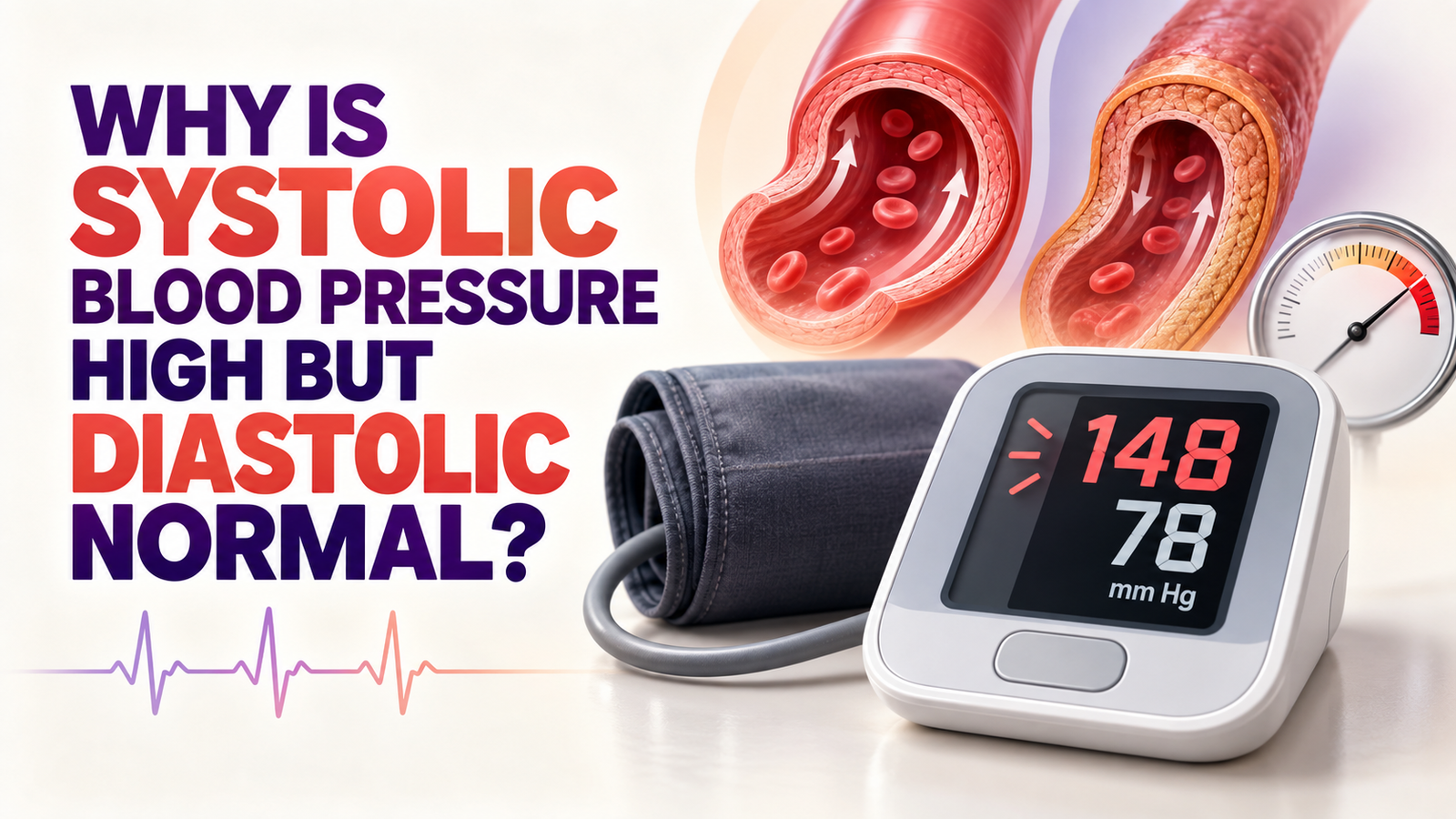

When systolic blood pressure is repeatedly high but diastolic pressure remains normal, the pattern is often called isolated systolic hypertension. It means the pressure inside the arteries rises too much when the heart contracts, even though the pressure between heartbeats is not elevated.
The most common explanation—particularly in older adults—is that the large arteries have become stiffer and cannot expand as easily with each heartbeat. However, temporary factors, incorrect measuring technique, medications and certain health conditions can produce the same pattern.
A normal lower number does not cancel out an elevated upper number. Persistent systolic hypertension still increases the workload on the heart and can raise the long-term risk of stroke, heart disease, kidney disease and cognitive decline.
What the Two Blood Pressure Numbers Measure
A blood pressure reading contains two measurements:
- Systolic pressure, the upper number, measures the pressure against the artery walls while the heart contracts.
- Diastolic pressure, the lower number, measures the pressure while the heart relaxes between beats.
Under current US blood pressure categories:
| Category | Systolic pressure | Diastolic pressure |
|---|---|---|
| Normal | Below 120 | Below 80 |
| Elevated | 120–129 | Below 80 |
| Stage 1 hypertension | 130–139 | Or 80–89 |
| Stage 2 hypertension | 140 or higher | Or 90 or higher |
| Severe hypertension | Higher than 180 | And/or higher than 120 |
Therefore, a reading such as 135/76 mm Hg falls into Stage 1 hypertension based on the systolic number alone. A reading of 148/78 mm Hg falls into Stage 2.
Definitions vary slightly between countries and clinical guidelines. Some sources use the term isolated systolic hypertension specifically for readings of at least 140 systolic with a diastolic pressure below 90. Regardless of terminology, a consistently elevated upper number deserves attention.
The Most Likely Explanation: Stiffer Arteries
Healthy arteries stretch when the heart pumps blood and then gently recoil. This flexibility helps absorb the pressure produced by each heartbeat.
With age, large arteries—particularly the aorta—may become thicker, stiffer or affected by plaque. A stiff artery cannot expand as effectively, so the systolic pressure rises. The diastolic number may remain normal or eventually decrease because the artery’s elastic recoil is weaker between beats.
This is why isolated systolic hypertension becomes more common with age. It is not, however, something that should be dismissed as an unavoidable or harmless part of getting older.
Other Reasons the Upper Number May Be High
A high systolic reading does not always have one clear cause. The possibilities generally fall into three groups.
1. Temporary Changes
Systolic pressure responds quickly to physical and emotional conditions. It may rise temporarily because of:
- Anxiety, stress or pain
- Recent exercise
- Caffeine, nicotine or energy drinks
- A full bladder
- Cold temperatures
- Poor sleep
- Talking during the measurement
- “White-coat” hypertension caused by anxiety in a medical setting
One unusual reading cannot confirm hypertension. What matters is whether the pattern continues across properly taken measurements.
2. Incorrect Measurement
A falsely high systolic reading can result from:
- Using a cuff that is too small
- Placing the cuff over clothing
- Holding the arm below heart level
- Sitting without back support
- Crossing the legs or leaving the feet unsupported
- Measuring immediately after walking or climbing stairs
- Using an unvalidated wrist, finger or smartwatch device
- Talking or moving during the reading
Incorrect cuff size is especially important. A cuff that is too small can overestimate blood pressure.
3. Medical Conditions or Medications
Although age-related arterial stiffness is common, clinicians may also consider conditions that increase blood pressure or make the heart pump more forcefully, including:
- Kidney disease
- Thyroid disorders
- Obstructive sleep apnea
- Diabetes and metabolic disease
- Significant anemia
- Aortic valve disease
- Narrowing of an artery supplying a kidney
- Pregnancy-related hypertension
Certain substances and medicines can also raise blood pressure. Examples include some decongestants, stimulants, nonsteroidal anti-inflammatory drugs, corticosteroids and hormonal medicines. Supplements and recreational drugs can contribute as well.
Do not stop a prescribed medicine independently. A doctor or pharmacist can review whether it may be affecting your readings and recommend a safe alternative when appropriate.
What a Wide Pulse Pressure May Indicate
Pulse pressure is the difference between the systolic and diastolic numbers. For example:
150 − 75 = a pulse pressure of 75 mm Hg
A larger difference can occur when the arteries are stiff or when the heart is ejecting a greater volume of blood with each beat. Pulse pressure often widens with age.
This calculation can provide useful context, but it cannot diagnose a heart or artery condition by itself. Clinicians interpret it alongside age, symptoms, medical history, repeated readings and examination findings.
First Check Whether the Pattern Is Real
Before drawing conclusions from a high systolic value, repeat the measurement correctly.
- Avoid smoking, caffeine and exercise for at least 30 minutes beforehand.
- Empty your bladder.
- Sit quietly for at least five minutes.
- Keep your back supported and both feet flat on the floor.
- Place the cuff on bare skin using the correct cuff size.
- Support the arm so the middle of the cuff is at heart level.
- Remain still and silent.
- Take two readings one minute apart and record both.
- Repeat the process at consistent times over several days, following your clinician’s instructions.
Use a validated automatic upper-arm monitor. Wrist and finger monitors are generally less reliable, while cuffless smartwatch readings should not currently be used to diagnose hypertension.
Bring your monitor to a medical appointment so its accuracy and cuff fit can be checked against the clinic’s equipment.
When to Arrange a Medical Appointment
Contact a healthcare professional if your systolic readings repeatedly reach 130 mm Hg or higher, even when the diastolic number stays below 80.
An evaluation may include:
- Reviewing your home blood pressure record
- Comparing measurements in both arms
- Checking medication, supplement and stimulant use
- Assessing cardiovascular risk factors
- Blood and urine tests for kidney, thyroid or metabolic problems
- Screening for sleep apnea
- An electrocardiogram or other heart testing when indicated
- Ambulatory monitoring that records blood pressure over 24 hours
The goal is to distinguish persistent hypertension from temporary elevation, white-coat hypertension or an inaccurate home monitor. A clinician can also look for secondary causes, especially if the pattern begins suddenly, occurs at a young age or remains difficult to control.
When High Systolic Pressure Is an Emergency
If your blood pressure is higher than 180/120 mm Hg, wait at least one minute and measure it again.
Call emergency services immediately if the repeated reading remains that high and you have symptoms such as:
- Chest pain
- Shortness of breath
- Back pain
- Weakness or numbness
- Difficulty speaking
- Confusion
- A sudden change in vision
- A severe or unusual headache
Do not wait for the pressure to fall on its own when these symptoms are present. If the reading remains above 180/120 without symptoms, contact a healthcare professional promptly for instructions.
Pregnancy requires separate thresholds and additional caution. A pregnant or recently postpartum person with a high reading, severe headache, vision changes, upper abdominal pain, major swelling, chest pain or breathlessness should obtain urgent obstetric care.
How Is Isolated Systolic Hypertension Treated?
Treatment depends on the average blood pressure, age, overall cardiovascular risk and medical history. It may involve lifestyle measures, medication or both.
Helpful changes can include:
- Following a DASH-style eating pattern
- Reducing excess sodium
- Exercising regularly within personal medical limits
- Reaching or maintaining an appropriate weight
- Reducing or avoiding alcohol
- Stopping smoking
- Improving sleep
- Treating sleep apnea when present
- Managing diabetes, kidney disease and cholesterol
- Taking prescribed blood pressure medicine consistently
Dietary potassium may help some people, but potassium supplements or major dietary increases can be unsafe for people with kidney disease or those taking certain medications. Discuss this with a healthcare professional first.
Medication must be selected carefully, particularly in older adults. Lowering systolic pressure is important, but treatment should also avoid reducing diastolic pressure excessively or causing dizziness, fainting and falls. Never alter the dose based on one home reading.
The Practical Bottom Line
A high systolic number with a normal diastolic number usually means the arteries are experiencing excessive pressure each time the heart contracts. Arterial stiffness is a frequent cause, especially later in life, but inaccurate technique, short-term stress, medicines and underlying health conditions can produce a similar pattern.
Confirm the reading with correct home monitoring and discuss repeated systolic values of 130 mm Hg or higher with a healthcare professional. The normal lower number should be reassuring only in context—it does not make persistent systolic hypertension harmless.