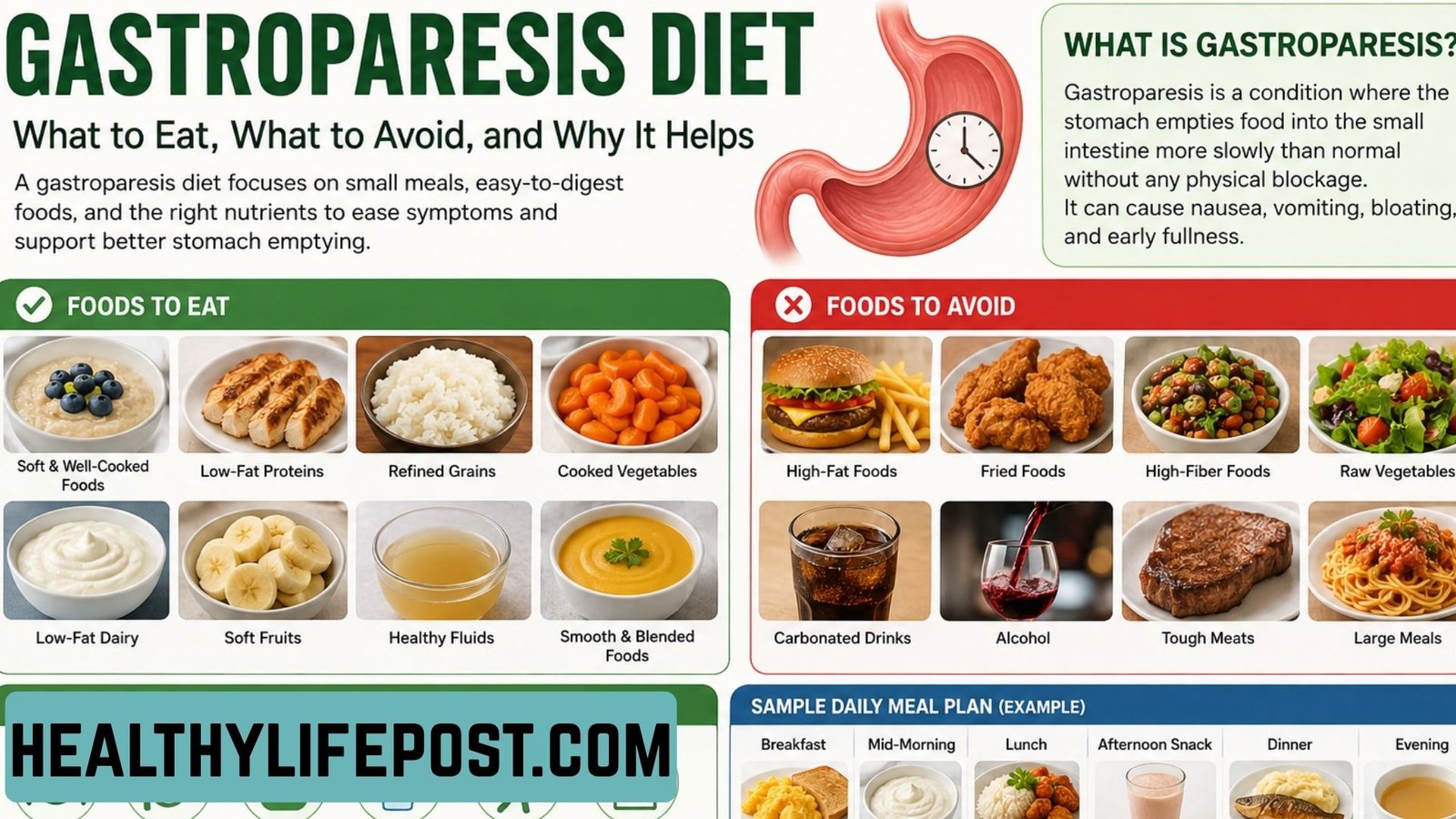

A good gastroparesis diet focuses on smaller meals and easier digestion. The goal is not simply eating less. It is getting enough nutrition without overloading a slow stomach.
What Is Gastroparesis?
Gastroparesis slows the movement of food from the stomach. It happens without a physical blockage. Food can remain in the stomach longer than expected. This may cause nausea, vomiting, bloating, and early fullness.
The condition can also affect nutrition. Some people eat less because meals cause discomfort. This can increase the risk of dehydration and malnutrition.
At a Glance
| Diet Focus | Practical Approach |
|---|---|
| Meal size | Choose five or six smaller meals |
| Fat | Keep meals relatively low in fat |
| Fiber | Choose lower-fiber foods when advised |
| Texture | Prefer soft and well-cooked foods |
| Fluids | Maintain adequate hydration |
| Eating speed | Chew food thoroughly |
| Severe symptoms | Consider liquids or blended foods with medical guidance |
These recommendations come from guidance published by the National Institute of Diabetes and Digestive and Kidney Diseases.
The Main Goal of a Gastroparesis Diet
The key idea is less stomach workload per meal.
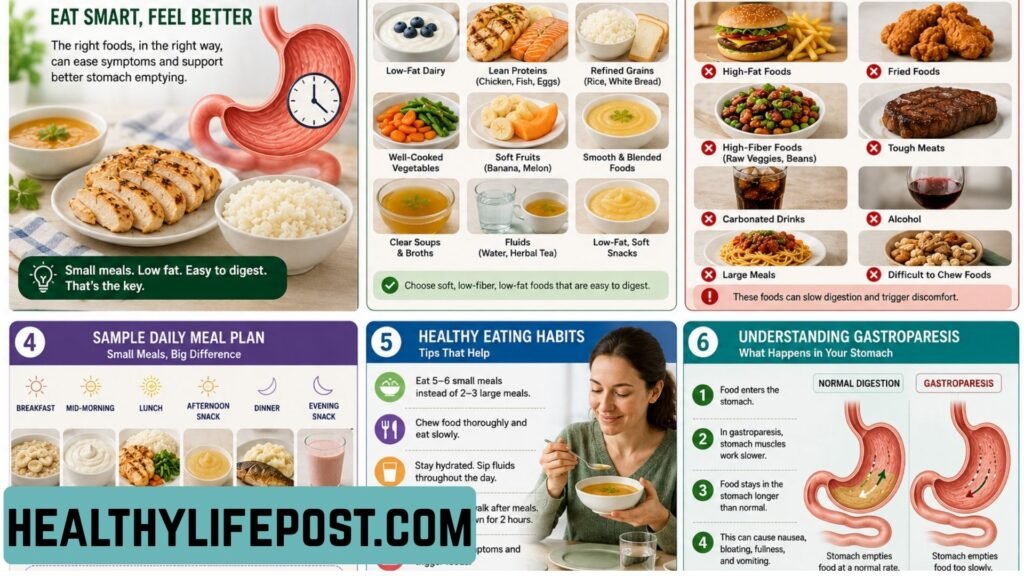
Large meals can place more food inside the stomach at once. Smaller meals may be easier to tolerate. NIDDK recommends five or six small, nutritious meals instead of two or three large ones.
Texture also matters. Soft, well-cooked foods are often easier to manage. Thorough chewing can further reduce the physical work needed during digestion.
A useful approach is to think beyond calories. Each meal should provide useful nutrition while remaining easy to tolerate.
Best Foods for Gastroparesis
There is no single menu that works for everyone. Tolerance can vary between people. Still, several food characteristics are commonly recommended.
Choose Lower-Fat Foods
High-fat foods may be difficult for people with gastroparesis. Doctors may recommend reducing dietary fat as part of symptom management.
Potentially easier choices include:
- Low-fat dairy products, if tolerated
- Lean poultry
- Fish prepared without heavy frying
- Eggs prepared with little added fat
- Low-fat soups
- Soft cooked foods
NIDDK professional information also describes limiting fat as part of dietary treatment.
Choose Lower-Fiber Foods When Needed
Fiber is normally valuable for health. However, large amounts can be difficult for some people with gastroparesis. NIDDK recommends lower-fiber foods for people with the condition.
Examples can include:
- White rice
- Refined breads
- Well-cooked vegetables
- Soft fruits without difficult skins
- Mashed potatoes without skins
The right amount depends on symptoms and nutritional needs. A dietitian can help personalize this choice.
Why Food Texture Can Make a Difference
One overlooked part of a gastroparesis diet is food texture.
Soft foods generally require less chewing. Well-cooked foods can also be easier to consume. During worse symptoms, doctors may recommend foods processed into very small pieces. Blended or liquid nutrition may sometimes be necessary.
This creates an important progression:
Regular tolerated foods → soft foods → blended foods → liquids
Not everyone needs to follow every stage. The appropriate stage depends on symptom severity and medical advice.
Foods and Drinks That May Cause Problems
Some foods can make symptoms harder to manage. NIDDK specifically advises avoiding foods high in fat and fiber when recommended for gastroparesis. It also advises avoiding foods that are difficult to chew.
Common examples to limit or discuss with a clinician include:
- Fried foods
- Very fatty meals
- Large portions
- High-fiber foods
- Tough meats
- Foods that are difficult to chew
- Carbonated drinks
- Alcohol
Carbonated beverages deserve special attention. They can increase stomach discomfort for some people. NIDDK specifically recommends avoiding fizzy beverages.
A Simple Gastroparesis Meal Structure
Instead of building meals around large portions, use smaller combinations.
For example, a person might choose a small serving of lean protein. Add a soft carbohydrate and a tolerated cooked vegetable. The meal should remain modest rather than becoming a large plate.
A practical day could look like this:
| Meal | Example Direction |
|---|---|
| Breakfast | Soft eggs with refined toast |
| Mid-morning | Small low-fat yogurt, if tolerated |
| Lunch | Small chicken and rice portion |
| Afternoon | Blended or soft snack |
| Dinner | Lean fish with mashed potatoes |
| Evening | Small liquid nutrition option if needed |
These are examples, not personalized medical instructions. Individual tolerance can differ significantly.
The Often-Missed Part: Hydration and Nutrition
Gastroparesis is not only about stomach discomfort. Repeated vomiting can cause dehydration. Poor food intake can also reduce calories and nutrients.
NIDDK suggests fluids such as water, low-fat broths, clear soups, and certain electrolyte-containing drinks. Your medical team can recommend the best options for your situation.
This matters because a diet that reduces symptoms but provides too few nutrients is not a successful long-term plan.
What If Solid Food Becomes Difficult?
Moderate or severe symptoms can change dietary needs.
Doctors may recommend liquids or blended foods when solid foods are poorly tolerated. Liquid nutrition can sometimes provide calories when normal meals become difficult.
More serious cases may require medical nutrition support. Options can include feeding through a tube or intravenous nutrition. These treatments are reserved for situations where ordinary eating cannot meet nutritional needs.
This is why severe gastroparesis should not be managed through restrictive dieting alone.
A Better Way to Find Your Trigger Foods
There is no universal “gastroparesis food list” that works perfectly.
A more useful method is tracking patterns. Record the meal, portion size, texture, and symptoms afterward. This can help identify foods that repeatedly cause problems.
However, avoid removing large food groups without professional guidance. Excessive restriction can increase the risk of inadequate nutrition.
A registered dietitian can help build a plan around calories, protein, fluids, and individual tolerance. NIDDK also recommends dietitian support for people who need help meeting nutritional needs.
Eating Habits Matter Too
The gastroparesis diet is not only about ingredients.
NIDDK recommends several eating-related habits:
- Eat five or six small meals.
- Chew food thoroughly.
- Choose soft, well-cooked foods.
- Drink enough suitable fluids.
- Avoid lying down for two hours after eating.
- Consider gentle activity after meals.
NIDDK specifically mentions gentle activity, such as walking, after meals.
These habits can make the overall eating routine more manageable.
Gastroparesis and Diabetes Need Special Attention
Diabetes is the most common known underlying cause of gastroparesis. High blood glucose can also further delay stomach emptying.
People with both conditions need careful meal and glucose management. Changing meal sizes or timing can also affect diabetes treatment.
For this reason, people with diabetes should not make major dietary or medication changes without medical guidance.
When Should You Seek Medical Help?
Gastroparesis can sometimes cause serious complications.
Seek medical attention for warning signs such as:
- Persistent vomiting
- Signs of dehydration
- Unintentional weight loss
- Severe abdominal pain
- Blood in vomit
- Fainting or extreme weakness
- Very high or very low blood glucose
NIDDK lists these symptoms as reasons to seek medical help.
Final Takeaway
The best gastroparesis diet is usually small, soft, lower in fat, and lower in fiber. The goal is easier eating without sacrificing nutrition.
Start with the principles rather than a rigid food list. Smaller portions, suitable textures, adequate fluids, and careful symptom tracking can create a more practical routine.
Most importantly, severe symptoms, weight loss, dehydration, or repeated vomiting need professional care. A doctor and dietitian can adjust the diet according to the underlying cause and nutritional needs.
Medical note: This article provides general educational information. It does not replace diagnosis or individualized medical advice.
more than:Plant-Based Protein Sources: Which Foods Actually Deliver?
